

 English
 Français
  Deutsch
  Español
The Paris Metro isn’t just a way to get around, it’s part of the city’s soul. This sprawling underground labyrinth has been shaping daily life in the French capital for over a century. Whether it’s your first visit or you’re a returning traveler ready to ditch taxis and ride like a local, mastering the Metro is your ticket to discovering the city’s charm and skipping the crowds.
Let’s dive into the history, practical tips, and insider secrets you need to navigate Paris like a true Parisien.
A Brief (and Fascinating) Metro History
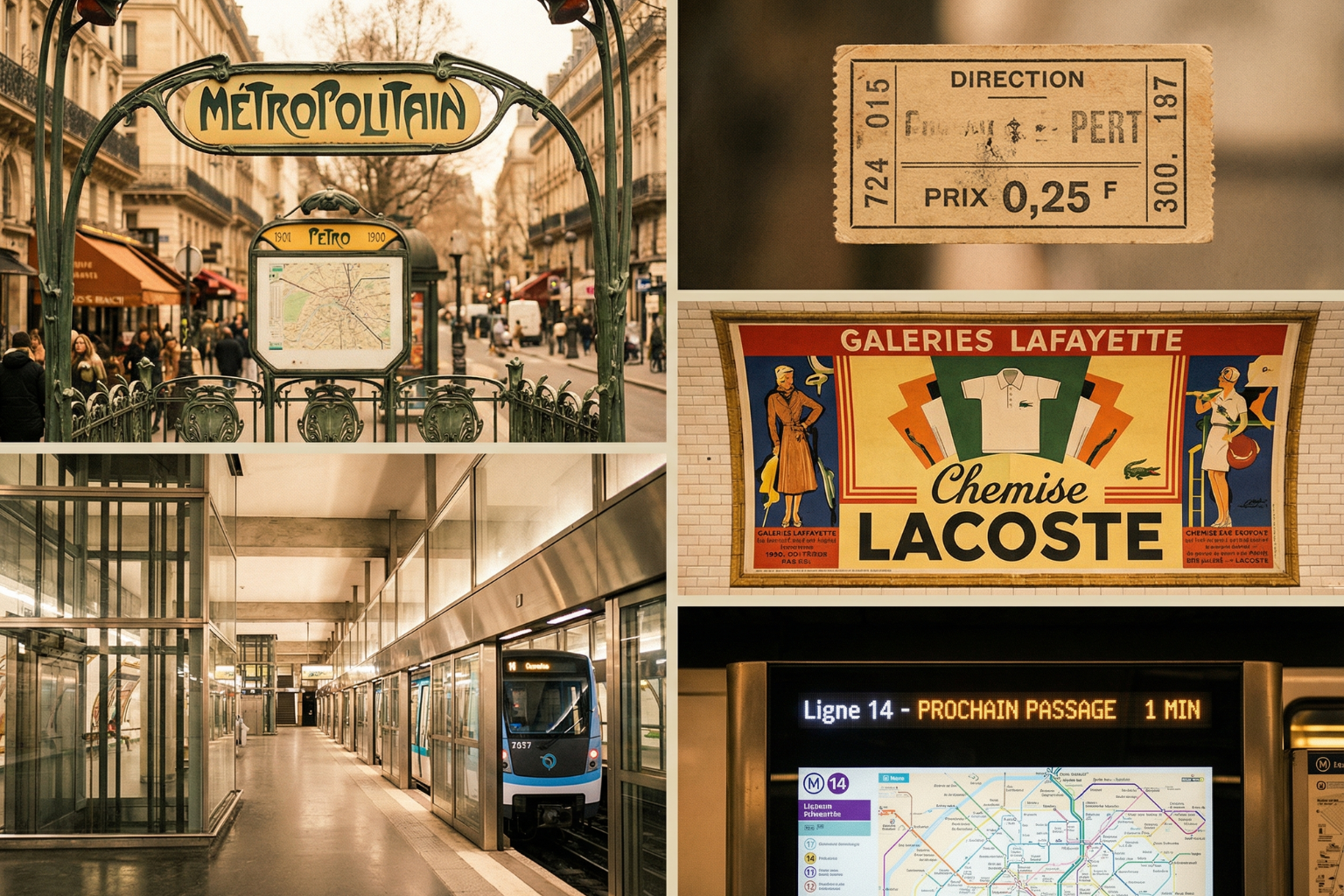
The Paris Metro, le Métropolitain, or just le Métro to locals, first opened on July 19, 1900, timed perfectly for the Universal Exposition and Olympic Games. It was designed to link the city’s scattered train stations and manage the massive wave of visitors. From the start, it was all about efficiency wrapped in style.
Enter the iconic Art Nouveau entrances by Hector Guimard: swooping wrought iron, whimsical typography, and that signature green hue. While many of the original 141 entrances have vanished, the survivors, like those at Porte Dauphine – are little works of urban art.
Behind the curtain was engineer Fulgence Bienvenüe, the mastermind of the Metro’s core design. Fun fact: he lost an arm in a construction accident earlier in his career, but didn’t let that stop him. His legacy lives on at Montparnasse–Bienvenüe station, named in his honor.
Oh, and the mystery? Paris’s Metro has its share of intrigue, including about a dozen “ghost stations” – abandoned or never-opened stops, some dating back to World War II. They add an eerie, secretive charm to the city’s underground life.
How It Works: The Basics of the Paris Metro

Today’s Metro system is one of the densest in the world, with 16 lines, numbered 1 to 14, plus the quirky 3bis and 7bis. Each line is color-coded and numbered, and unlike other cities, the Paris Metro doesn’t rely on compass directions. Instead, train directions are marked by their final station name.
So if you’re on Line 1 heading east, follow signs for Château de Vincennes. Going west? Look for La Défense. It’s surprisingly intuitive once you get the hang of it.
The Metro is operated by RATP (Régie Autonome des Transports Parisiens), which also runs the city’s buses, trams, and RER trains – all integrated into one smooth transit network.
Metro vs. RER: What’s the Difference?
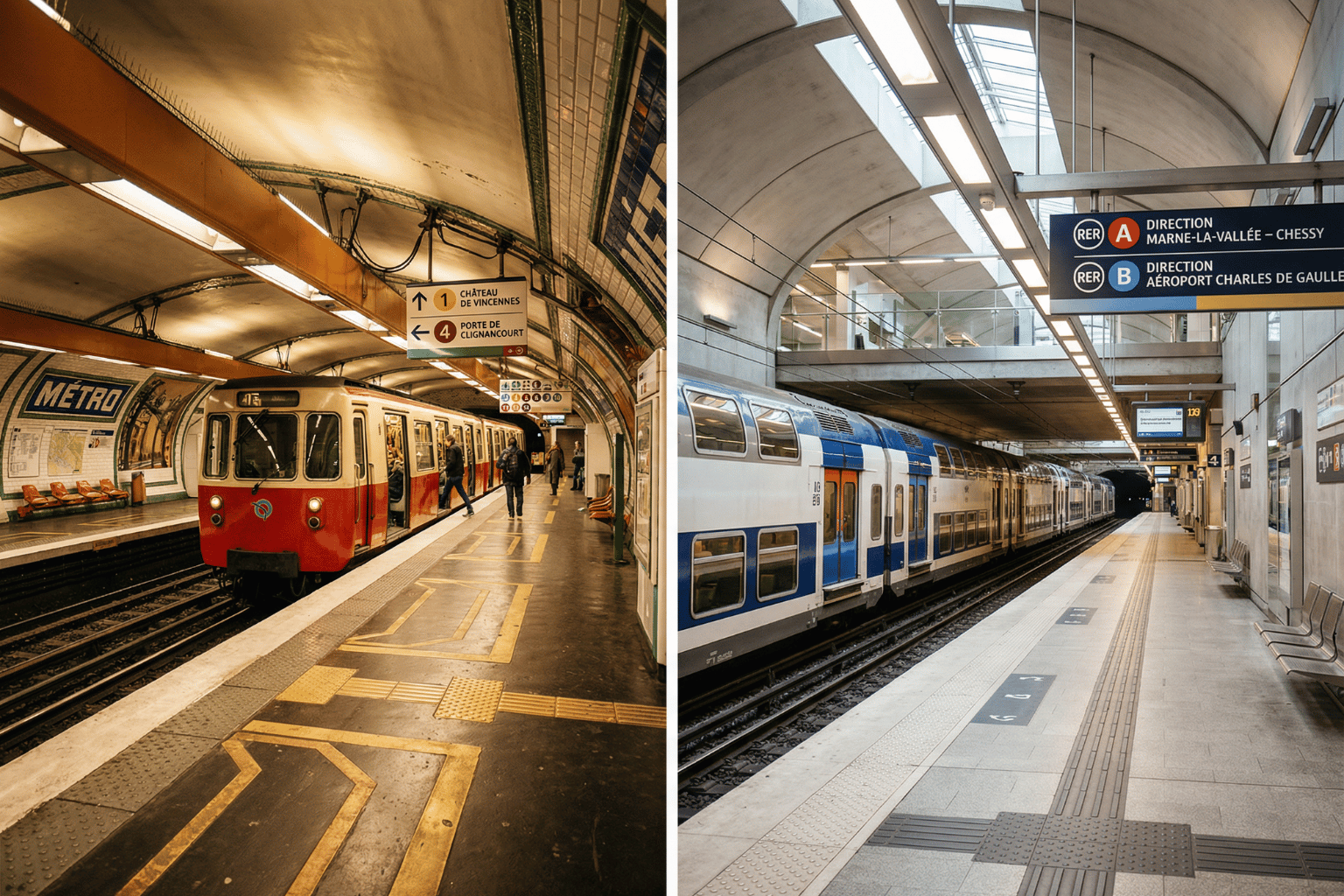
The Metro is your go-to for zipping around within Paris city limits (intra-muros), with stops spaced closely together, perfect for neighborhood hopping.
The RER (Réseau Express Régional) is more like a suburban commuter train, with five lines (A–E) that connect central Paris with outer regions. If you’re heading to Charles de Gaulle or Orly Airport, or out to Versailles, the RER is your ride. Many RER and Metro stations overlap, so transferring between them is easy.
Throw in trams (mostly on the city’s outskirts) and a comprehensive bus system, and you’ve got a transit network where one ticket often covers your entire multi-modal journey.
Tickets, Passes & Smart Planning
If you’re only taking a few rides, a single T+ ticket (€2.50) will do. You can buy them individually or grab a carnet (a 10-ticket bundle) and load it onto a Navigo Easy card, it is super handy.
Staying longer? Locals love the Navigo Découverte pass. It costs just €2 for the card, and you can load unlimited travel for a week (Monday to Sunday) within chosen zones. Just remember:
- You’ll need a small passport-style photo.
- The pass week always runs Monday–Sunday, so plan your start date accordingly.
It’s one of the best deals in town if you’re spending more than a few days in Paris.
How to Navigate Like a Pro
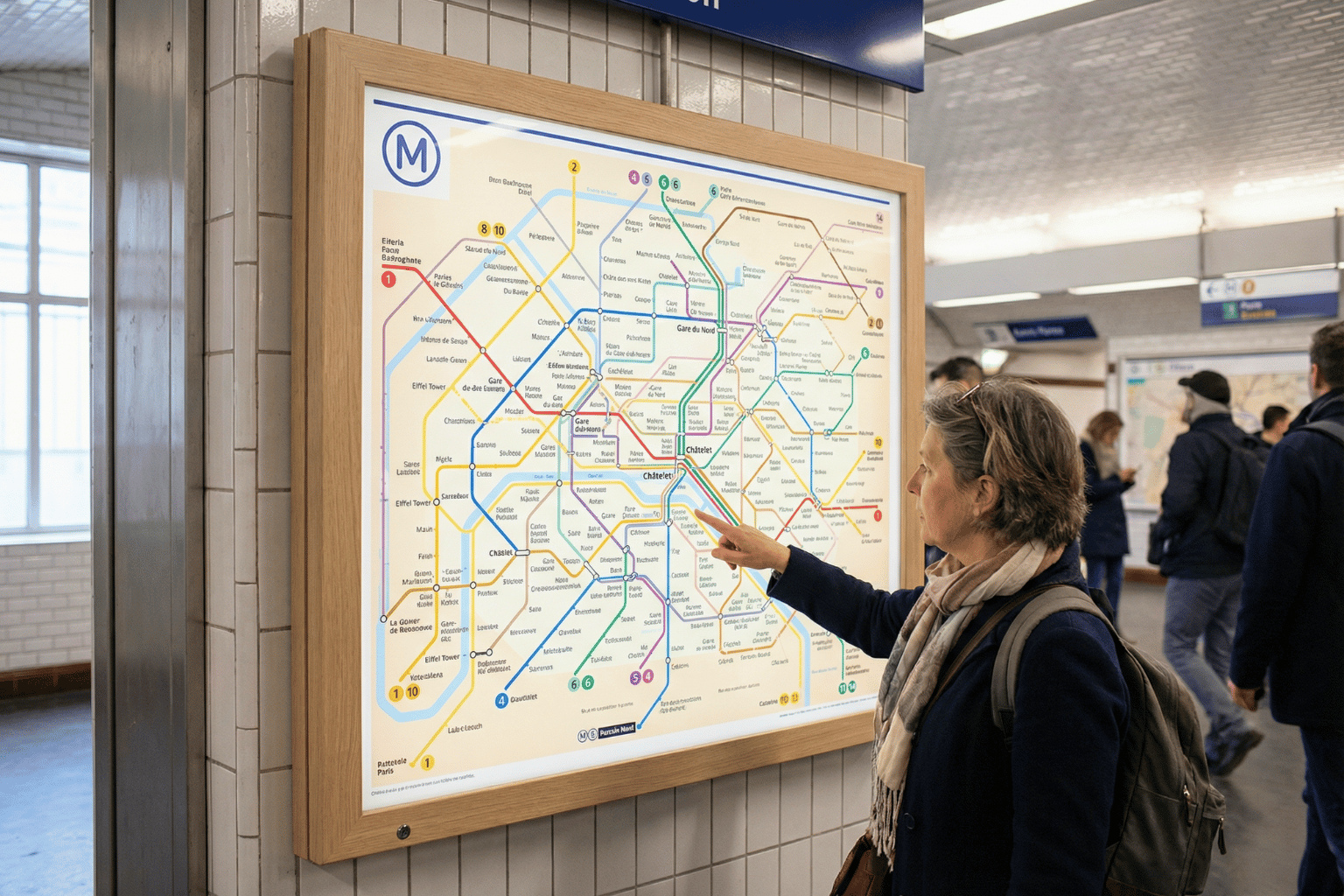
The Metro map might look intimidating, but don’t overthink it. Focus on three things:
- Your line number
- The train’s direction (aka the last station)
- Your destination stop
You don’t need to memorize the whole system, tech can help. Use the Bonjour RATP app or Google Maps to get step-by-step directions, live updates, and transfer guidance. It’s like having a savvy local in your pocket.
Paris Metro Etiquette: Read the Room
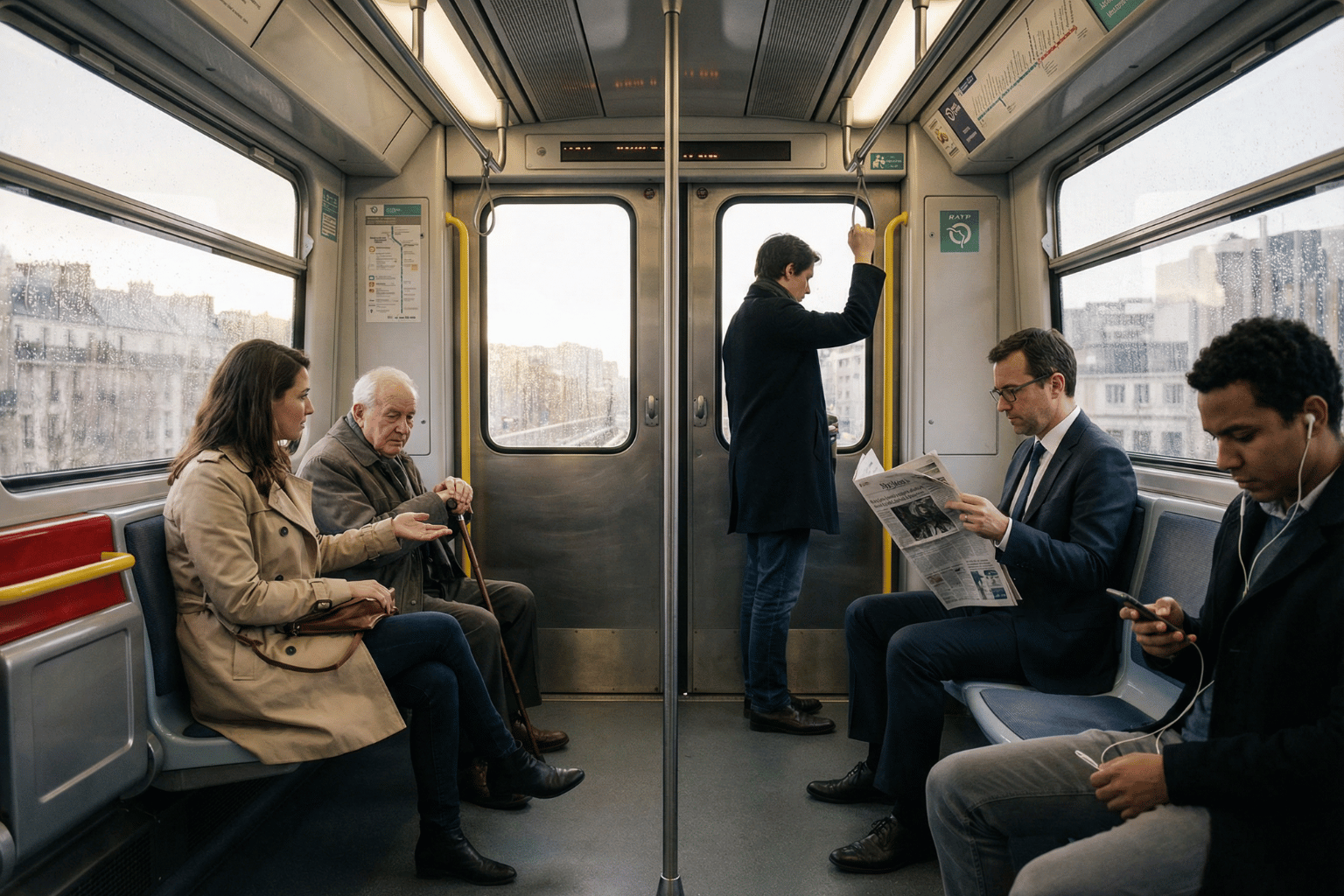
Want to blend in? Follow these unspoken rules:
- Stand right on escalators so others can pass left.
- Let passengers exit before boarding.
- On older trains, you might need to press a button or lift a handle to open the doors, don’t just stand there!
- Try to avoid rush hour (8–9:30 AM and 5–7 PM on weekdays). Trust us: you’ll appreciate the breathing room.
Safety First: Watch Your Stuff

The Metro is generally safe, but pickpockets do operate – especially in crowded trains and tourist zones. Keep bags zipped and in front of you, avoid displaying valuables, and stay alert. If something feels off, move away or change cars.
If you’re carrying luggage, try to travel off-peak. Many stations have lots of stairs, narrow corridors, and limited elevators. Plan ahead using the RATP app to find the most accessible routes.
Accessibility & Luggage Tips
Paris’s Metro system isn’t famous for its accessibility. Many stations lack elevators or ramps, which can make navigating with strollers, wheelchairs, or big suitcases tricky. The Bonjour RATP app and website offer up-to-date accessibility info.
When traveling with luggage:
- Choose stations with fewer stairs (Line 1 is your friend).
- Avoid peak hours if possible.
- Keep your bag close and don’t block doors or aisles, locals will thank you.
Airport Connections: Easy & Efficient

Wondering how to get to the city from the airport?
- Charles de Gaulle (CDG): Take RER B directly to central Paris. It’s fast (about 30–40 minutes), frequent, and skips the taxi chaos.
- Orly (ORY): Also accessible via RER B, with an additional Orlyval shuttle. Slightly closer and just as efficient.
Just note: RER airport tickets are separate from Metro fares and cost a bit more, but they’re worth it for the convenience.
Now that you know how to explore the city, let’s dive into everything Paris has to offer. Take a look at our self-guided tours of Paris and keep the adventure going at your own pace.
Final Word: You’ve Got This
The Paris Metro is a blend of brilliant design, rich history, and daily practicality, all with a touch of that signature Parisian flair. With a little prep, a helpful app, and a few Metro manners, you’ll be riding like a local in no time.
You’ll save money, skip traffic, and discover parts of the city you might’ve missed otherwise. So grab that Navigo, channel your inner flâneur, and hit the underground.
Bienvenue à bord – and bon voyage!

Comment (0)