

2 Hours
Daily Tour
Unlimited
English, French, German, Italian, Spanish
Walk through Spain’s best-kept coastal secret at your own pace—from Roman oyster traditions to a bronze swimmer bursting from the pavement, Vigo rewards curiosity. This 3-4 hour walking tour covers 33 stops across Vigo’s old town, waterfront, and Monte do Castro hill. It’s a moderate walk with several... Read more
A bronze swimmer bursts from the pavement—half art, half urban legend. Locals say he swims beneath the city at night. Miss this and you'll never understand Vigo's restless soul.
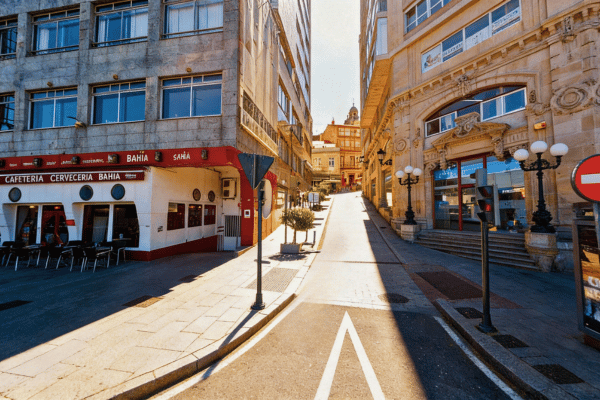
Ancient Roman stone meets brutal Atlantic hills. Your calves will burn, but these cobbles have stories older than most European cities. Every step climbs through centuries you can't find elsewhere.
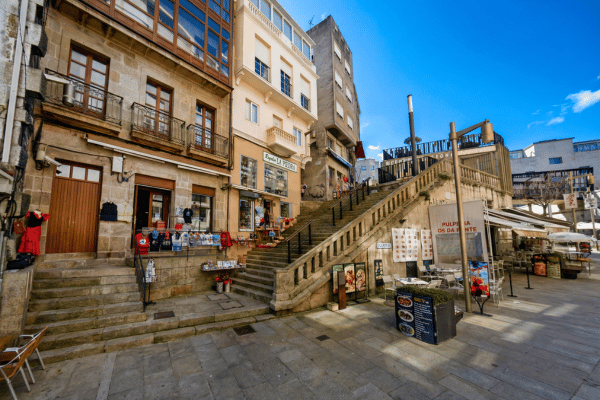
Raw oysters cracked open by weathered hands, cold Albariño, sea salt in the air. This salty ritual has fed Vigo since Roman times. Skip it and you've only seen half the city—the boring half.
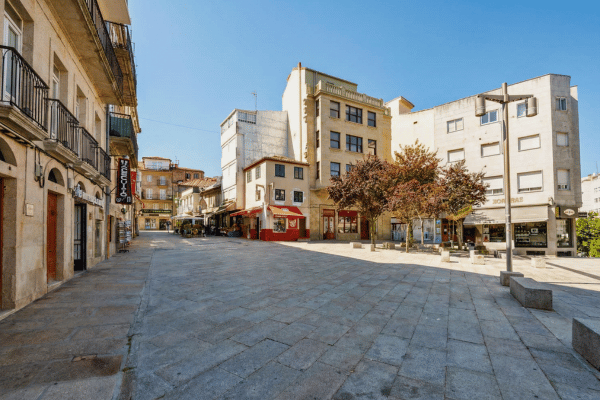
Chaos, shellfish, and ghost stories collide where fishermen sell dawn's catch before wholesalers wake. After dark, locals whisper about an eyeless captain hunting the perfect oyster. Believe what you want.
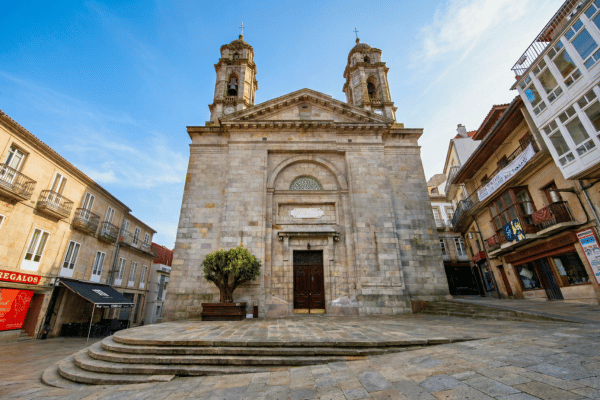
This cathedral rose from explosion rubble—literally. Inside, a wooden Christ is credited with driving out Napoleon's army. The locals still carry him through streets every August, settling old scores with France.
Vigo's first electric light still stands here—before most Spanish cities had gas lamps. Hidden in plain sight: a carved granite moon that shifts from crescent to full as you circle it. Most people walk past blind.
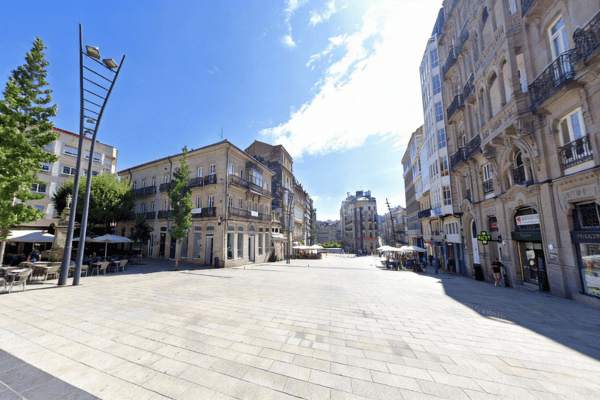
Kilometer zero. Every distance in Vigo begins here, beneath your feet. An angel with no wings guards a fountain. In December, a 45-meter LED tree turns the square into something from a fever dream.
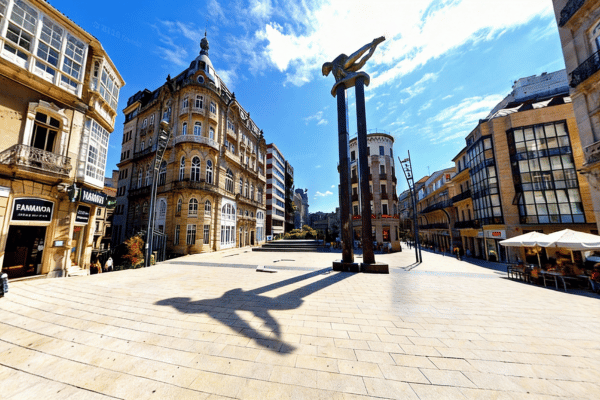
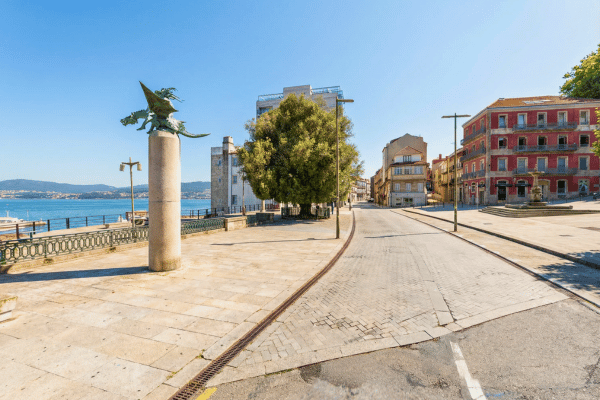
Half man, half fish, all controversy. This bronze merman caused fistfights when installed. Now he's Vigo's icon. Is he escaping the sea or the city? Locals still can't agree—and that's exactly the point.
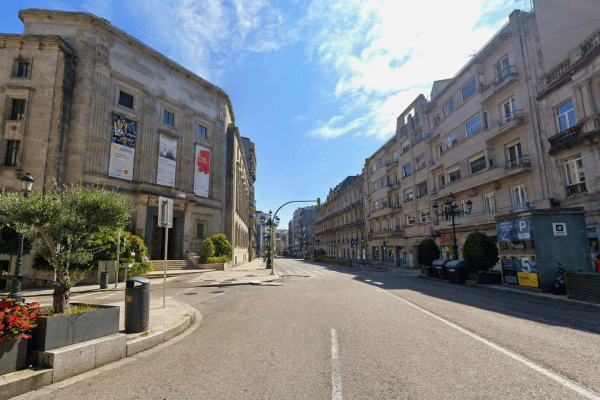
Where Vigo learned to dress up. This street grew elegant when the city got rich—and confident. Behind modern doors hide original staircases, mosaic floors, and secrets the façades won't tell you themselves.
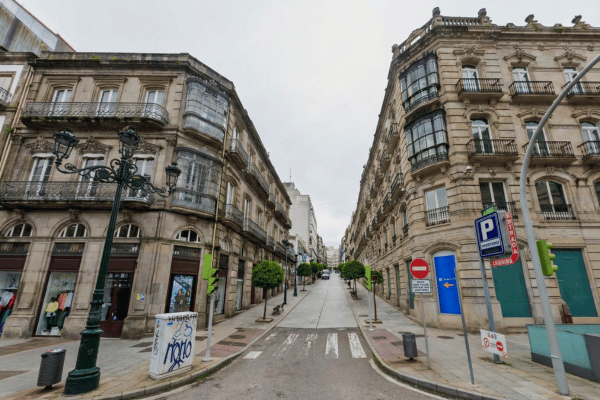
Not a monument. A home. But in Vigo, homes shaped the city as much as theatres did. Late-night lights once burned in these windows—someone planning, worrying, building tomorrow while the city slept below.
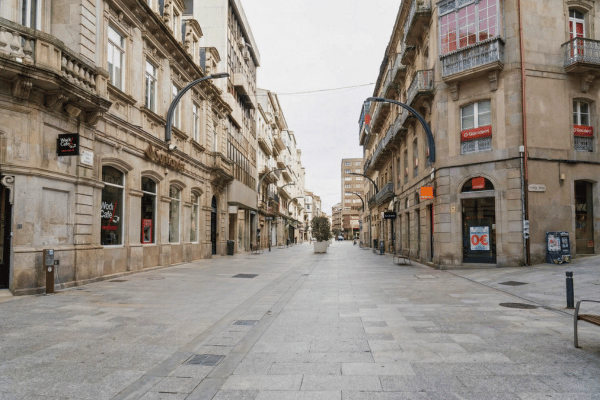
Vigo's living room—no traffic, just footsteps and voices. Walk it end to end without seeing someone you know, and you've just outed yourself as a visitor. In December, it becomes a glowing tunnel of gold light.
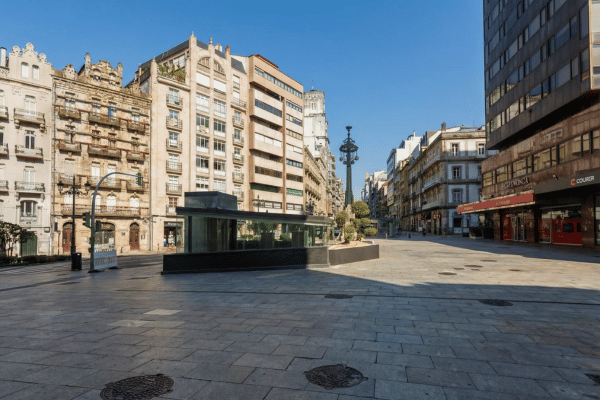
La Farola isn't just a lamppost—it's 20 tons of iron holding court in the street's center. When they moved it in 1972, complaints were so loud the city brought it back. Vigo doesn't joke about its landmarks.
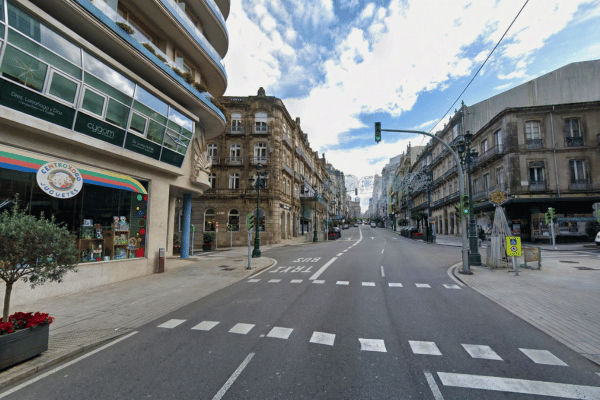
A building that seems to notice you first. The façade shifts with light like the northern lights—never the same twice. Locals swear soft greens and golds ripple across the stone at sunset. No photo ever captures it.
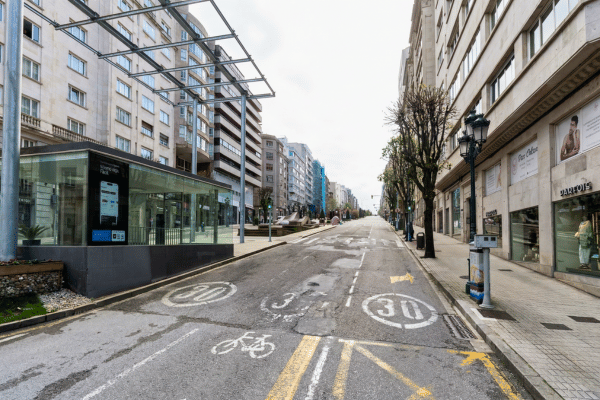
Six bronze fishermen frozen mid-labor, nets tangled in their hands. On foggy mornings, people swear they whisper to each other about the day's catch. It's only shadow and imagination… but Vigo has plenty of both.
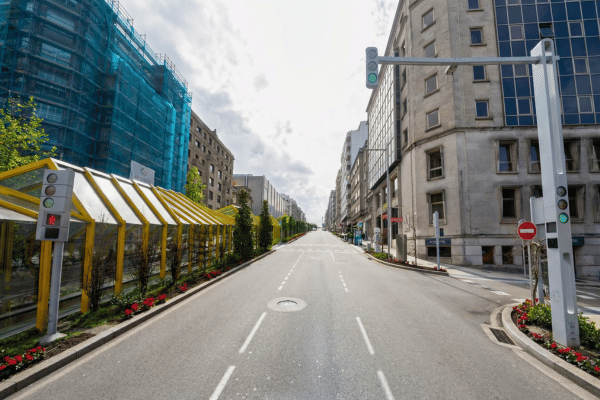
An outdoor moving walkway wrapped in rainbow lights and vertical gardens. Vigo's playful answer to a brutal hill. Glide up beneath LED canopies that pulse with color after dark—magic disguised as infrastructure.
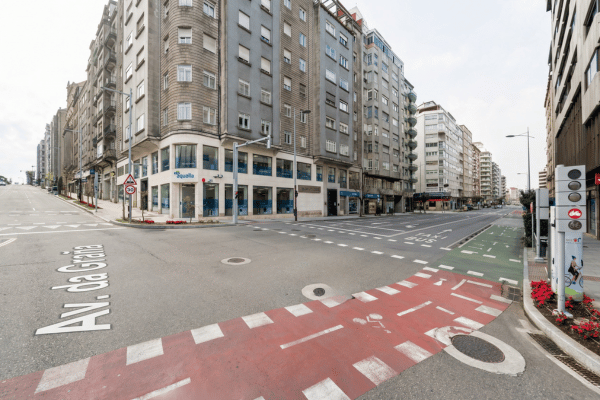
Pause here and choose: climb to Plaza de España where five bronze horses spiral skyward, or turn right into neighborhood Vigo. Either way, you're standing at a crossroads most visitors never even notice exists.
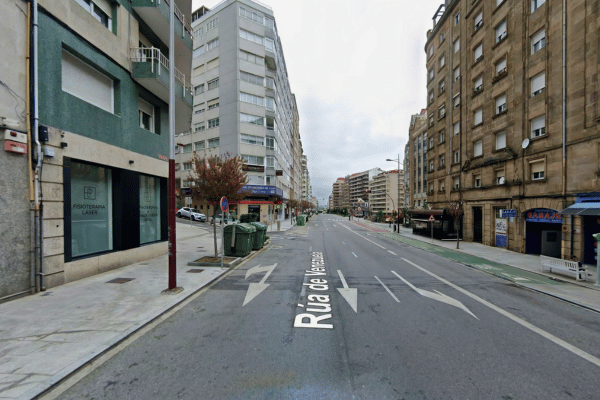
The street where Vigo tells its proudest story: in 1809, ordinary people expelled Napoleon's army. First city in Europe to free itself. Every March, the streets explode with musket fire, period costumes, and old scores.
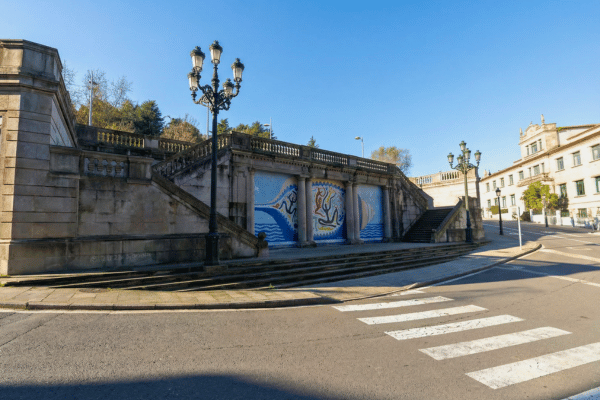
A 10x20-meter burst of color beneath stone stairs—fisherwoman, crashing waves, Celtic knots. Vigo earned the nickname "City of Color," and once you start noticing, murals ambush you everywhere. This one just happens to tower.
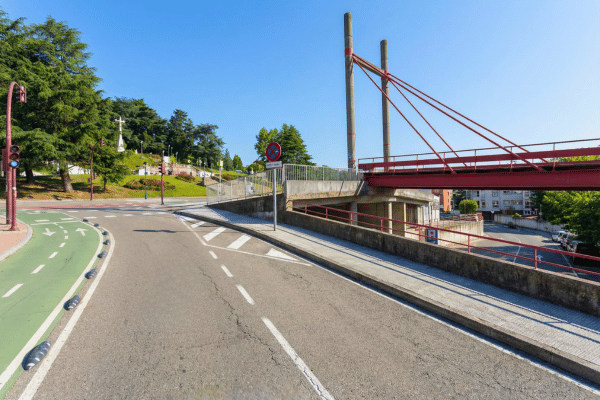
silhouetted at the top? That's Monte do Castro—Vigo's birthplace. Ancient roots, sweeping views, and the soul of the city all meet up there. Go see why it was worth defending.
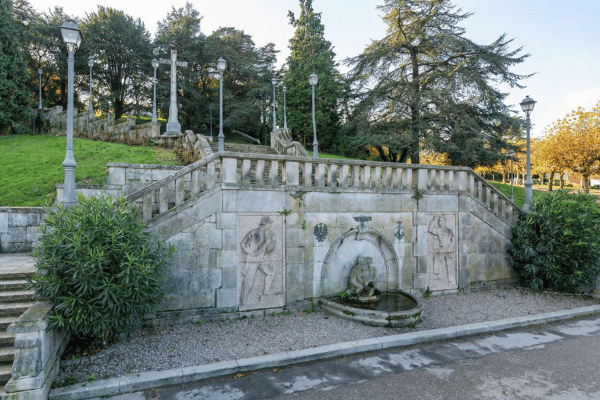
A fountain with two sailors and a cheeky monkey. A cross that sometimes wears a halo on misty afternoons. Steps worn smooth by centuries. You didn't just walk uphill—you walked into Vigo's layered story, one stone at a time.
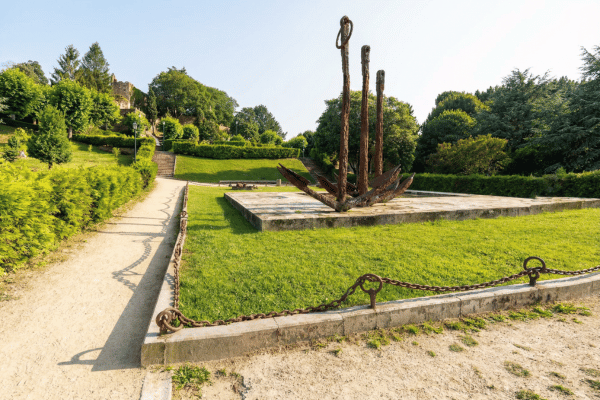
A colossal anchor slammed into stone like the sea left it behind. This remembers 1702—when Spanish treasure galleons were deliberately sunk nearby. Gold lost. Ships sacrificed. Survival chosen over glory. Weight, not shine.
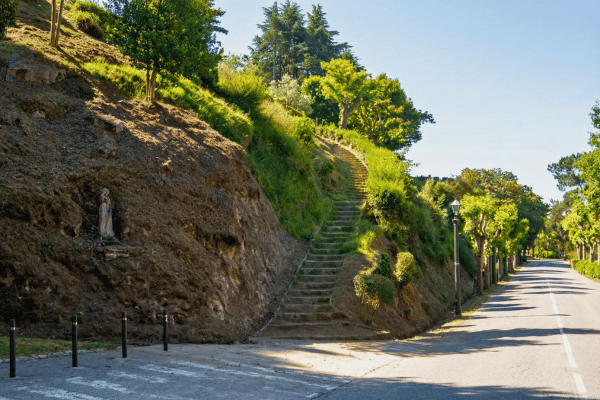
Steep, raw, carved into hillside. This is one of the original approaches soldiers, settlers, and watchmen once used—not for views, but for duty. Take it slow. These steps are old, and the ground remembers every single footfall.
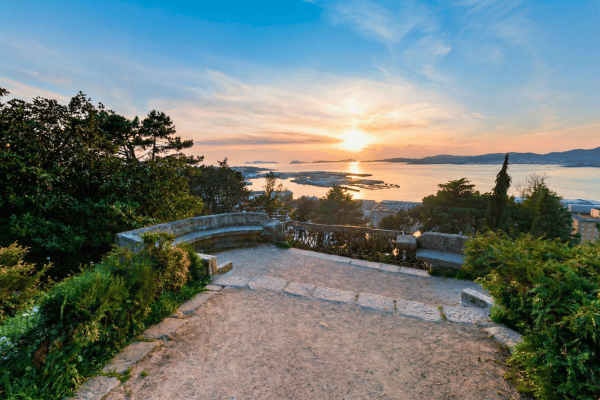
Pause midway and look right. The Cíes Islands float on the horizon like they've got nowhere else to be. Playa de Rodas is ranked among Earth's best beaches. And you're only halfway up—imagine what's waiting at the top.
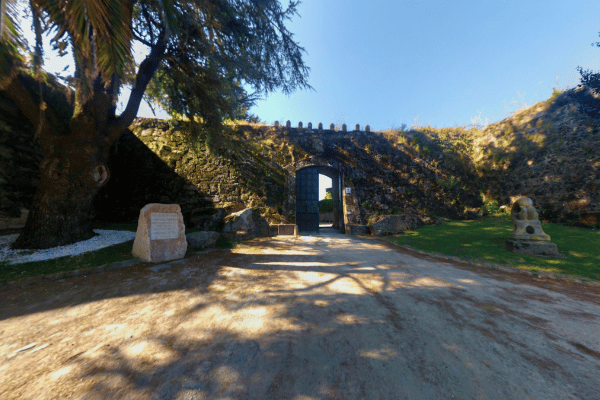
Stone walls from 1665 rise quietly but confidently. This hill once controlled the entire ría—nothing arrived unnoticed. Today, trees lean inward and nature reclaims what was once all strategy and tension. Conflict has softened.
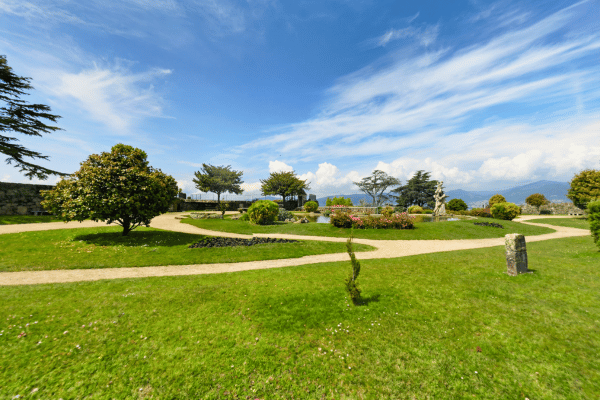
Settlement. Defence. Effort. Calm. Monte do Castro isn't just a park—it's Vigo taking a long, well-earned pause. Wander the walls. Find a viewpoint that feels like yours. This hill has waited centuries—it's in no hurry now.
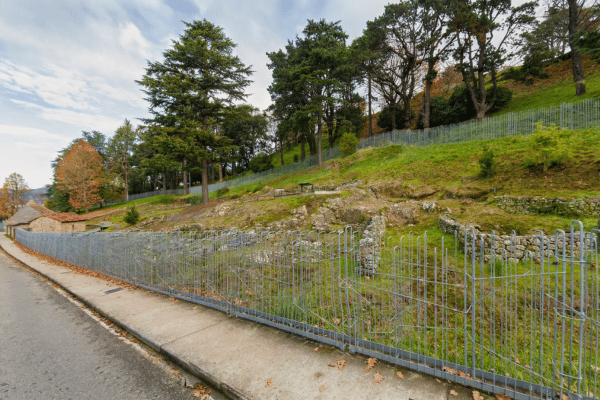
Low stone circles resting in grass. Homes built 2,000 years ago by Celtic settlers who understood this hill instinctively: protection and perspective. This is where Vigo was born. City behind you. Atlantic ahead. Past underfoot.
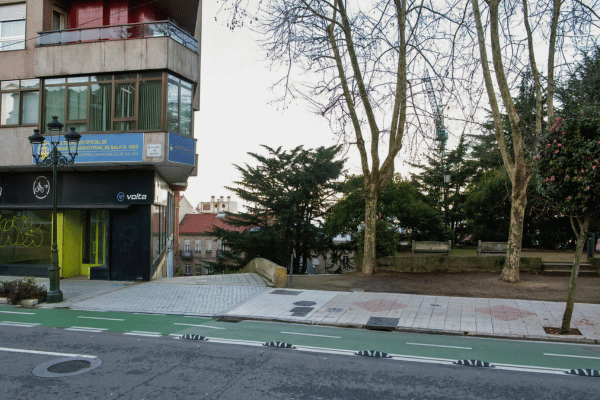
Choose: take the stairs or follow the cobbles. Either way, head downhill. Vigo works vertically—always has. This gentle descent is part of the experience. The paths come back together below, just like Vigo's routes always do.
A fairy and dragon guard an ancient olive tree that survived wars and centuries. The tree appears on Vigo's coat of arms—civic memory with roots. Below, the Ría spreads wide. Above, myth and maritime soul share the same moment.
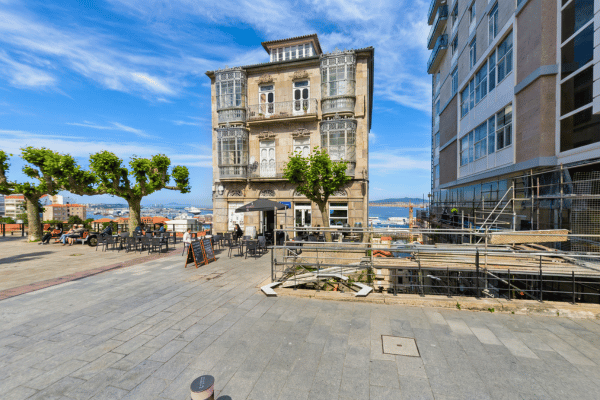
Narrow stairs beside Bar El Castro slip downhill quietly, almost hiding. Classic Vigo shortcut—practical, unpolished, essential. Built for hills, not postcards. Each step feels like leaving the lookout behind and rejoining everyday life.
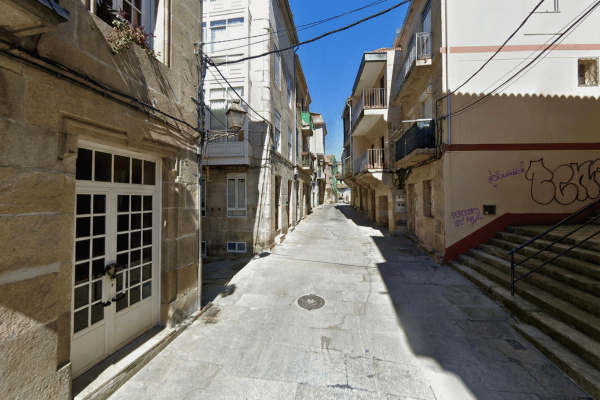
A small, everyday square hiding a secret: narrow stairs slipping downward between buildings, easy to miss. These aren't grand—they simply exist, doing their job. This is the last set of stairs on our walk. No drama. Just one last descent.
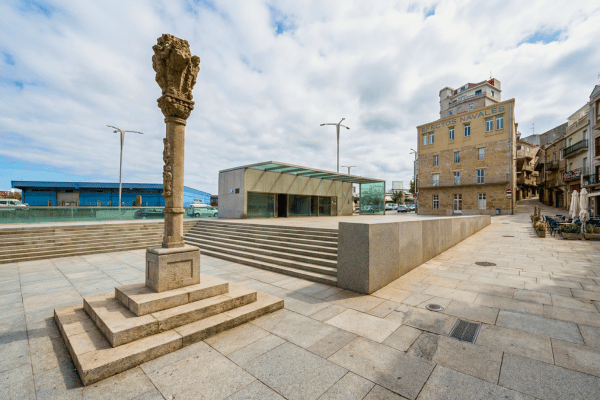
Stone arcades from Vigo's oldest fishing quarter. Fish was unloaded, sorted, sold, argued over here. Boats pulled in steps away. This isn't Vigo commemorated or cleaned up—this is where the maritime story actually happened. Still hums with it.
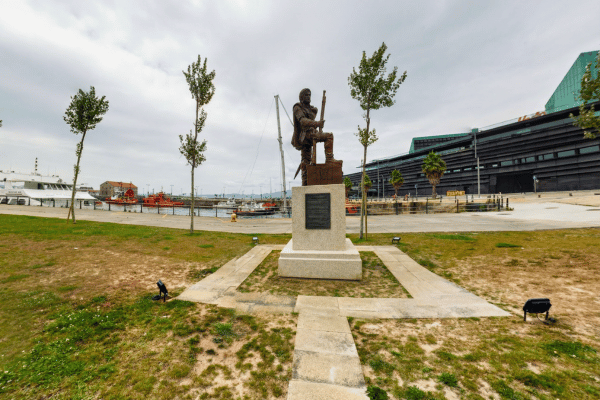
A bronze sailor faces the water, not the city. He sailed with Magellan, deserted in the Pacific, survived, adapted, returned as translator—not conqueror. Very Vigo. Behind him, the working harbour does what it's always done: quietly endure.

Member Since 2025

 English
 Français
  Deutsch
  Español
Leave a review