

 English
 Français
  Deutsch
  Español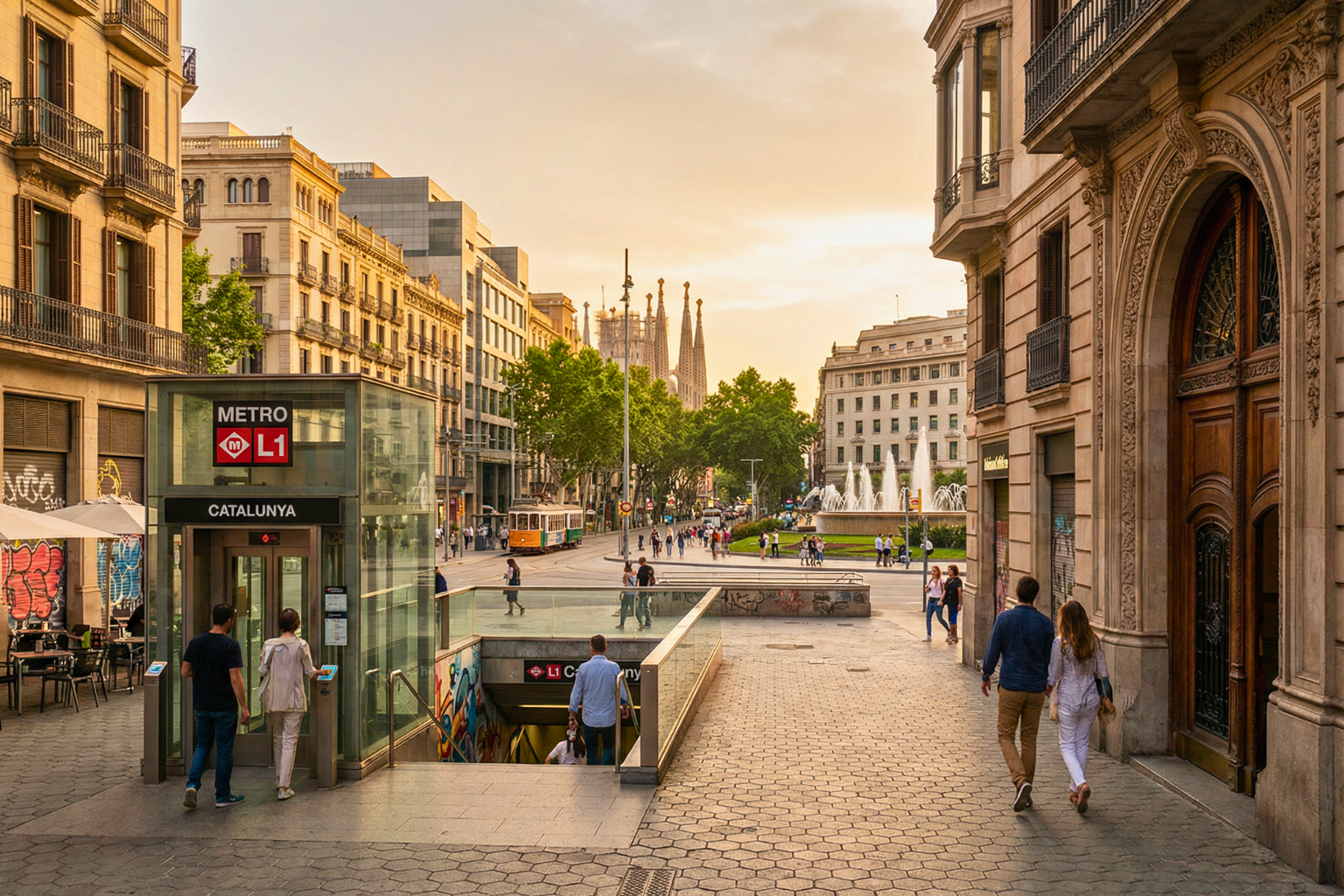
Barcelona is one of those cities that looks big on the map but feels surprisingly friendly once your feet hit the pavement. Wide boulevards, compact neighborhoods, and a public transport system that actually makes sense — yes, really.
Whether you’re hopping on the metro, strolling between landmarks, or figuring out which pass saves you money, getting around Barcelona town is easier than most first-time visitors expect.
Let’s break it down so you can spend less time navigating and more time enjoying the city.
The Barcelona Metro: Fast, Simple, and Visitor-Friendly
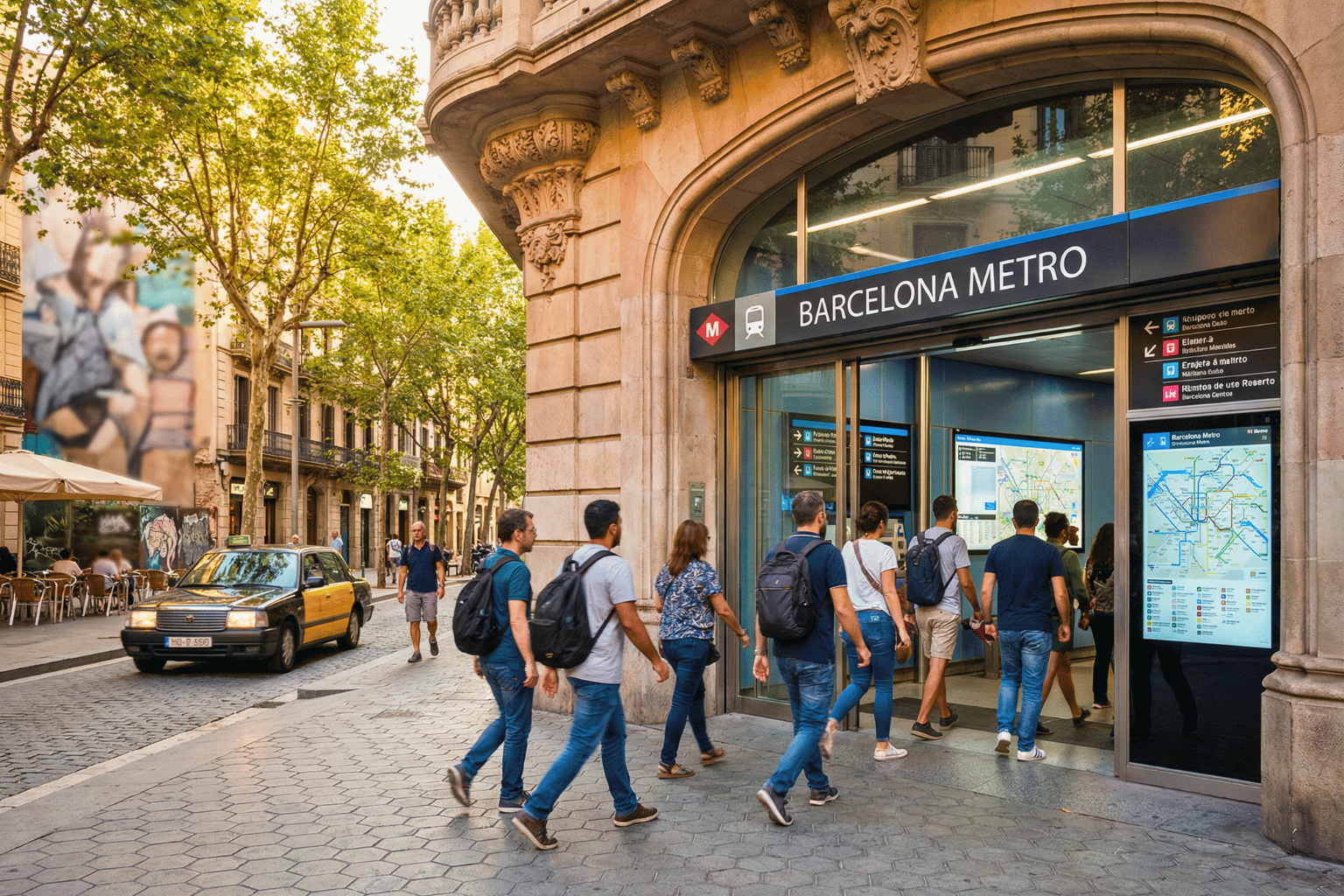
The metro is the backbone of Barcelona’s transport system, and it’s excellent. Clean, frequent, and well-signposted, it connects nearly every major area you’ll want to visit — from the Gothic Quarter to Sagrada Família, the beach, and beyond.
There are currently multiple lines, each color-coded and clearly marked. Stations have maps everywhere, and stops are announced in English as well as Catalan and Spanish. Trains usually run from early morning until midnight on weekdays, later on Fridays, and all night on Saturdays — perfect if tapas turn into a late one.
A local tip: keep your ticket until you exit the station. You’ll need it to get through the barriers again.
Understanding Tickets: Single Rides vs Day Passes
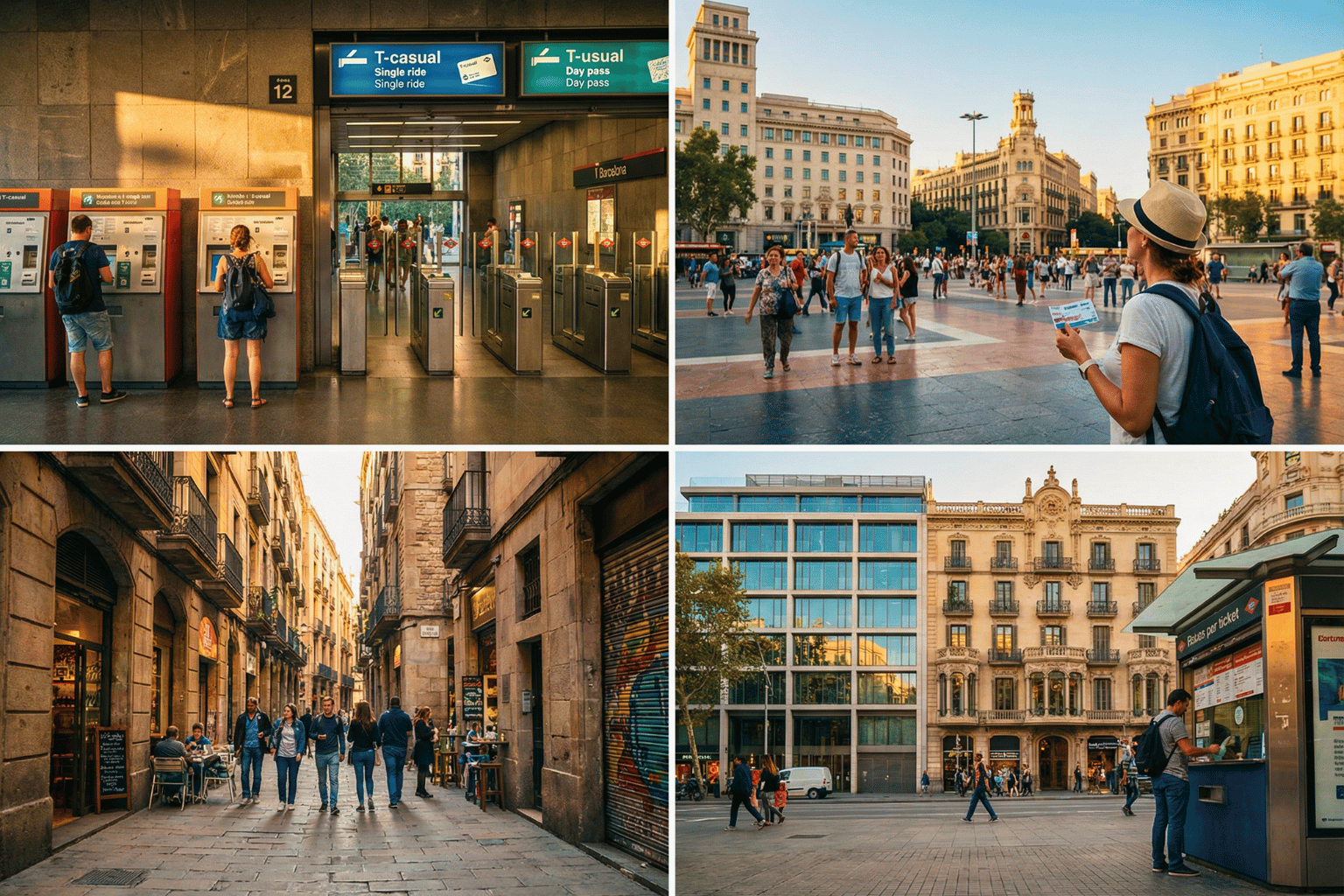
If you’re only taking one or two rides, a single ticket works fine. But for most visitors, day passes or multi-ride tickets make far more sense.
The T-casual (10 rides) is a favorite. It’s cheaper per trip and can be used across the metro, buses, and trams. Just remember it’s for one person only.
If you’re planning a busy sightseeing day, consider the Hola Barcelona Travel Card. It offers unlimited travel for 48, 72, 96, or 120 hours. No counting rides, no stress — just tap and go. It’s especially handy if you’re staying a bit outside the city center or planning lots of back-and-forth exploring.
Walking Around Barcelona: The Best Way to Feel the City
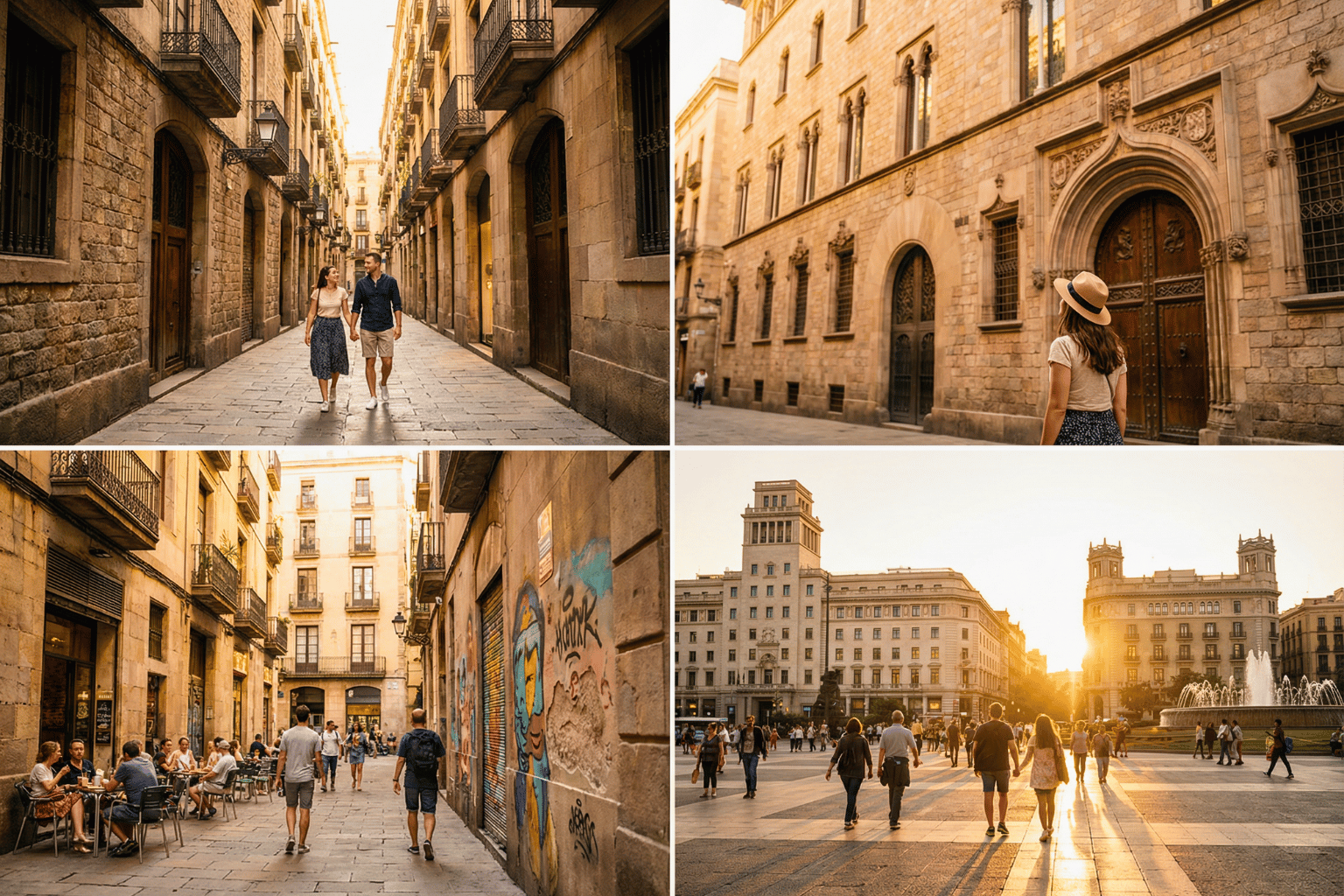
When people talk about the best area to stay in Barcelona city, they’re often pointing to neighborhoods where walking is part of the experience. Many of Barcelona’s most iconic areas are best explored on foot, where you start noticing the little things — plant-filled balconies, quiet hidden squares, and tiny bakeries you’d completely miss from a bus window.
The Gothic Quarter, El Born, and El Raval are compact, mostly flat, and full of character. Their narrow streets feel made for slow wandering rather than strict plans. Take your time — getting a little lost here often leads to your favorite discovery of the day.
On the other hand, Eixample offers a totally different vibe. It’s wide, calm, and wonderfully easy to navigate thanks to its grid layout. Fewer surprises, yes — but some of Barcelona’s most striking architecture lives here, so remember to look up as you walk.
Smart Walking Routes to Save Time
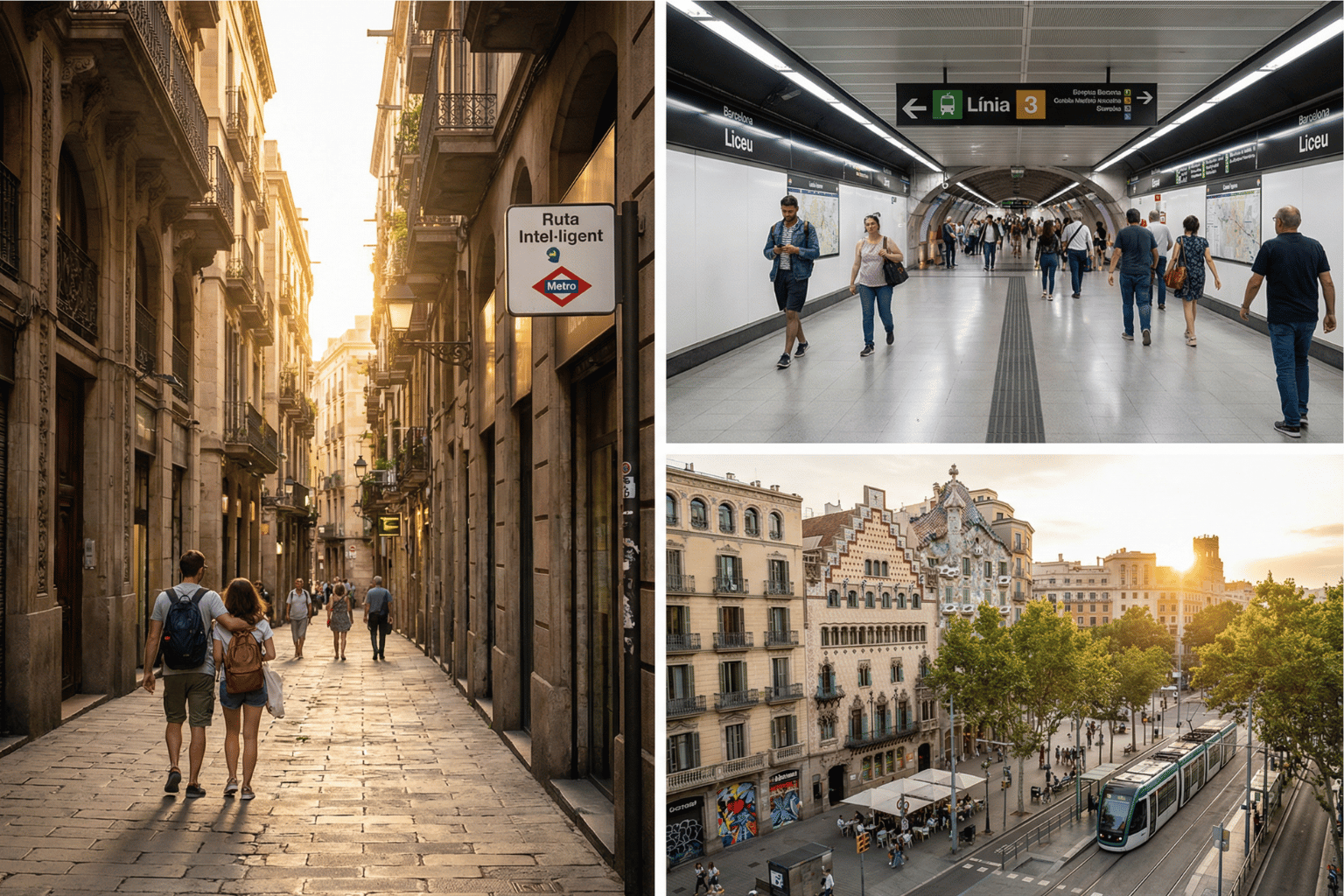
One of the best things about District Barcelona is how walkable the connections are between neighborhoods.
You can stroll from Plaça de Catalunya to the Gothic Quarter in minutes, then continue on foot to El Born and down toward the waterfront. Another great walk is from Gràcia into Eixample, where village vibes slowly give way to grand boulevards.
If you’re heading uphill — like toward Montjuïc or Park Güell — consider taking the metro or bus up and walking back down. Your legs will thank you.
Buses, Trams, and When to Use Them
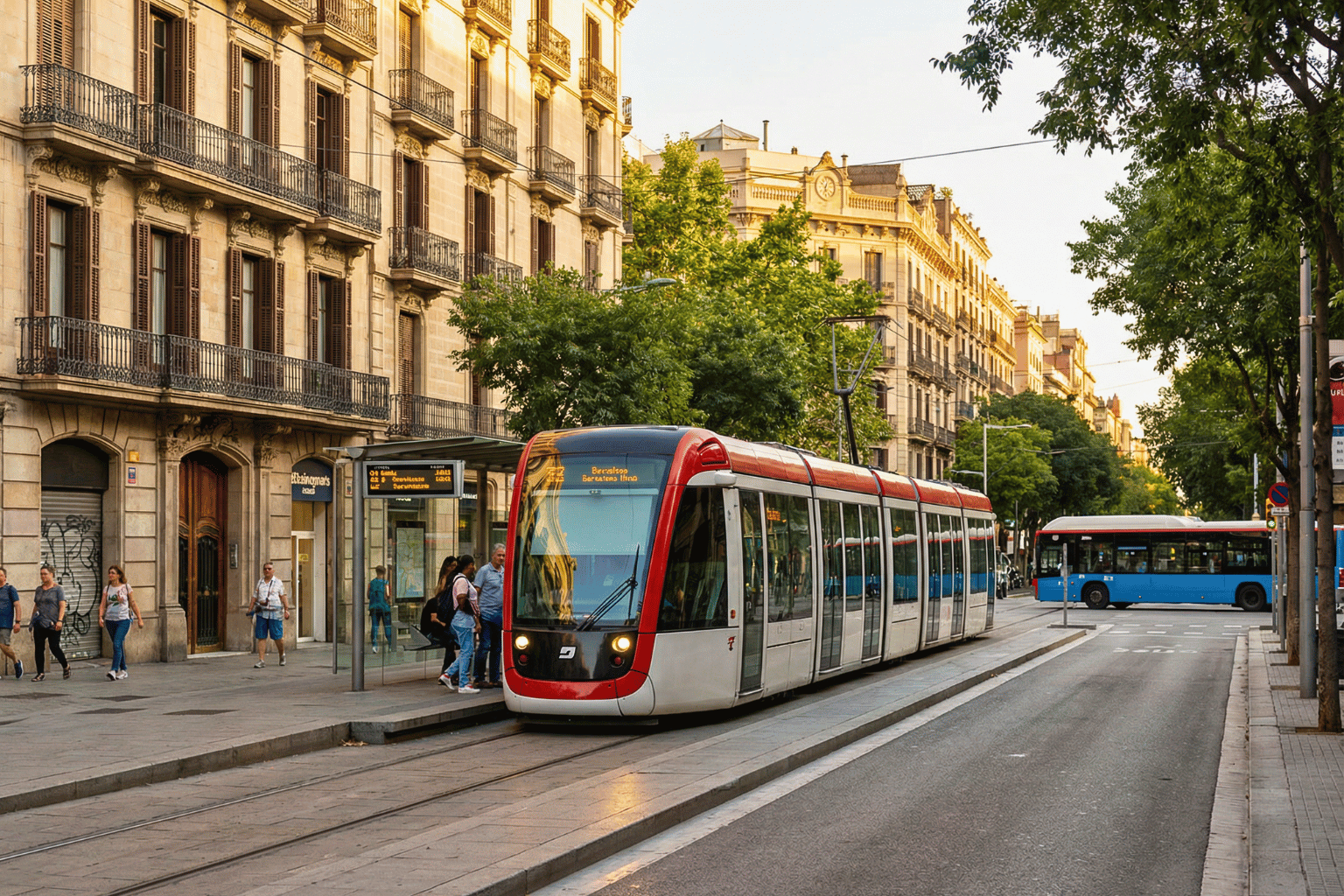
Barcelona’s buses are reliable and surprisingly scenic. They’re great for routes where the metro requires multiple changes, and you get bonus street views along the way.
Trams are less useful for most short-term visitors but can be handy in certain outer districts. For central sightseeing, metro plus walking usually wins.
And yes, taxis and ride-hailing apps are plentiful — but with good public transport, you’ll rarely need them.
Day Pass Tips Locals Actually Use
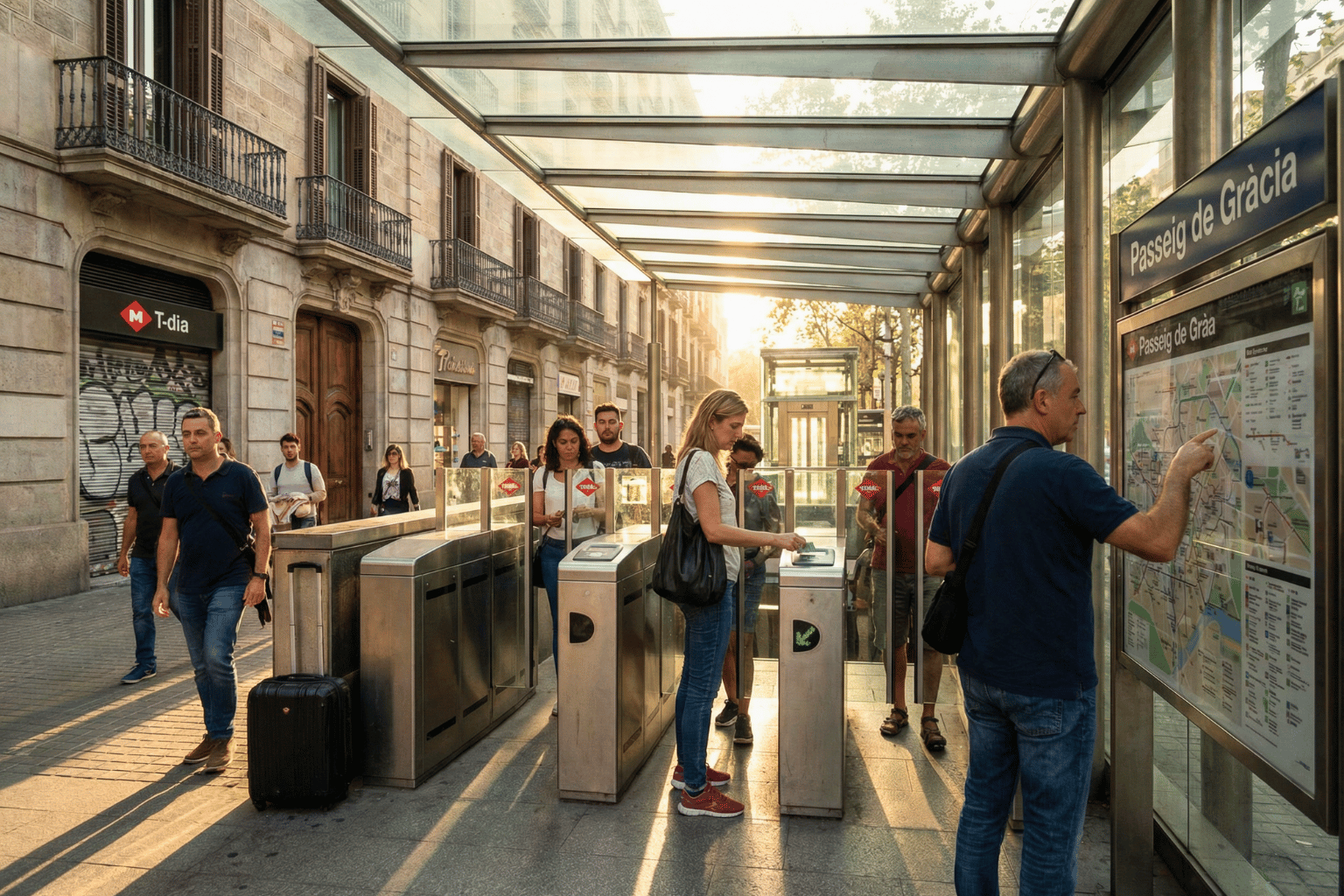
Here’s a simple rule: if you plan more than four rides in a day, a day pass pays off.
Another tip — buy your travel card at the airport or metro stations, not on buses. It’s quicker and less stressful. Also, the best areas of Barcelona are zone-based, but almost everything tourists want is in Zone 1, so you don’t need to overthink it.
Always keep an eye on your belongings, especially in crowded stations like Plaça de Catalunya and La Rambla. Barcelona is safe, but busy transport hubs attract pickpockets.
Final Thought:
Getting around Barcelona town isn’t about rushing from sight to sight. It’s about mixing metro rides with long walks, pausing in plazas, and letting the city unfold naturally.
Plan smart, walk often, and use day passes to keep things simple. Once you’ve got that down, Barcelona stops feeling like a map — and starts feeling like a place you belong.
If you’ve decided to explore on foot, a Self-Guided Walking Tour of Barcelona can be the perfect companion. Head over to our website, pick the Barcelona tour that suits your style, and start discovering the city at your own pace.

Comment (0)