

 English
 Français
  Deutsch
  Español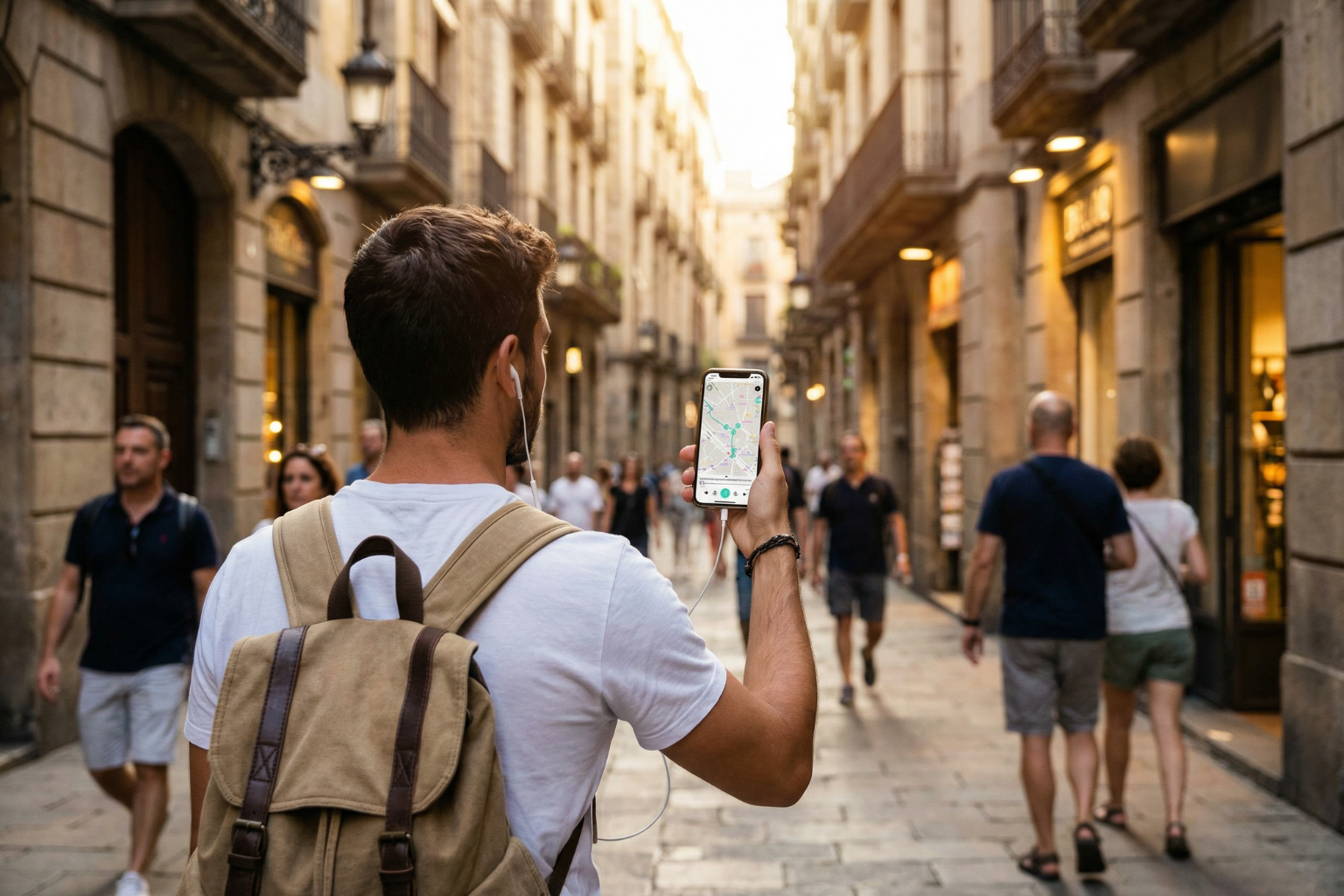
Barcelona is a city best understood by walking it. Not just because it’s flat and friendly, but because every neighborhood feels like a different chapter. In just a couple of kilometres, you can travel from medieval alleyways to grand boulevards built for a modern age.
This walking tour of Barcelona takes you from the atmospheric Gothic Quarter to the elegant streets of Eixample, explaining what you’re seeing as the city quietly changes around you.
Starting Point: The Gothic Quarter’s Timeless Maze
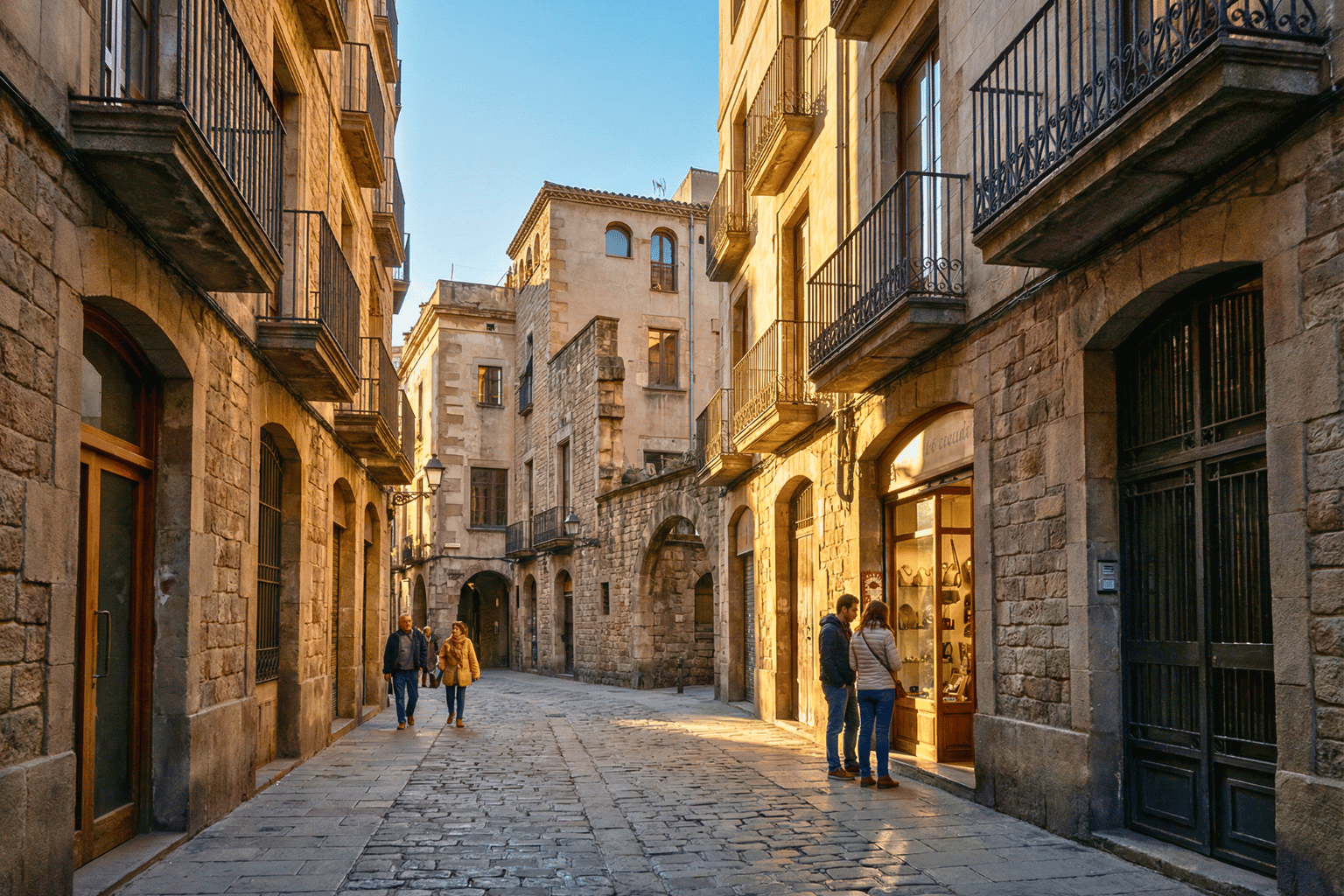
Begin in the Gothic Quarter, the historic heart of Barcelona. This is where the city began over 2,000 years ago, first as a Roman settlement and later as a medieval powerhouse. The streets here are narrow, winding, and intentionally confusing — they were designed for shade, defence, and daily life long before cars existed.
As you walk, look up. Laundry lines stretch between buildings, stone balconies lean inward, and sunlight slips through in thin ribbons. You’ll pass hidden squares like Plaça Sant Felip Neri, where history whispers rather than shouts.
Cathedrals, remnants of Roman walls, and tiny chapels appear suddenly, as if the city is revealing secrets only to those moving slowly enough to notice.
El Born: Medieval Roots with Creative Energy
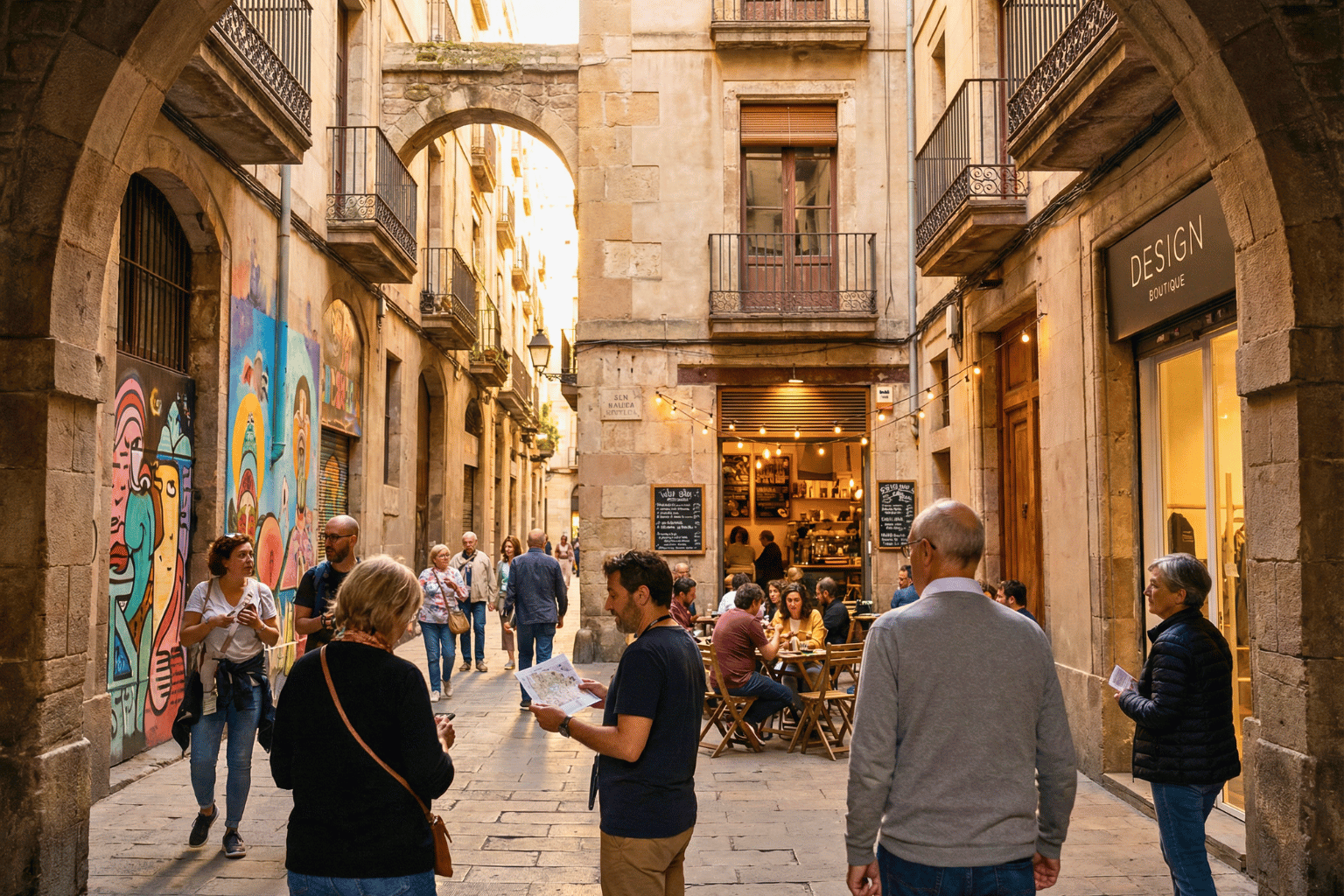
Step east and you’ll drift naturally into El Born, where the medieval atmosphere remains but the mood shifts. The streets open slightly, the cafés feel livelier, and the neighborhood hums with creative energy.
This area was once home to merchants, sailors, and craftsmen, and today that spirit lives on through boutique shops, art studios, and tapas bars. Walk toward the soaring Santa Maria del Mar, a masterpiece built by the people of the city rather than royalty.
El Born feels social, warm, and effortlessly cool, and is one of the best areas of Barcelona — the kind of place where a short stop turns into a long lunch.
El Raval: Raw, Real, and Constantly Evolving
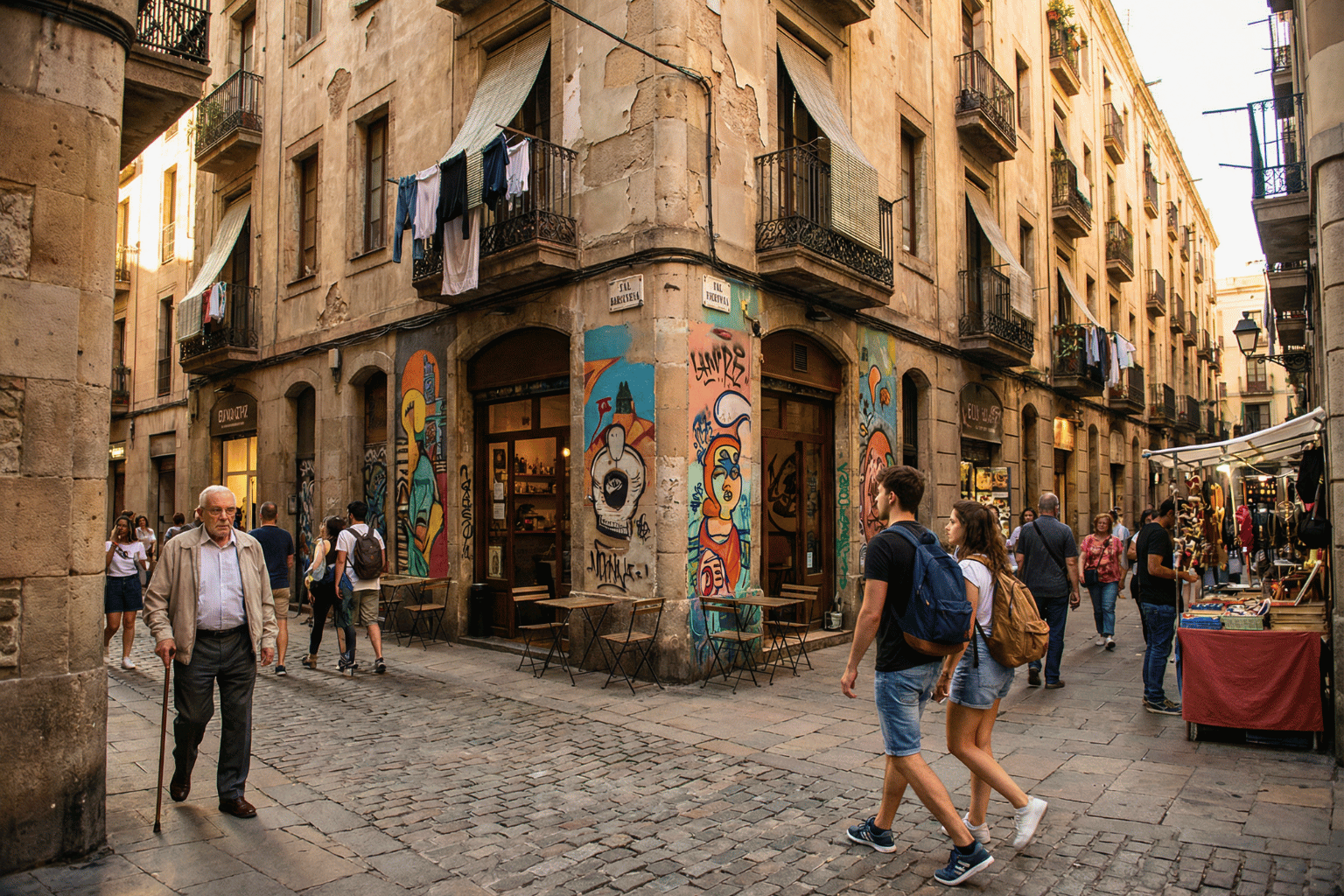
Heading west instead brings you into El Raval, one of Barcelona’s most complex neighborhoods. Once overlooked and rough around the edges, El Raval has been reshaped by culture, immigration, and reinvention.
Walking here feels different — more intense, more real. Street art covers walls, local life spills onto sidewalks, and the city feels lived-in rather than polished.
Museums, bookstores, and historic bars sit side by side. It’s not everyone’s favourite, but it’s an important part of understanding modern Barcelona.
Plaça de Catalunya: The Great Divide
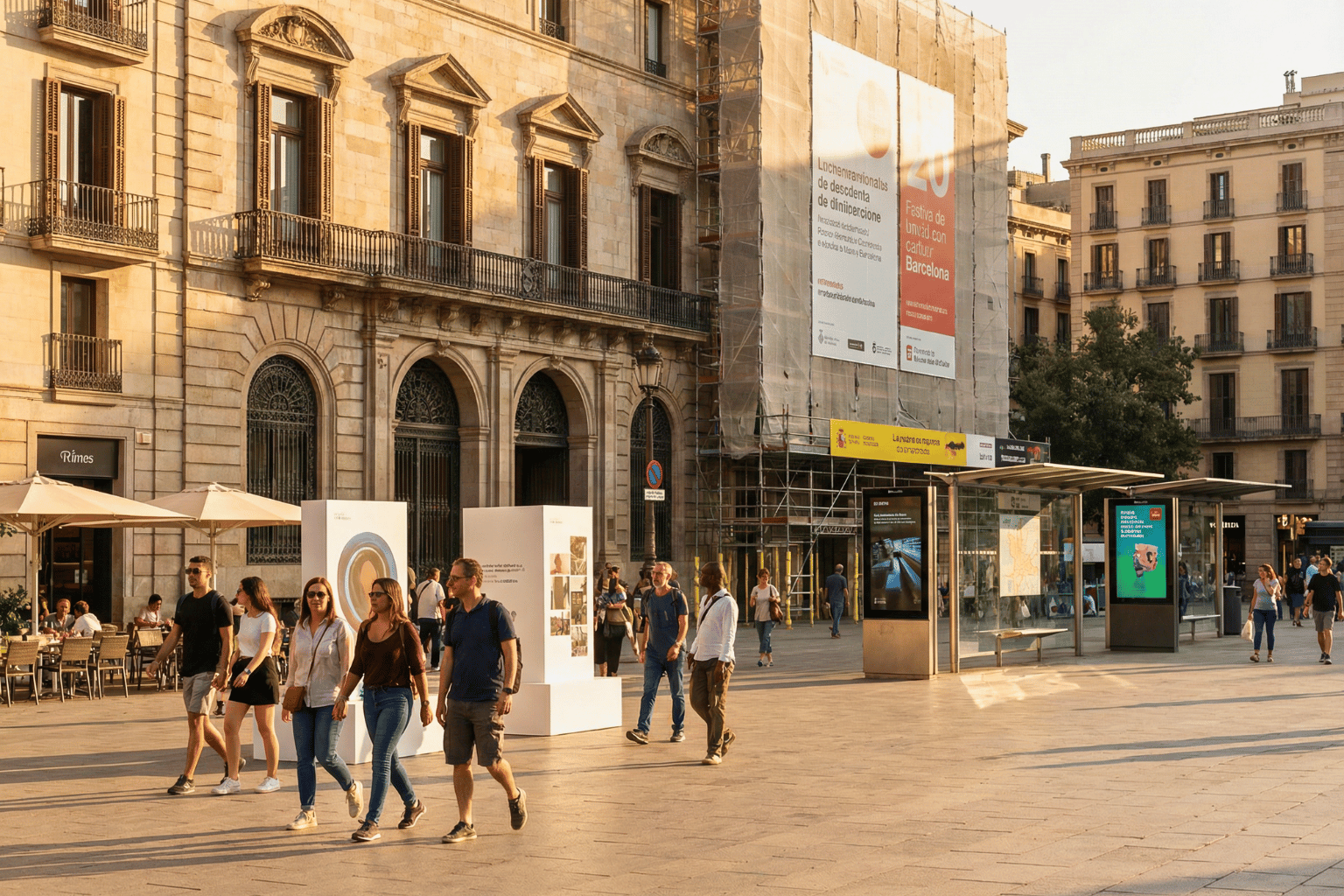
Soon, you’ll arrive at Plaça de Catalunya, and this is where the city visibly changes. Behind you lies the old city — tight, textured, intimate. Ahead of you stretches something entirely different.
Pause here. This square isn’t just a meeting point; it’s a symbolic line between Barcelona’s past and future. Once you cross it, the streets straighten, the sky opens up, and the pace of walking naturally shifts.
Entering Eixample: Barcelona’s Bold Reinvention
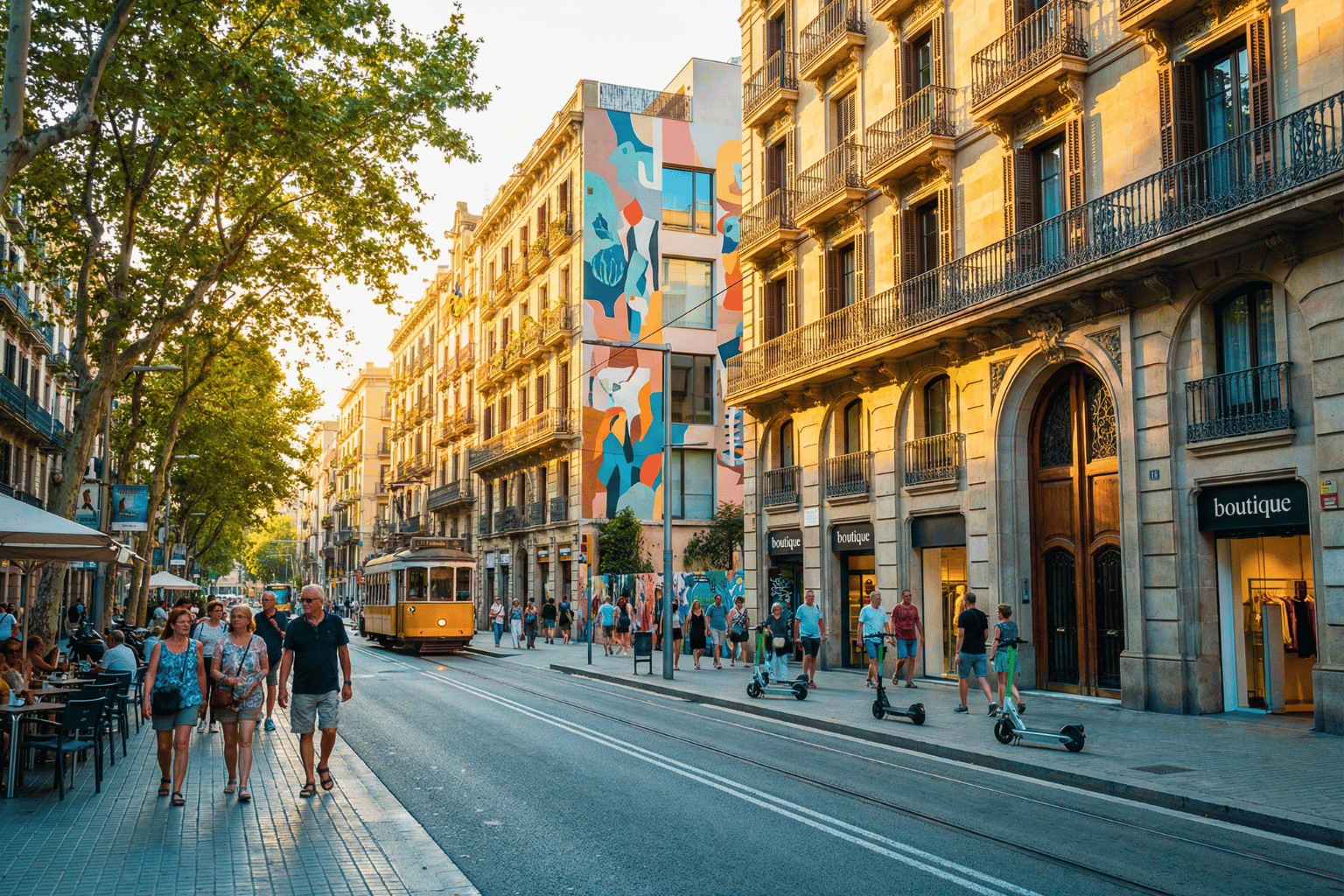
Welcome to Eixample, the neighborhood that changed everything. Designed in the 19th century by urban planner Ildefons Cerdà, the Eixample was built to bring light, air, and order to a growing city.
The grid layout is deliberate. Streets are wide, corners are chamfered, and blocks were designed with shared courtyards in mind. Navigation becomes effortless, and suddenly you’re walking with confidence instead of curiosity.
This is also where District Barcelona shows off its architectural ambition. Modernisme buildings line the streets — ornate façades, wrought-iron balconies, colorful tiles, and sculptural rooftops. Look up often; Eixample rewards attention.
From Hidden Corners to Grand Statements
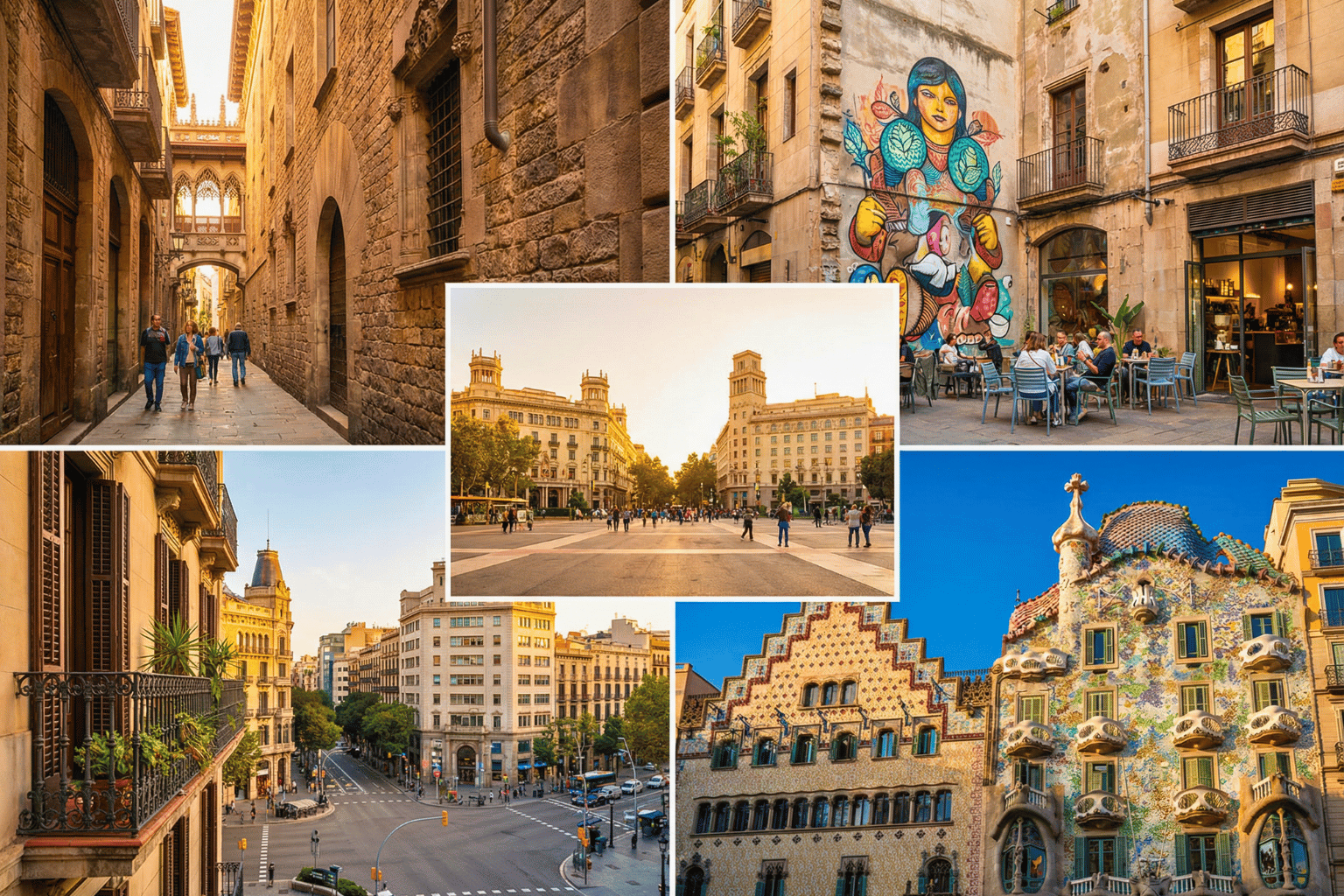
What makes this walking tour of Barcelona special isn’t just the places you visit — it’s the transition itself. You physically feel the city evolving beneath your feet.
The Gothic Quarter hides. El Born invites. El Raval challenges. Eixample declares. Each neighborhood reflects a different idea of what Barcelona once was — and what it wanted to become.
Tips for Walking This Route Comfortably
To explore the best areas of Barcelona, slip into comfortable shoes — the streets are mostly flat, but the city has a way of tempting you to walk just a little farther. Pause in shady plazas, keep some water handy, and take your time. This isn’t a checklist walk; it’s about letting the city change gently around you as you go.
If you want context, stories, and gentle direction without being rushed, a self-guided walking tour of Barcelona is an ideal companion. It lets you pause, wander, and explore at your own rhythm.
Final Thought: A City Best Read on Foot
Barcelona isn’t a city you conquer — it’s a city you read, page by page. Walking from the Gothic Quarter to the Eixample lets you experience centuries of history in a single afternoon.
By the time you reach the wide boulevards, you won’t just know where you are — you’ll understand how Barcelona town
became what it is today..

Comment (0)