

2 Hours
Daily Tour
Unlimited
English, French, German, Italian, Spanish
Walk Barcelona’s grandest streets and see how art, planning, and everyday life collide — with clear directions, flexible pacing, and zero rush. Barcelona’s Eixample is where the city stretches out, breathes, and shows off. On this self-guided walking tour, you’ll explore wide boulevards, octagonal corners, and some of ... Read more
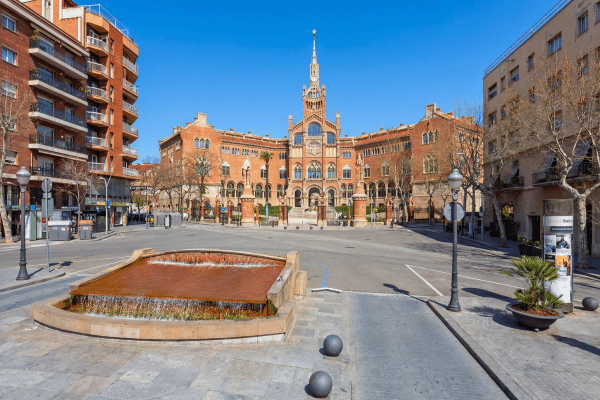
A calm stone fountain sits quietly across from Sant Pau, curving low and elegant. It doesn’t shout for attention — it cools the street, slows the pace, and gently welcomes you into Eixample.
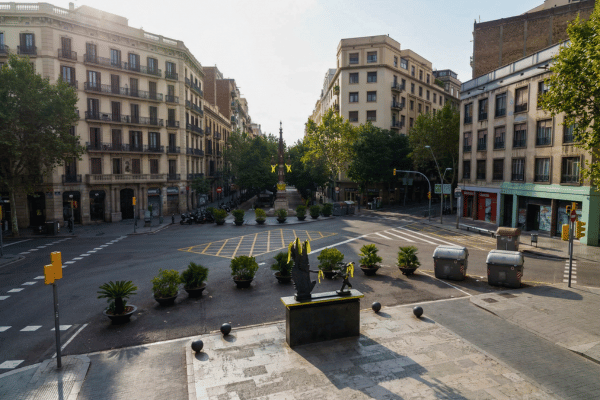
Two bronze figures twist mid-motion in the road — hope chasing chaos. Smooth versus jagged, light versus dark, this sculpture freezes a powerful idea right in the middle of daily life.
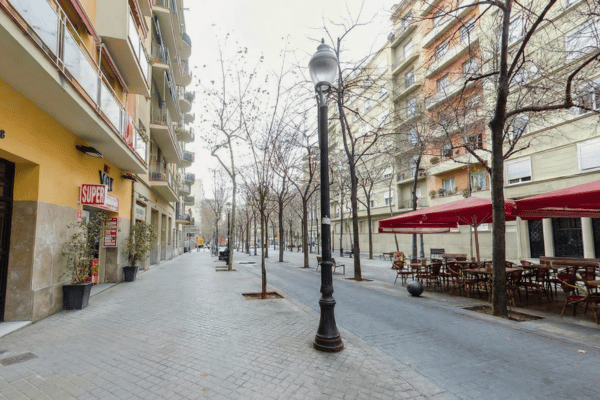
Ahead, the skyline changes. Spires rise like living forms, twisting toward the sky. This is where Gaudí’s world begins — where buildings grow, breathe, and refuse to behave like stone.
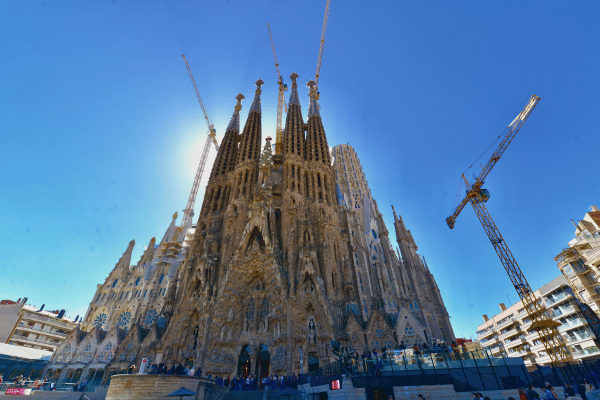
Nothing prepares you for this. Towers soar, stone ripples, and carvings crowd every surface. Half church, half sculpture, this is Gaudí’s lifelong dream — still growing, still astonishing.
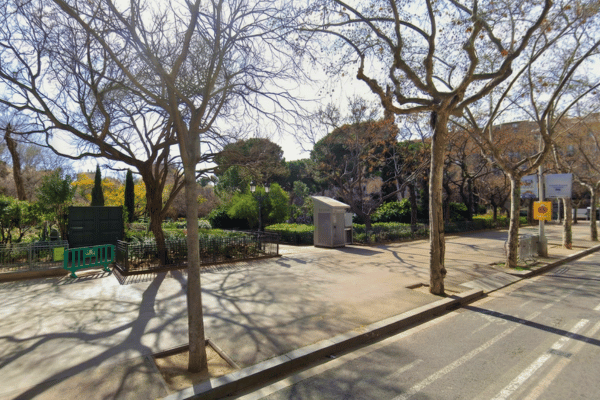
From the back, the basilica feels even wilder. As you walk on, remember: this is Catalonia — proud, creative, expressive. Football, language, art — identity lives loudly here.
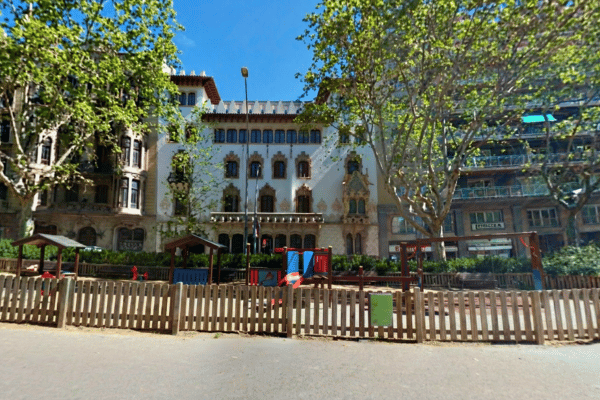
White, refined, and quietly confident, this Modernista palace rewards close looks. Gothic arches, carved stone, and a serene courtyard inside — and yes, you can step in for free.
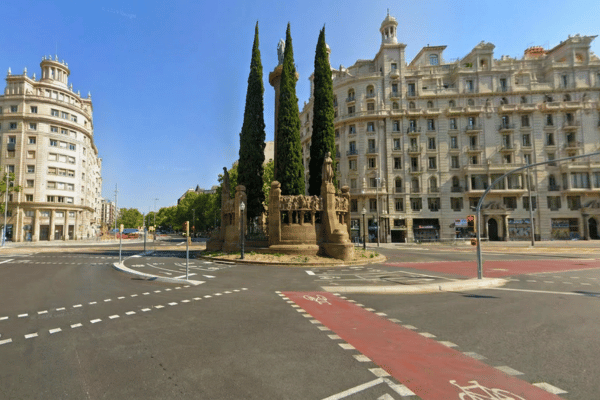
A poet watches over traffic from a tall monument ringed by cypress trees. Look up — culture sits at the center here, with a surprise neon owl glowing nearby like a wink.
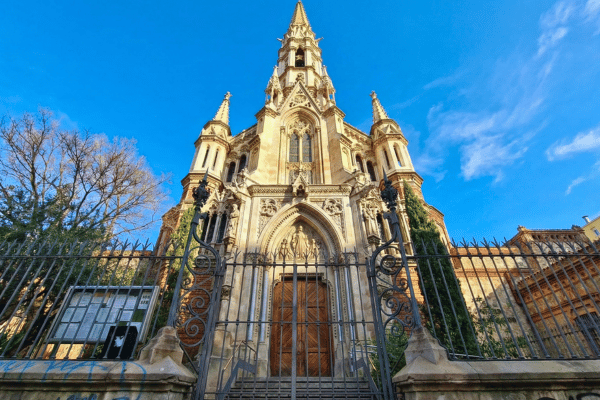
Red brick, pointed arches, and a slender spire rise gracefully here. Designed by Gaudí’s teacher, this Neo-Gothic church bridges medieval inspiration and Barcelona’s Modernista future.
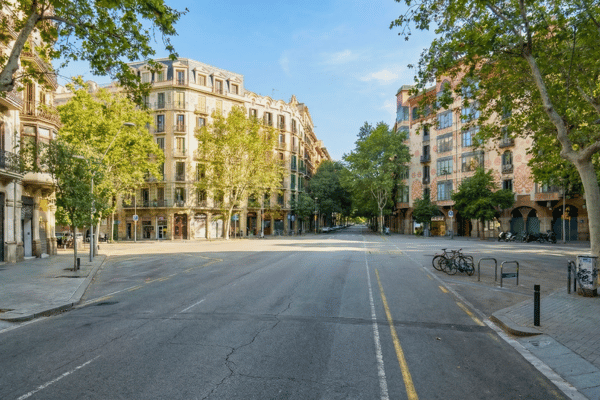
Soft sgraffito patterns, glass bay windows, and oriental details wrap this corner building. It’s Modernisme with restraint — elegant, confident, and designed to catch light from every angle.
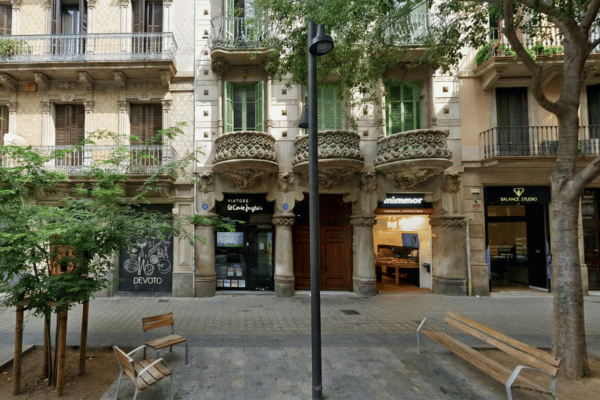
Curving balconies stack like sculpted waves, crowned by a Gothic crest. Small but packed with personality, this Domènech i Montaner gem turns an ordinary corner into a celebration.
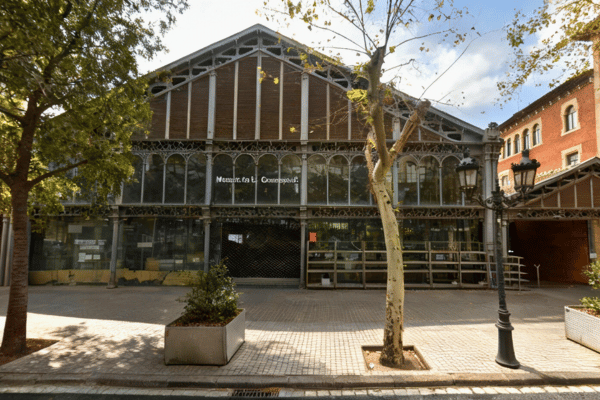
Iron, glass, flowers, noise, and color — this 19th-century market feeds Eixample daily. Step inside for fruit, jamón, flowers, and a slice of everyday Barcelona life.
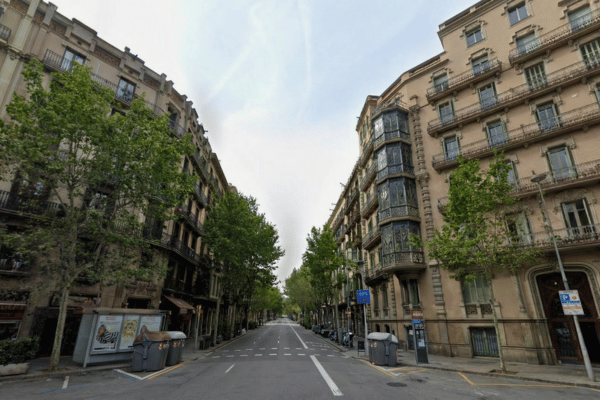
Glass-wrapped corner balconies glow with stained light. Floral ironwork and symmetry meet decoration here — bourgeois housing elevated into art, perfectly shaped for the Eixample grid.
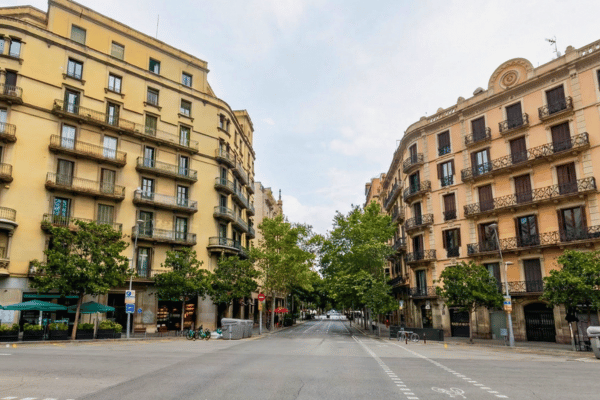
Calm stone, glowing ceramics, and balanced lines give this mansion Italian elegance. Once a private palace, now public offices — proof Eixample buildings love second lives.
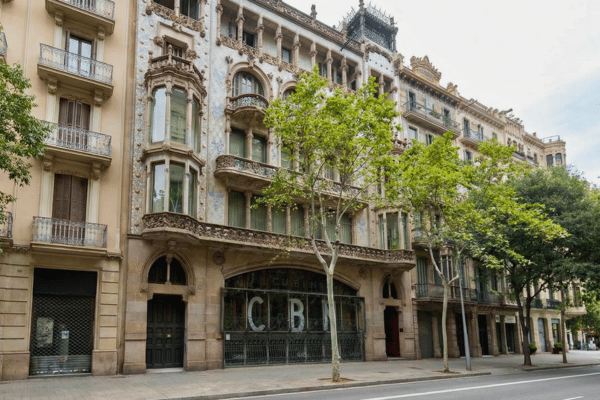
Dragons, eagles, iron vines, and a dramatic arched entrance — all wrapped around a former print shop. Modernisme meets industry here, and the building still buzzes with creativity.
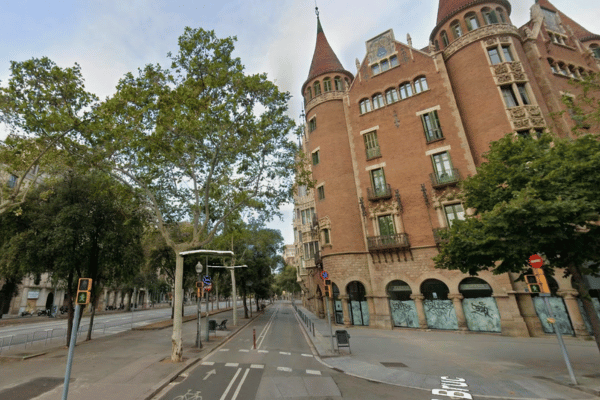
A fairytale castle in the middle of the grid. Six spiked towers, dark brick, and a dragon-slaying Saint Jordi turn this Modernista icon into pure Catalan legend.
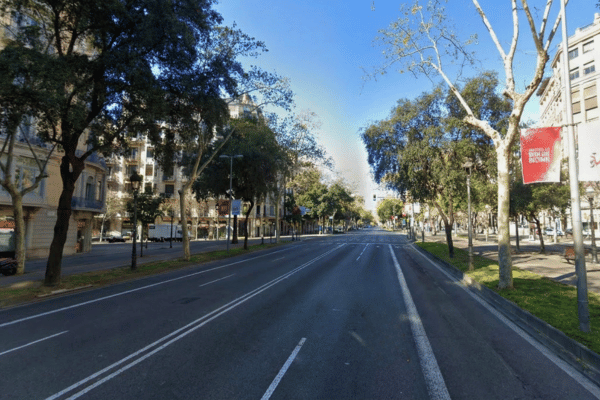
Barcelona breaks its own rules here. This diagonal boulevard slices through the grid, once for parades, now for bikes, cafés, and daily life — bold urban planning in motion.
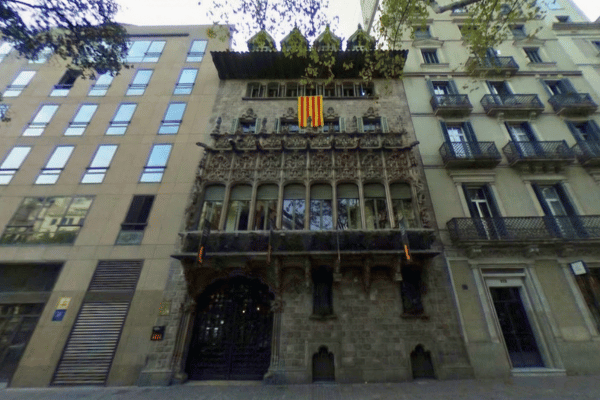
One side feels medieval and serious, the other playful and colorful. Two buildings, two moods — Puig i Cadafalch’s gravitas meets Modernisme’s joyful last flourish.
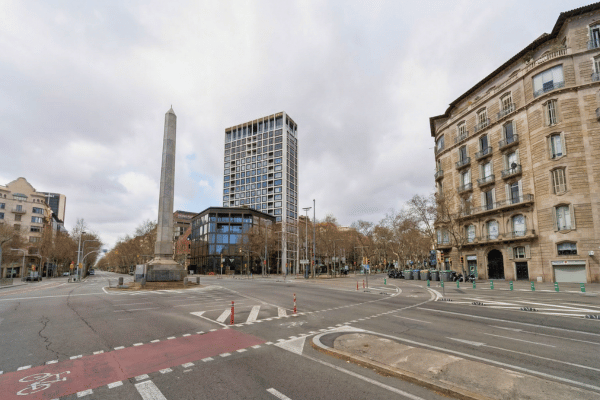
Nicknamed after a playing card, this square hides political drama. The tall “pencil” monument has worn many symbols — proof that even traffic circles remember history.
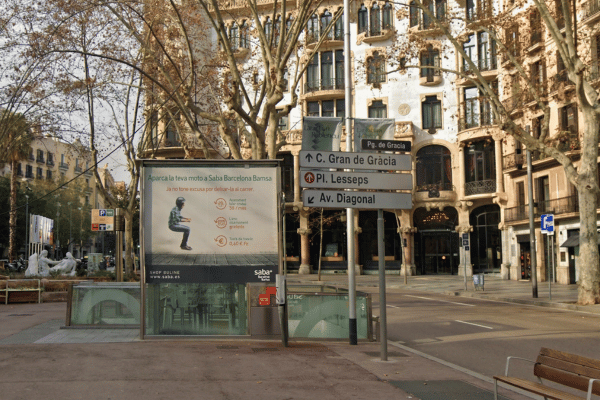
A quiet green pause with a reading woman carved in marble. This gentle tribute to language and learning reminds you Barcelona celebrates ideas, not just buildings.
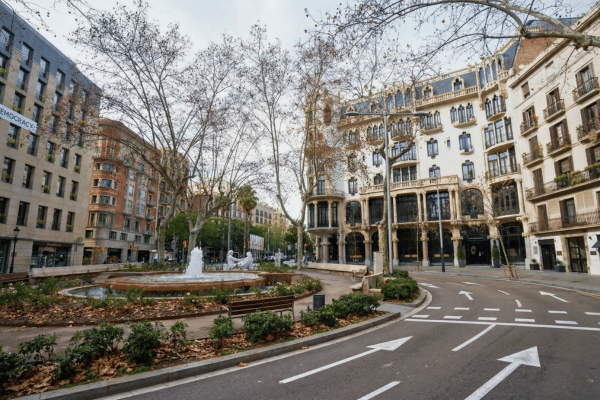
White marble, sculpted columns, corner towers — once the city’s most expensive home, now a luxury hotel. Saved from demolition, it still steals the spotlight with ease.
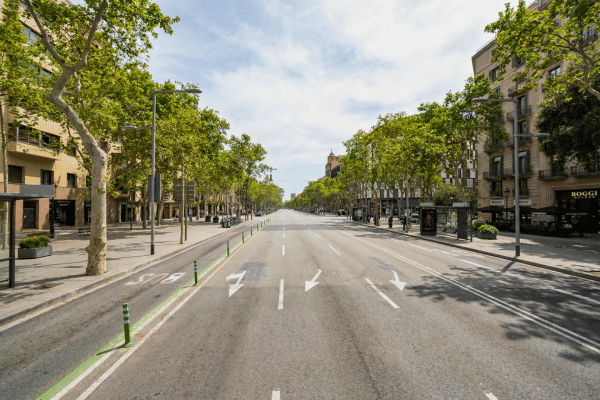
Streetlamps that double as benches — only in Barcelona. Sit here and you’re resting on Modernisme itself, designed to light streets and invite lingering conversations.
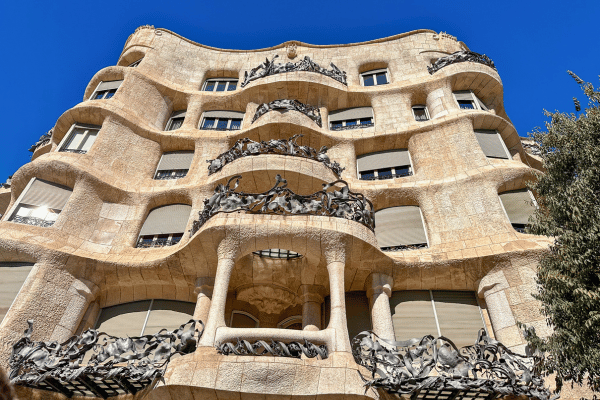
The building that refuses straight lines. Stone waves, iron seaweed balconies, and a rooftop full of sculptural chimneys — Gaudí turns a home into a living landscape.
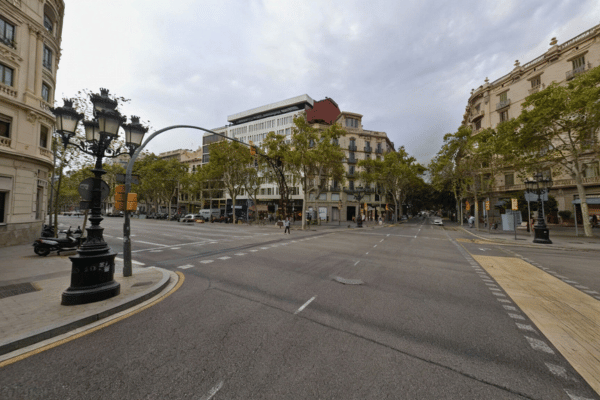
Elegant, classical, and composed, this early Passeig de Gràcia residence shows how wealth first announced itself — symmetry before curves, order before Modernisme went wild.
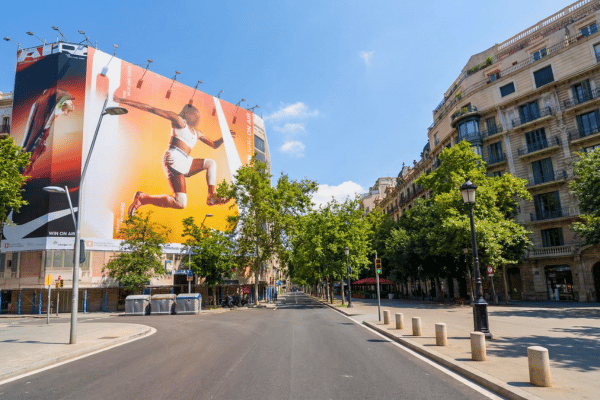
A working pharmacy wrapped in history. Stained glass, lettering, and floral details prove even medicine got the Modernista treatment — healing with beauty included.
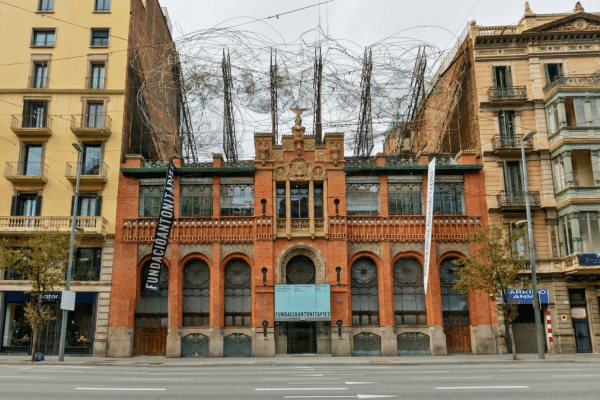
Red brick, iron columns, and a floating wire cloud topped by a chair. Industry meets ideas here, turning a publishing house into one of Barcelona’s boldest art spaces.
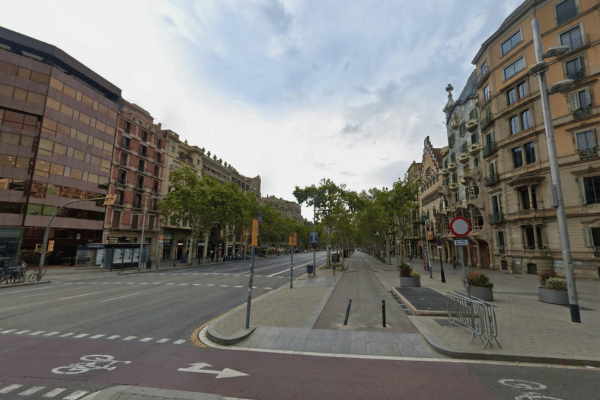
Four buildings, four egos. Gaudí, Puig, Domènech, and Sagnier compete wall to wall — flowing bones, Gothic pride, legal order, and mosaic drama all collide here.
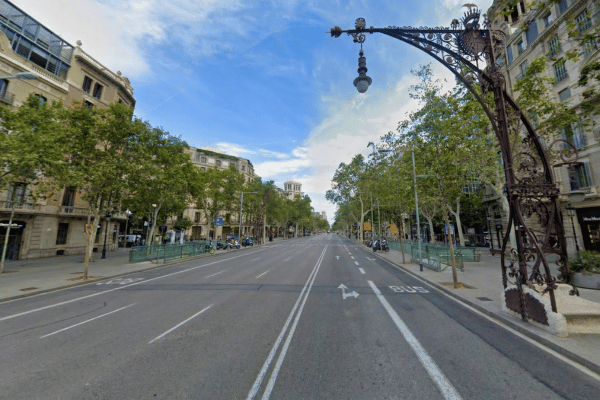
The grid softens, history thickens. Roman walls, lost Jewish quarters, and medieval streets whisper beneath modern façades — Barcelona’s oldest layers never fully disappear.
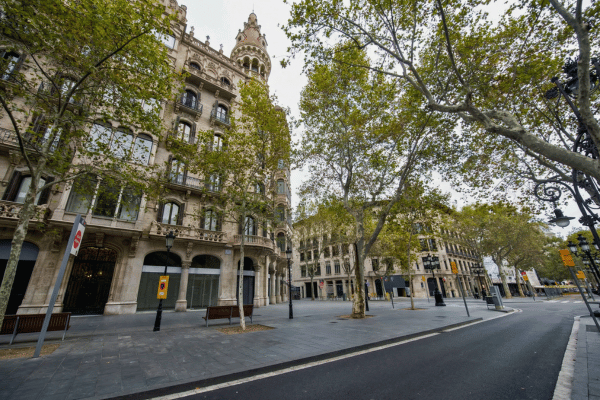
A red-brick urban castle with towers and ceramic vaults, funded by soap money. Neo-Gothic ambition on a grand scale, half hidden behind trees and traffic.
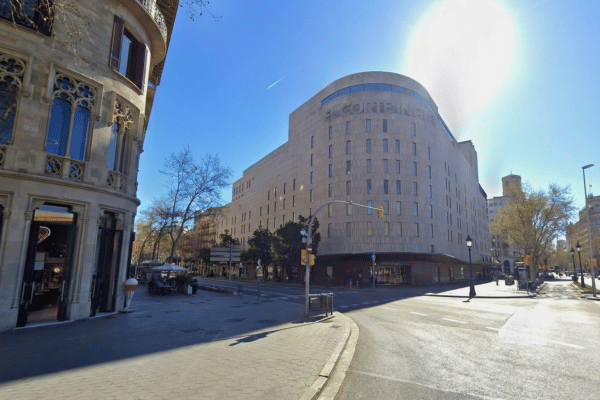
Look down. Yes, that traffic light has cartoon spies walking you across the street. A tiny joke that perfectly captures Barcelona’s love of humor and surprise.
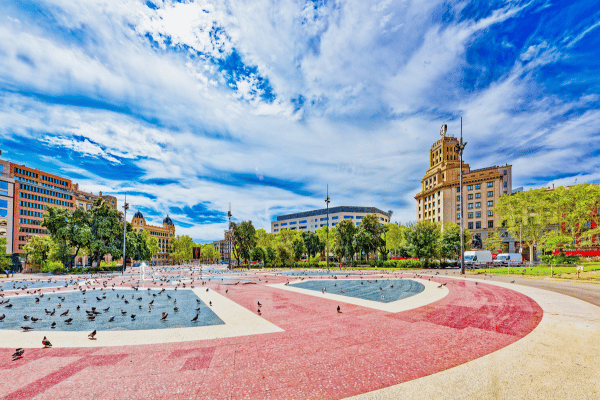
The city’s true crossroads. Fountains, sculptures, protests, pigeons, and plans collide here — where old Barcelona meets the Eixample and every journey begins again.
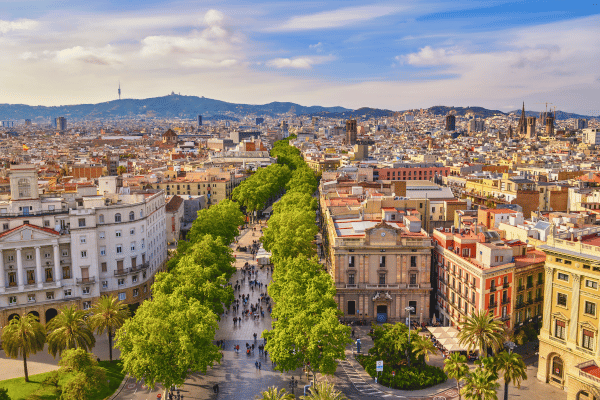
Once a riverbed, now a restless boulevard. Performers, flowers, crowds, cafés, and chaos flow nonstop — lively, noisy, unforgettable. Hold your phone tight and enjoy.

Member Since 2025
 English
 Français
  Deutsch
  Español
Leave a review