Cairns Beyond the Reef: The Port, Markets and Tropical Identity Behind the Gateway City
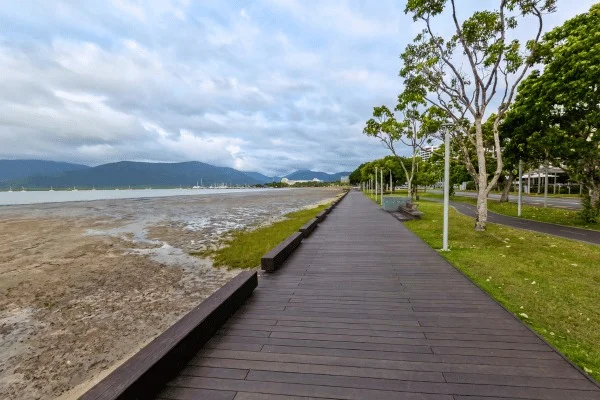
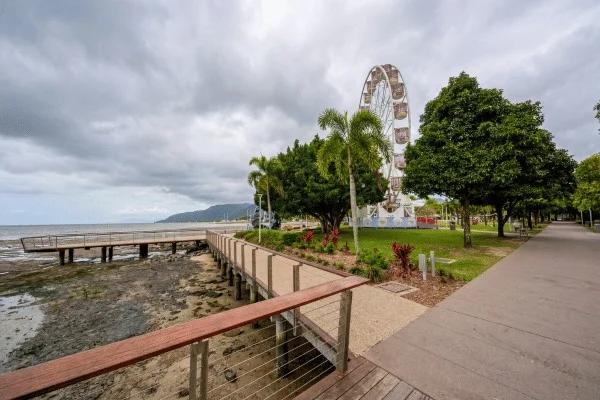
At low tide, Cairns presents a waterfront that can surprise visitors expecting a line of surf and white sand. The exposed shore, distant ranges and working inlet tell a different story. This city grew because people needed to move goods between the coast and the interior. Its later role as a base for reef and rainforest trips developed on top of that earlier transport economy.
Cairns city history is easiest to understand by looking at what passed through it. Produce travelled from farms to wharves. Railway construction drew labour and investment. Chinese families created businesses and religious institutions, while tropical conditions shaped the buildings in which people worked. The waterfront that visitors enjoy today is also the result of substantial public engineering.
Set aside time for the city alongside your trips into the surrounding region. Trippy Tour Guide's paid Cairns city walking tour adds local audio stories to that time, helping you look more closely at a place often treated as a departure point.
Gimuy gives the city a longer history
Cairns Regional Council identifies Gimuy as the traditional place name for the area occupied by the city. Its interpretation explains the name through the slippery blue fig, a tree that once grew in large numbers here. The council's accounts of Yidinji and Yirrganydji history describe relationships with coastal and rainforest environments that predate the colonial town.
This matters when looking at a map that seems to begin with surveyed streets. A European street grid records one period of ownership and administration. It does not show all the earlier ways people understood and moved through the same country. Nor does Indigenous history belong only to a period before settlement. The Gimuy Walubara Yidinji Elders Aboriginal Corporation continues cultural education and community work in Cairns.
Use the names and accounts provided by local Traditional Owners rather than treating the region as one undifferentiated Indigenous culture. The city, neighbouring coast and inland rainforest include distinct communities and histories. Reading the Esplanade's interpretation gives a visitor a more careful starting point than assuming that the city's foundation date marks the beginning of its human story.
The Esplanade looks across tidal flats towards the surrounding ranges.
A port with an uncertain beginning
The colonial township was established in 1876 to serve the Hodgkinson goldfield. Cairns took its name from Queensland governor William Wellington Cairns. The municipal account records competing early names, including Newport and Trinity Bay, before official usage settled. The city that now appears firmly established had a much less certain identity at the start.
Its initial port facilities were basic. The cultural heritage study prepared for the Cairns Shipping Development Project describes jetties extending across mangroves and mud, with sheds attached to some of them. Cairns became a warehousing port for dutiable goods in January 1877. Rival Port Douglas soon threatened its prospects because access to the interior could make that port more useful to traders.
A harbour's appearance is only part of what determines its success. Merchants also need to know how freight will reach inland customers and how produce will return. Cairns had to establish those connections before its position on the coast could sustain a town. The later civic buildings make more sense once you recognise the precarious trading settlement that came before them.
The railway tied Cairns to the interior
Competition for the railway gave the rival ports something concrete to fight over. Queensland Rail's history records railway leagues in Cairns and Port Douglas campaigning from 1882. The Barron Valley route was selected in 1884, and construction began in 1886. The section to Kuranda opened in 1891 after difficult work on the range.
The engineering story includes labour, illness and deaths. Construction accounts deserve attention alongside the views from the railway. Cutting a line through steep country required sustained physical work. The line also crossed Aboriginal Country during a period of colonial expansion, a history that cannot be reduced to the celebration surrounding the first official sod.
For Cairns, the rail connection improved the case for using its port. A coastal town could become the meeting point between shipping and inland production. The relationship still helps explain the city's geography: the waterfront belongs to a wider regional system, even when the person standing beside it is waiting for a leisure boat. Tourism later made use of connections originally built for different purposes.
Chinese farmers and Cairns Chinatown
Chinese migrants did much more than follow the northern gold rushes. Cairns Regional Council's thematic history describes their role in market gardening and in the early sugar and banana industries. It records Andrew Lee On, also known as Andrew Leon, and the Hap Wah syndicate's contribution to sugar cultivation. Chinese growers also moved crops towards the rail and shipping terminals that connected the district to markets.
That movement of food is a useful corrective to a history told only through buildings named after colonial officials. A town's survival depends on people who cultivate, carry and sell its food. Their work can leave fewer imposing monuments than government administration, but the absence of a grand building does not indicate an absence of influence.
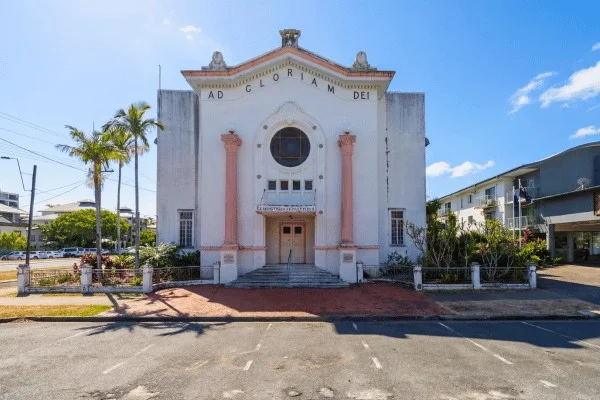
Chinese businesses developed around the street then known as Sachs Street, now Grafton Street. Shops supported economic life, while community institutions gave residents places to practise religion and maintain social ties. When looking at surviving commercial buildings, consider the wider network behind a shopfront: suppliers outside town, families across the sea and customers whose daily needs helped a business survive.
A temple collection preserves lives that buildings cannot
The Lit Sung Goong temple operated in Cairns from 1886 until 1966. The Cairns and District Chinese Association now cares for more than 240 objects from it. The collection includes furnishings, deity figures, carved panels and paintings on glass, with many pieces made in southern China and brought to North Queensland during the late nineteenth century.
Objects can answer questions that a broad migration story leaves open. A piece of ritual furniture tells us that people invested in a continuing religious life. A transported decorative panel required arrangements, money and the intention to establish something more lasting than a temporary camp. Those observations do not reveal every owner's motives, but they show why a temple collection deserves attention alongside port statistics.
Preserving the collection requires people to store, research and interpret the objects. Consult the association for current access and exhibition information rather than assuming that every object is permanently on display. Trippy's paid Cairns city audio tour offers another way to add local historical context while exploring the city.
Markets keep the city connected to its growers
Rusty's Markets began in 1975 under Emrys 'Rusty' Rees. Reporting on its fiftieth anniversary, ABC Far North described the early market's dirt floor and small group of sellers. Rees's son recalled his father's wish to give growers a place to sell directly to customers. The market developed from that practical exchange into a destination visited by residents and travellers.
A produce market makes the surrounding agricultural region visible in a way that a hotel breakfast rarely does. You can see what is being sold in quantity, ask a seller where something was grown and compare familiar ingredients with produce you have not cooked before. The useful question is often a simple one: what would you do with this at home? That starts a more grounded conversation than treating every unfamiliar fruit as a novelty.
The earlier Chinese farming history and the later market are separate episodes, with different participants and circumstances. What connects them is the ongoing need to bring regional production into city life. Check the market's current trading information before planning a visit, and leave time to look beyond a single photogenic stall.
A present day stall cannot tell you a seller's family history simply from the food on display. Let people describe their own produce and experience. If they are serving a queue, return when they have a moment. Markets remain places of work, and a visitor gets more from them by respecting the pace of the people who keep them running.
Tropical architecture is practical before it is picturesque
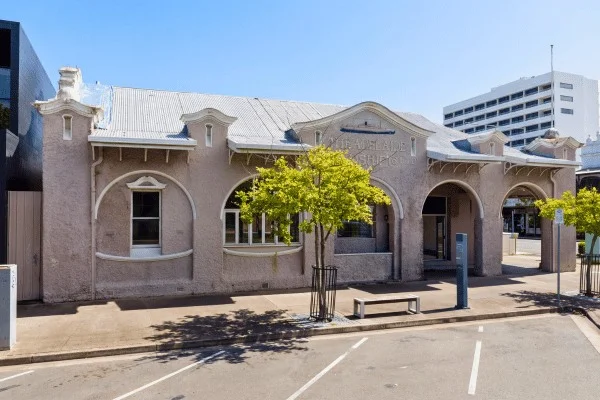
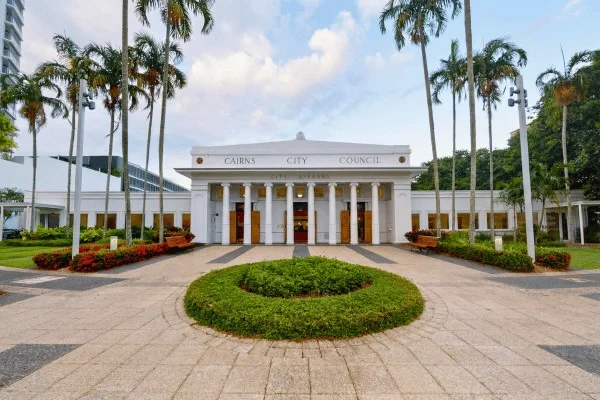
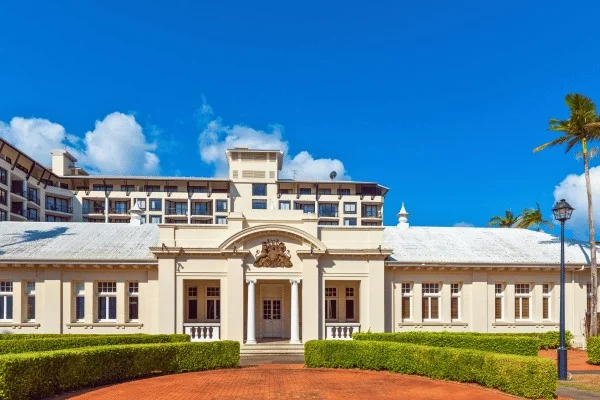
Shade changes the experience of a street in Cairns. So do the depth of an awning and the space between an enclosed room and the weather outside. Cairns Regional Council's design guidance treats verandahs, balconies and window protection as part of the city's architectural character. Its approach extends from individual buildings to the rhythm of whole streets.
Look at an older facade with those practical questions in mind. Where can a person wait out a shower? Which surfaces receive direct sun? How does a building allow an entrance to remain usable in rain? You do not need to identify an architectural style to notice how the building deals with its setting. A decorative facade may attract the camera first, while its shaded edge explains more about daily use.
The same questions apply to recent buildings and public spaces. A tropical identity cannot be supplied by palm trees alone. Comfort depends on the relationship between shelter, circulation and the places people actually need to reach. Looking at those details helps a visitor see Cairns as a working city shaped by its climate, rather than treating the climate as scenery.
How the Cairns Esplanade Lagoon changed the waterfront
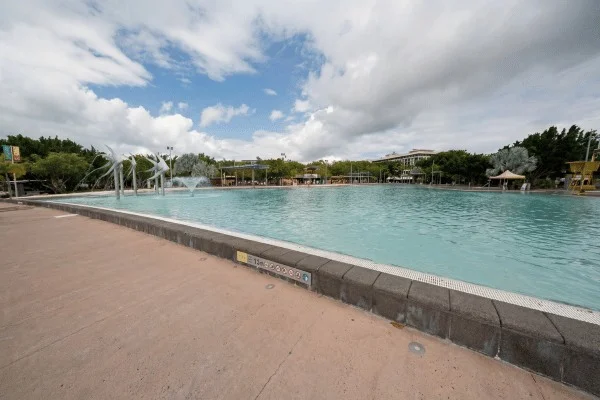
The Esplanade Lagoon opened in March 2003. Cairns Regional Council describes a substantial saltwater swimming facility within a public waterfront setting. Its existence helps explain why the city's centre can support a beachlike leisure experience without resembling a surf resort. The lagoon is a built facility beside a tidal environment, and the distinction is visible from the surrounding paths.
The wider waterfront has also been physically altered. The shipping project's land assessment records extensive reclamation around the Esplanade and port. That engineering history should not be confused with a complete explanation for the bay's changing sediment: different processes have affected the shore over time. What the evidence does establish is that much of the public ground people use today was deliberately made.
Allow enough time to enjoy the waterfront without treating it as a waiting room for tomorrow's excursion. Its old buildings and newer public spaces belong to the same city, though they answered different needs. Trippy Tour Guide's paid Cairns city walking tour can add the local stories; the changing tide and the way people use the shore provide something different each time you look.
Frequently asked questions
Why was Cairns established as a port?
The colonial town was established in 1876 to serve the Hodgkinson goldfield. Its position alone did not guarantee success: Port Douglas offered competing access to the interior. The railway later strengthened Cairns by connecting inland production with its shipping facilities. This port history sits within the much older Indigenous history of Gimuy.
Did Cairns have a Chinatown?
Yes. Chinese businesses and community life developed around Sachs Street, now Grafton Street. The surviving Lit Sung Goong temple collection preserves evidence of religious and social life alongside the area's commercial history.
Is the Esplanade Lagoon natural?
No. It is a constructed swimming facility that opened in March 2003. The adjacent shore is tidal, so the lagoon and the bay should be understood as different environments.
Is Cairns worth exploring between reef trips?
Yes, particularly if you enjoy urban history, markets and architecture. Its streets explain how farming, migration and transport helped create the regional centre that now supports tourism. An audio walking tour can provide context during a city visit.
What does the Lit Sung Goong temple collection preserve?
The collection contains more than 240 objects from the Cairns temple, which operated from 1886 until 1966. Furnishings, carved panels and deity figures preserve evidence of religious and community life that a street map cannot show. Many pieces came from southern China. Check the association’s current arrangements for access and exhibitions.