Fremantle’s Haunted Reputation: Convict Prisons, Shipwrecks and the History Behind the Legends
Fremantle's pale limestone buildings can look cheerful in the afternoon sun. Learn what some of them were used for, and their appearance can become harder to separate from their history. A prison built by the people confined within it, an asylum that later became an arts centre, and a harbour linked to dangerous voyages give the city ample material for unsettling stories.
Its haunted reputation brings visitors towards that history, but a ghost story and a documented event answer different questions. The existence of an old prison can be established through plans and records. A claim that someone heard footsteps in an empty corridor remains a reported experience. Keeping that distinction clear leaves room to enjoy the atmosphere without turning speculation into fact.
Trippy Tour Guide's paid Fremantle ghost tour offers an audio experience built around the city's darker storytelling tradition. Learning about the prison’s labour system or the asylum’s former residents gives the stories a human setting.
Walyalup has a history beyond the colonial port
The City of Fremantle identifies Walyalup as a place of continuing importance to the Whadjuk people, with connections to Country on both sides of Derbal Yerrigan, the Swan River. The area supported trade and ceremony long before the Swan River Colony was established in 1829. Local accounts also record cultural relationships with Wadjemup, now widely known as Rottnest Island.
That context matters when a visitor encounters an old colonial building described as the beginning of Fremantle's history. The building marks a change in authority and land use. It does not mark the beginning of the place. Nor should Whadjuk cultural traditions be folded into a collection of ghost tales simply because both involve stories associated with the landscape.
Colonial imprisonment is one point where these histories intersect. The Round House held Aboriginal prisoners awaiting transfer to Wadjemup. The Western Australian Government's heritage account describes this as part of a painful history of dispossession and incarceration. These were people's lives and family relationships, with consequences extending beyond the walls visible today. A thoughtful visit keeps that history in view alongside the more frequently retold stories of European convicts.
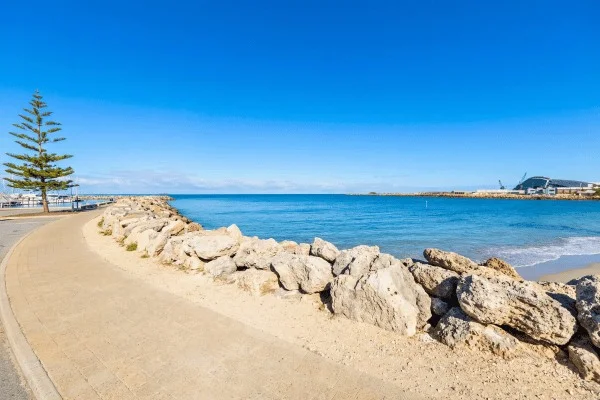
Fremantle's coast forms part of a much older Whadjuk cultural landscape.
Fremantle Prison history and the labour behind its walls
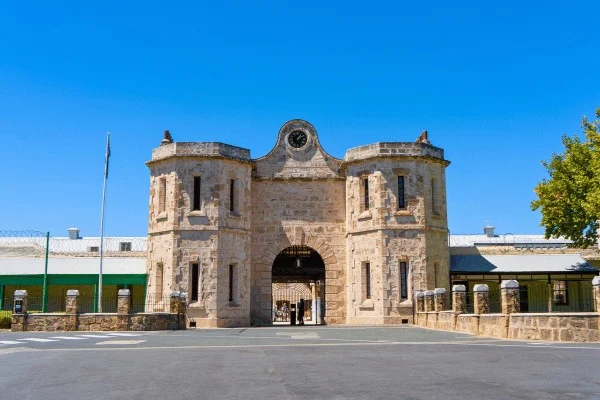
The first convict transport to Western Australia arrived in 1850. Convicts built Fremantle's Convict Establishment between 1852 and 1859, using limestone quarried on the site. The institution's role included supplying labour for colonial infrastructure. Roads and public buildings outside the prison were therefore connected to the discipline imposed inside it.
The architecture makes that control visible. A gate concentrates movement into a place where it can be observed. High walls divide people who can choose to leave from those who cannot. These ordinary functions give the building its unsettling force before any supernatural story is added. The prison's own history also records legal executions, including the hanging of 43 men and one woman; the last execution there took place in 1964.
Escape stories reveal the limits of the system. In 1867, Joseph Bolitho Johns, known as Moondyne Joe, was breaking stone for exercise after his health deteriorated. A growing pile concealed him while he made an opening in the prison's perimeter wall. He escaped and remained at large for nearly two years. The prison's historical account makes clear that this was an escape from the yard, a detail that can disappear when the story is shortened to a man defeating an 'escape proof' cell.
The Round House belongs to an earlier chapter of confinement
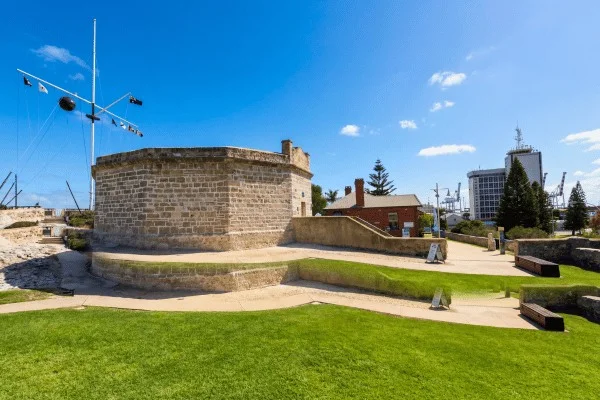
Completed in January 1831, the Round House predates convict transportation to Western Australia. That chronology prevents a common misunderstanding: an early colonial gaol was needed even when the colony had not yet begun receiving transported convicts. The building's original arrangement placed small cells around a central courtyard.
Its history includes the imprisonment of the Noongar leader Yagan and the execution of John Gavin, a fifteen year old settler convicted of murder. The government's heritage account also records overcrowding. A compact plan and an attractive coastal position can make the building appear less severe than a large prison, but its scale did not prevent it from exercising coercive power.
The surrounding ground has changed purpose more than once. Whaling interests obtained a tunnel through Arthur Head in the 1830s to connect the shore with the town. Later, the Round House survived proposals for demolition and became a preserved historic building. These changes complicate the impression of a place simply left untouched. What visitors see reflects both early construction and later decisions about what Fremantle should retain.
The paid Fremantle Spooky Stories audio walking tour adds another way to engage with the city's past. Keep the dates of individual buildings in mind as you listen to local stories; Fremantle's places of confinement belonged to different institutions and different periods.
The former Fremantle asylum and its haunted reputation
The building now occupied by Walyalup Fremantle Arts Centre began as the Fremantle Lunatic Asylum in the nineteenth century. The historic name reflects the terminology of its period, not an appropriate description of people experiencing mental illness today. The centre's own account dates the limestone building to 1864 and records the opening of the arts centre in 1973.
Its later uses included a women's home and educational activities. That changing history is easy to overlook when the building is reduced to a single sinister identity. Different residents occupied it under different arrangements, and their experiences cannot be reconstructed from the appearance of a Gothic arch alone. The arts centre now gives the rooms another purpose through exhibitions and creative work.
Claims of haunting have circulated around the building. In a 2022 ABC interview, then director Anna Reece acknowledged public interest in such stories while explaining her concern about sensationalising the site's troubling past. Her emphasis was on recovering the experiences of people associated with it. That is a useful distinction for visitors: the haunted reputation is part of how the place has been talked about, while its institutional history requires evidence and individual accounts.
Shipwreck archaeology makes a violent maritime past tangible
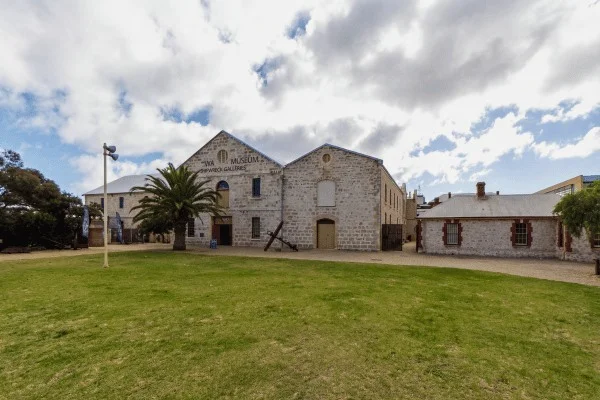
The WA Shipwrecks Museum connects Fremantle to wrecks along the wider Western Australian coast. Its collections include original timber from Batavia, a Dutch East India Company ship wrecked in the Houtman Abrolhos Islands on 4 June 1629. The wreck did not occur in Fremantle Harbour, and the distinction matters when the object is encountered far from its recovery site.
The loss of the ship was followed by mutiny and the murder of more than a hundred survivors. The museum's research records both underwater investigation and work on the islands where survivors came ashore. Archaeology can test details of an account and recover evidence that written sources leave out, though an object still needs interpretation before it can tell a visitor what happened.
The museum building has a separate connection to Fremantle's colonial administration. The Commissariat originally held government stores and was restored to house the museum in 1979. Broad Arrow marks survive on parts of its fabric, identifying British government property. A visit therefore brings together two histories: the maritime events represented by the collection and the supply system that created the building itself.
Allow time for the material details of an exhibit. A timber's scale, a tool mark or an object's recorded recovery location may explain something that a dramatic retelling misses. The violence in Batavia's history is documented; it does not need a supernatural explanation to remain disturbing.
A civic celebration was followed by a real crime
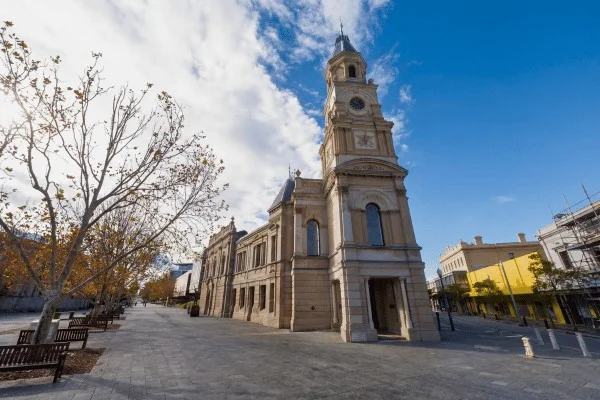
Fremantle Town Hall opened on 22 June 1887 in connection with Queen Victoria's Golden Jubilee. The State Heritage Office's account records a programme of celebration followed by a children's fancy dress ball the next evening. During the events surrounding that ball, William Conroy shot Councillor John Snook, who subsequently died. Conroy was convicted and executed at Perth Gaol.
The setting is what makes the story particularly disquieting. A public building created for civic gatherings became the location of an act of violence almost immediately after opening. The tower and ornamental exterior express one intention, while the account of the shooting preserves a very different event. Neither should erase the other.
A crime associated with a building can later become the starting point for an alleged haunting, but the two claims need separate support. A heritage record documenting a shooting does not prove a later ghost story. When a retelling adds a voice, a figure at a window or a precise final sentence, ask whether that detail comes from a contemporary account or a later storyteller. The documented event already gives the building a history more complicated than its ceremonial opening suggests.
The way a place remembers loss changes its atmosphere
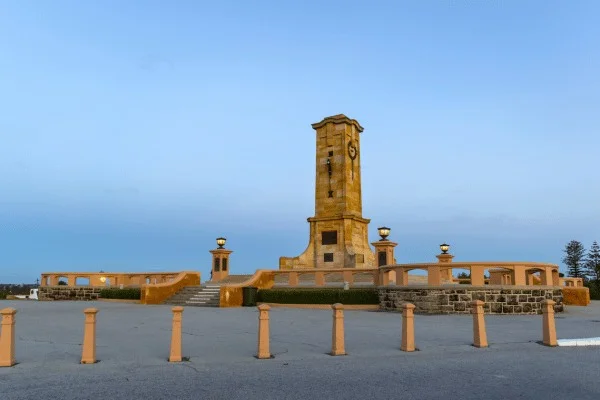
Fremantle contains places where loss is acknowledged openly through monuments, as well as buildings whose difficult history has to be explained. A formal memorial names its purpose. An old institutional wall may disclose little unless a visitor reads the interpretation. Those different forms of remembrance help explain why a city can feel familiar in daylight and unsettling after learning one particular story.
Ghost storytelling often gives a remembered person a continuing presence in a place. That can make an account memorable, but it can also reduce someone to the manner of their death. The former asylum offers a clear example of the tension: the building's haunted reputation attracts attention, while the search for former residents' histories asks for a fuller picture of their lives.
You can enjoy a suspenseful story while keeping that fuller picture in mind. Notice whether the account names a source, identifies uncertainty or treats every strange detail as established fact. A narrator's confidence is not evidence. Equally, the absence of a surviving record does not justify inventing an explanation. In a city with substantial collections and documented institutional histories, curiosity has plenty of places to go after the story ends.
Leave room for the living port around the old stories
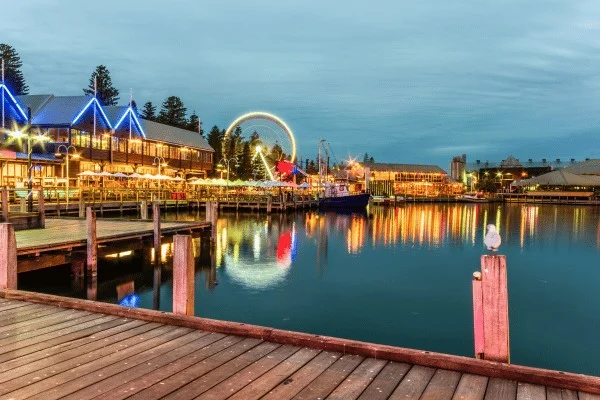
The city continues to make new uses of its maritime identity. Marcus Canning's Rainbow sculpture forms an arch from nine recycled shipping containers. Commissioned by the City of Fremantle, it turns equipment associated with freight into a conspicuous piece of public art. The work belongs to the present port as much as the surviving limestone buildings belong to its earlier periods.
After exploring the darker histories, leave time for the port’s current work and cultural venues. An arts centre has a programme to see. A civic hall still hosts gatherings. The harbour supports work and recreation. Their ongoing use prevents the city from becoming merely a backdrop for stories of people who are no longer here.
Choose the depth of interpretation that suits you and check individual venues for current entry arrangements. Trippy Tour Guide's paid Fremantle Spooky Stories walking tour provides local storytelling for an independent visit. The most lasting impression may come from recognising how close the city's ordinary daily life remains to buildings that once controlled who could enter, who could work and who could leave.

Frequently asked questions
Are Fremantle's ghost stories established historical facts?
No. Documented events and reported supernatural experiences are different kinds of claim. The prison and former asylum have well supported histories, but that does not establish that an alleged haunting occurred.
Is the Round House part of Fremantle Prison?
They are separate historic institutions. The Round House was completed in 1831, while construction of the Convict Establishment that became Fremantle Prison began in 1852.
Did Batavia sink in Fremantle?
No. Batavia was wrecked in the Houtman Abrolhos Islands in 1629. Original timbers and other material are interpreted through the Western Australian Museum's collections in Fremantle.
Can I visit the former asylum as a cultural venue?
The complex now houses Walyalup Fremantle Arts Centre. Consult the centre's current programme and visitor information for exhibitions and access arrangements. Its present cultural use is part of the building's continuing history.
Why was Fremantle Prison built?
The Convict Establishment was built to hold transported convicts and administer their labour in Western Australia. Convicts constructed it between 1852 and 1859 using limestone quarried on the site. Its responsibilities extended beyond confinement: the colonial labour system supplied workers for roads and public buildings outside the prison.