Why Manchester Became the World’s First Industrial City and What It Cost
Manchester did not become the world’s first industrial city because of one inventor, one mill or one lucky discovery. It became a machine made of many connected parts.
Canals lowered transport costs. Steam engines released factories from the limits of river power. Cotton linked Lancashire to ports, plantations and markets across the world. Warehouses gathered wealth in the centre, while railways made speed itself a commercial advantage.
The result was extraordinary. A town became a global manufacturing capital, a laboratory for new technologies and a model copied far beyond Britain. It was also overcrowded, polluted and brutally unequal. The story of the Manchester industrial revolution is therefore not a simple celebration of progress. It is a story about who gained, who paid and how a city learned to challenge the system it helped create.
For the deeper story in the streets, Trippy Tour Guide’s paid Manchester Industrial Revolution audio walking tour connects the city’s surviving industrial landscape with the people, decisions and contradictions behind it. The complete location sequence and narration remain inside the experience.
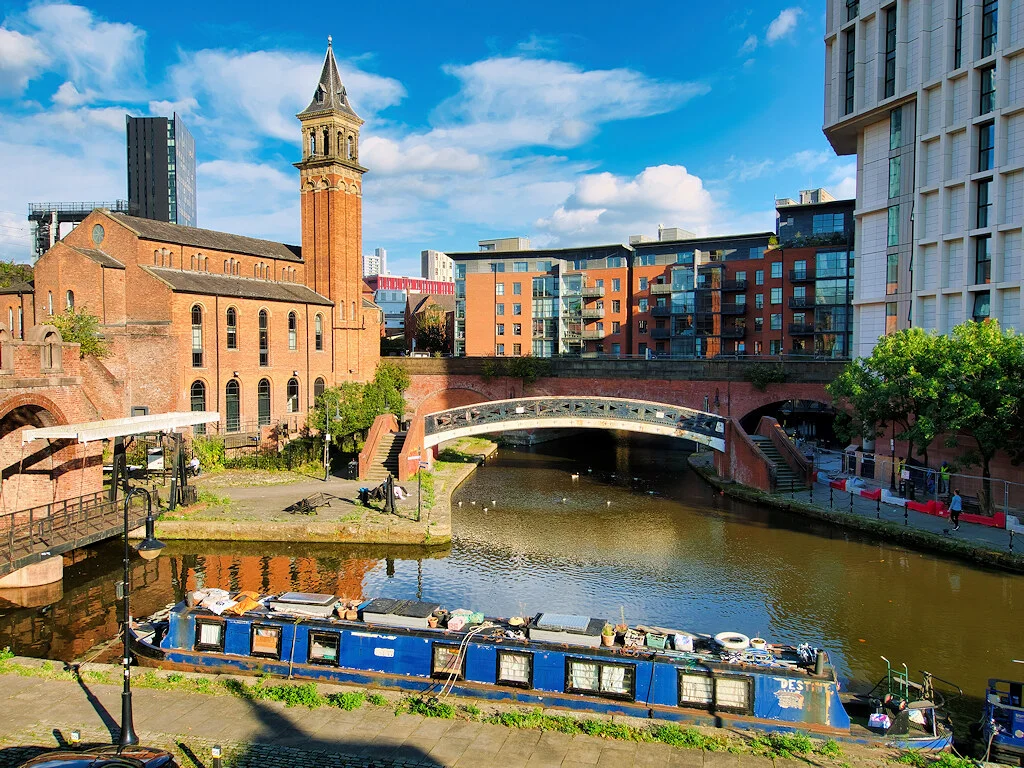
Castlefield compresses several centuries of Manchester industrial history into one view.
Why did the Industrial Revolution happen in Manchester?
Manchester combined transport, capital, labour, technology and access to global cotton markets at precisely the moment when mechanised production was expanding. Its canals moved fuel and materials, its merchants financed risk, its growing population supplied workers and its engineers built machines that could operate at an unprecedented scale.
That combination matters more than any claim that Manchester invented industrialisation by itself. The city depended on knowledge, materials, labour and markets extending from Lancashire to India, Africa, the Caribbean and the United States.
The transport revolution came before the factory skyline
Before railways and smoking chimneys defined Manchester, water changed its economic possibilities.
The Bridgewater Canal connected the Duke of Bridgewater’s coal mines at Worsley with Manchester. Castlefield became the city terminus, where boats, basins, warehouses and workers formed a new kind of transport landscape. Historic England describes the canal basin as part of the first industrial arterial canal system, a network that functioned like the major trunk roads of a later age.
Coal mattered because power had to be affordable and dependable. Moving heavy fuel by water was more efficient than hauling it over poor roads. Lower transport costs made steam powered production more practical, while canals also carried raw materials and finished goods.
The canal was not just infrastructure serving the Industrial Revolution. It helped create the conditions in which industrialisation could accelerate.
Cottonopolis was a global system
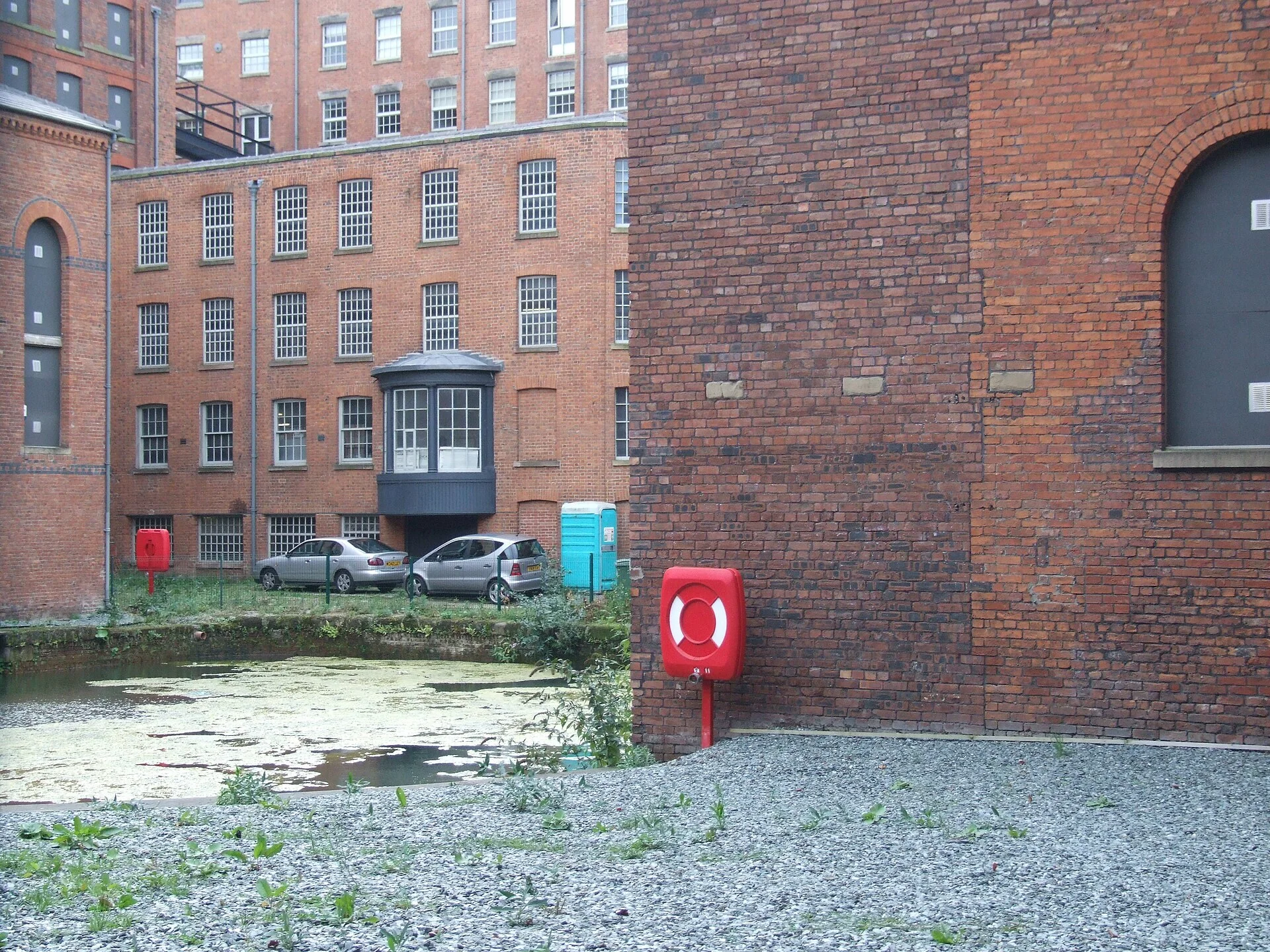
By the nineteenth century, Manchester had acquired the nickname Cottonopolis. The name captured the concentration of merchants, warehouses, mills, brokers and machinery surrounding the cotton trade.
Cotton cloth was not new. Indian producers had developed sophisticated spinning, weaving, dyeing and printing traditions long before Lancashire became dominant. Manchester’s rise involved mechanisation, aggressive commercial expansion, imperial power and access to overseas markets. It did not begin on an empty stage.
The raw fibre also carried a devastating human history. The Science and Industry Museum explains that Manchester’s prosperity relied heavily on cotton grown by enslaved people, particularly in the American South. The city’s factories transformed that fibre into cloth, while merchants and transport networks turned the cloth into profit.
This is why the phrase world’s first industrial city requires care. Manchester demonstrated the productive power of a connected industrial system, but that system joined invention to coercion. The polished warehouses of the commercial centre cannot be separated from plantation labour across the Atlantic.
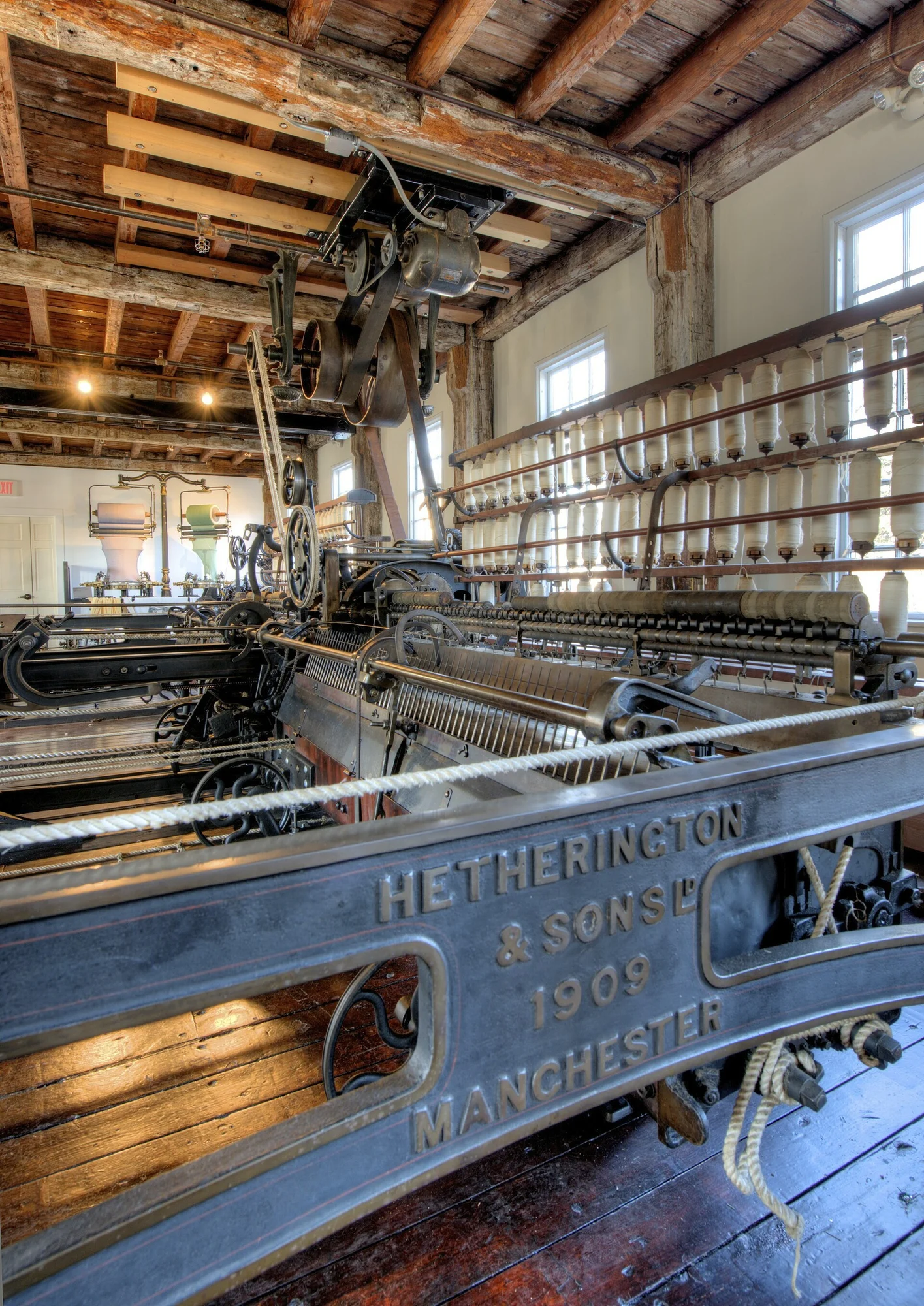
The factory changed more than production
Mechanised mills concentrated workers, machines and power inside large buildings. This made it possible to coordinate thousands of spindles and produce at a scale that domestic workshops could not match.
It also reorganised time.
In a home based system, work might follow daylight, household demands or the pace of an individual craftsperson. In a steam powered mill, the engine set the rhythm. Starting late, pausing or making an error could lead to lost wages or fines. The worker adapted to the machine, not the other way around.
The factory system therefore changed everyday life as much as it changed manufacturing. It affected family routines, discipline, noise, movement and the meaning of a working day. Children were part of this workforce until reformers forced Parliament to introduce greater protections. The Factory Act of 1833 barred textile factories from employing children younger than nine and limited hours for older children, although enforcement remained difficult.
Manchester produced more cloth, but productivity came with a new struggle over who controlled time and whose health could be sacrificed for output.
Railways made Manchester faster than its rivals
The Liverpool and Manchester Railway opened in 1830. Its Manchester terminus at Liverpool Road survives as part of the Science and Industry Museum site.
The railway tightened the connection between Liverpool’s port and Manchester’s factories and warehouses. Raw cotton could move inland more rapidly, while manufactured goods travelled outward toward national and international markets. Passenger travel and communication also became more predictable.
This was more than a faster version of the canal. Railways created a new expectation that distance could be compressed by timetables, standardised operations and mechanical speed.
The city that had learned to organise production around the engine now helped organise movement around it.
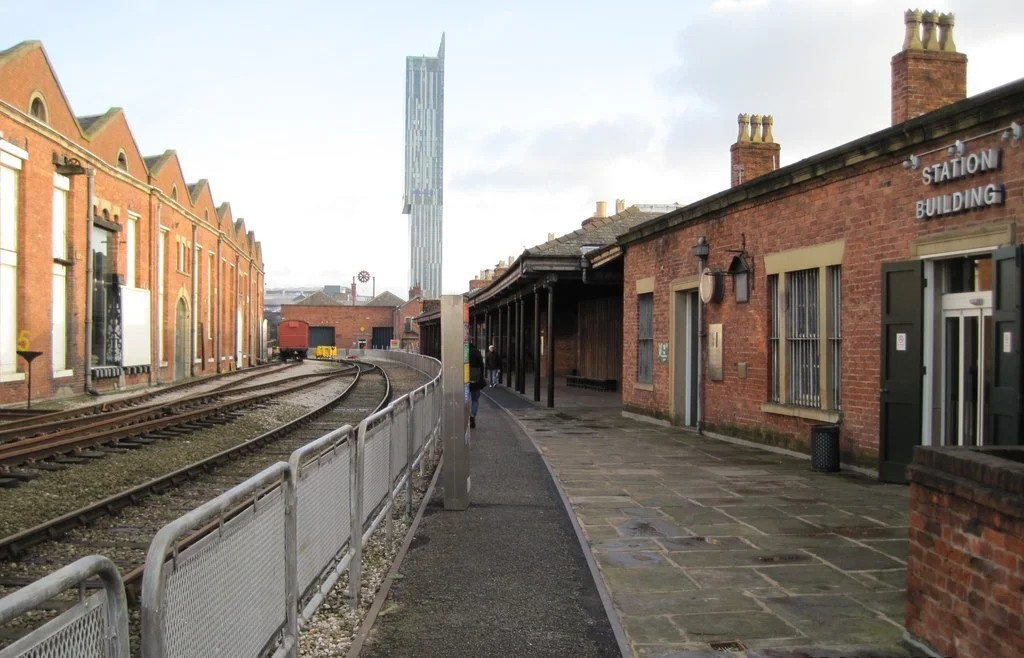
Walk through the decisions that created industrial Manchester
The paid Manchester Industrial Revolution audio experience adds human stories and historical context without publishing the tour sequence in this article.
The workers paid for growth with their bodies
Industrial Manchester grew too quickly for safe housing, sanitation or public health systems to keep pace. Workers crowded into districts near factories, sometimes living in cellars and small rooms with poor ventilation and contaminated water.
The Science and Industry Museum records that Manchester’s population grew from about 60,000 in 1800 to 142,000 by 1842. In 1837, the Manchester Statistical Society calculated an average age of death of only seventeen for the labouring population.
Those figures expose the central contradiction of the industrial city. Manchester generated wealth on a global scale while many of the people operating its machines lived in conditions that shortened their lives.
Pollution was part of the cost. Coal smoke darkened buildings and damaged lungs. Waste entered streets and waterways. Cholera and other diseases spread through neighbourhoods without adequate sanitation.
The industrial city looked like the future because no earlier city had combined production, population growth and environmental damage so intensely.
Peterloo revealed the political price
Economic power did not automatically bring political representation. In 1819, Manchester had no members of Parliament of its own, even though its population and importance were growing rapidly.
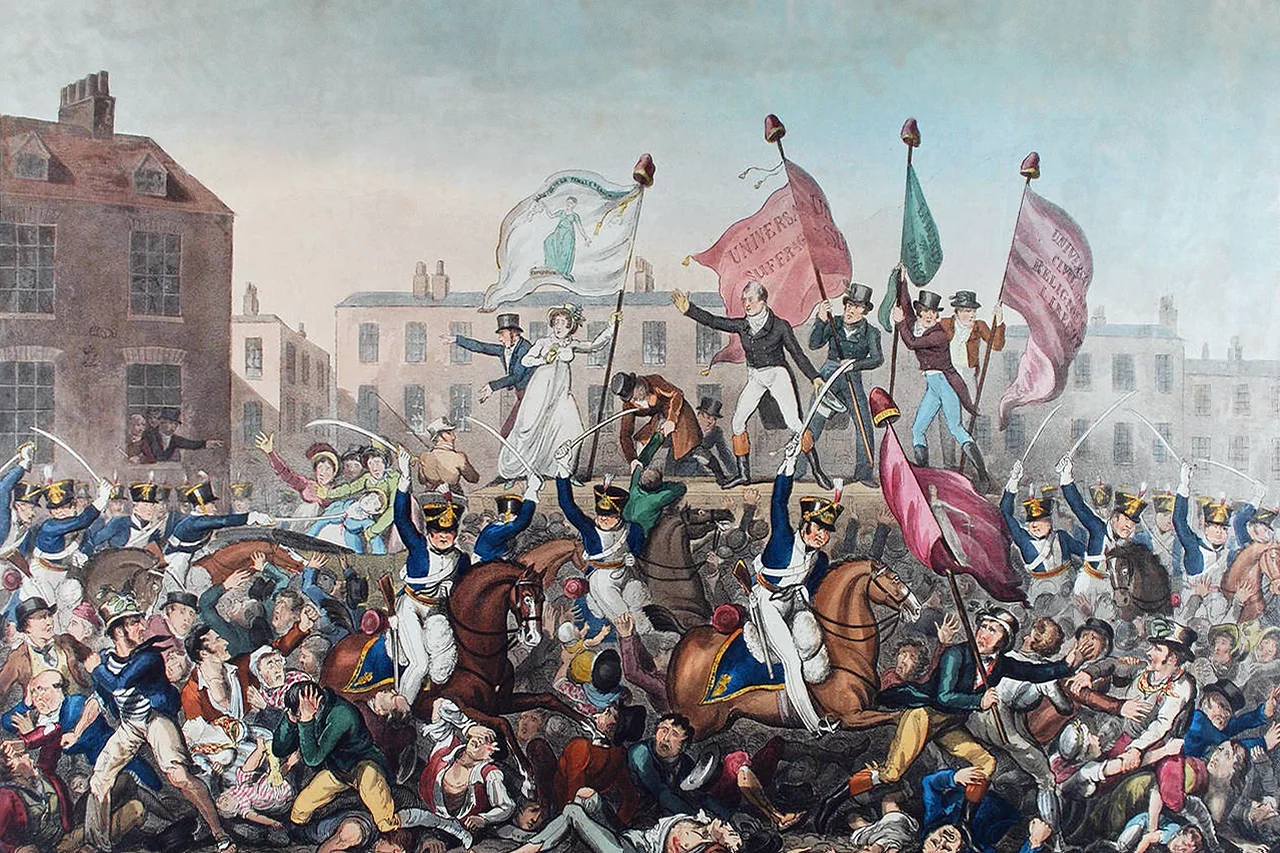
On 16 August, around 60,000 people gathered peacefully at St Peter’s Field to demand parliamentary reform. Armed cavalry charged the crowd. The National Archives records that eighteen people were killed and as many as 700 were injured.
The event became known as the Peterloo Massacre, a bitter comparison with the celebrated military victory at Waterloo.
Peterloo belongs inside the story of industrial Manchester because politics and industry were inseparable. New urban populations were producing national wealth while lacking a meaningful voice in the government that protected property and restricted protest.
The city’s factories helped create a large working class. Peterloo demonstrated what could happen when that class demanded recognition.
Manchester could challenge the trade that enriched it
Manchester’s relationship with slavery was deeply contradictory. Its growth depended on slave grown cotton, yet the city also became an important centre of abolitionist campaigning.
The contradiction became especially visible during the American Civil War. The Union blockade disrupted cotton supplies, mills closed and workers suffered through what became known as the Lancashire Cotton Famine.
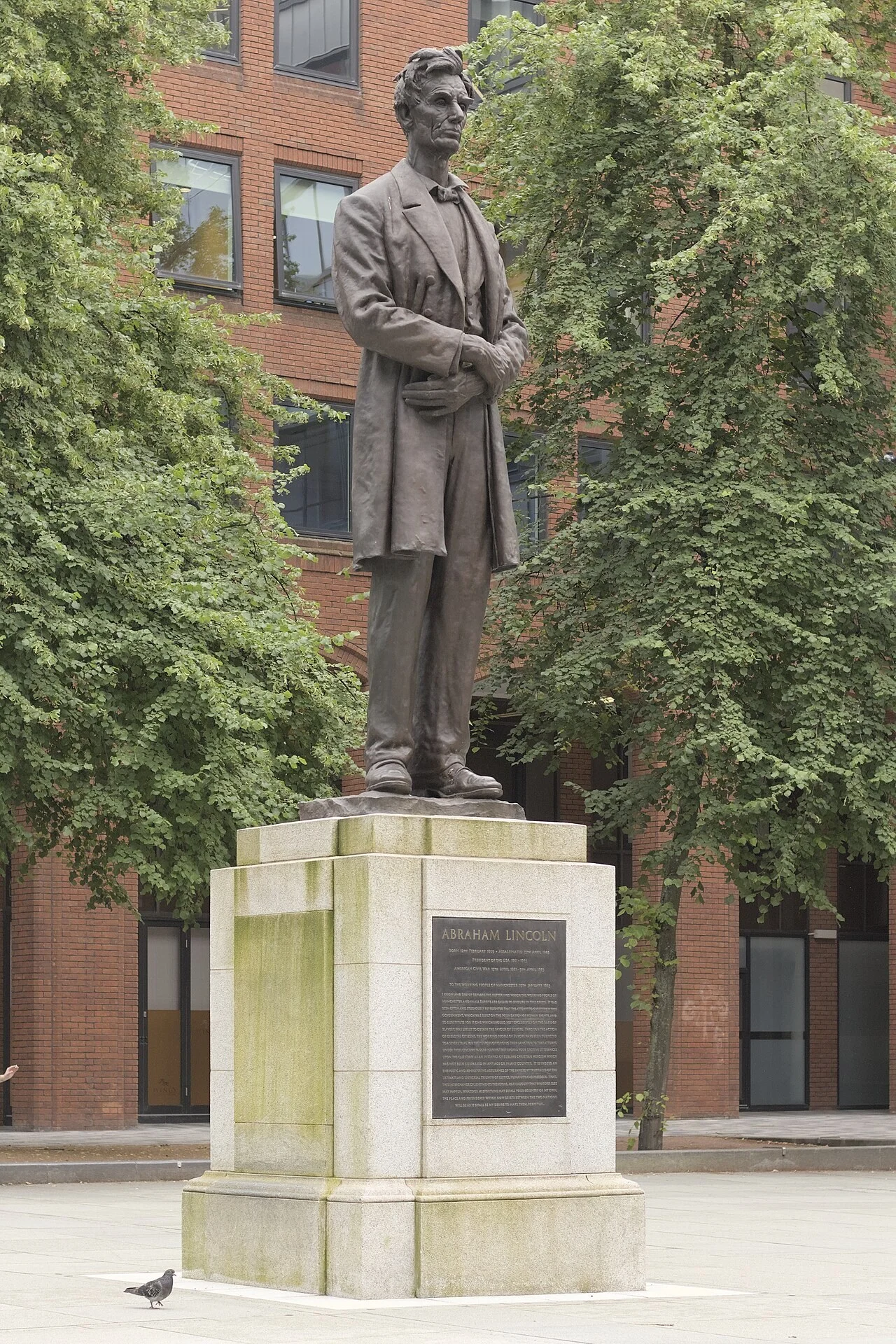
Despite that hardship, thousands attended a major public meeting in Manchester on 31 December 1862 and expressed support for President Abraham Lincoln and the antislavery cause. Lincoln replied in January 1863, acknowledging their position.
The story should not be simplified into a claim that everyone in Manchester agreed. Merchants, newspapers, politicians and workers held competing views. The city was arguing with itself about a system from which it had profited.
That argument is represented today by the Abraham Lincoln statue in the city centre. It asks visitors to hold two truths together: Manchester benefited from enslaved labour, and people in Manchester also organised against slavery.
Industrial wealth became culture and civic ambition
Manchester’s industrial fortunes did not remain inside mills and account books. Wealth shaped libraries, universities, galleries, civic buildings and public monuments.
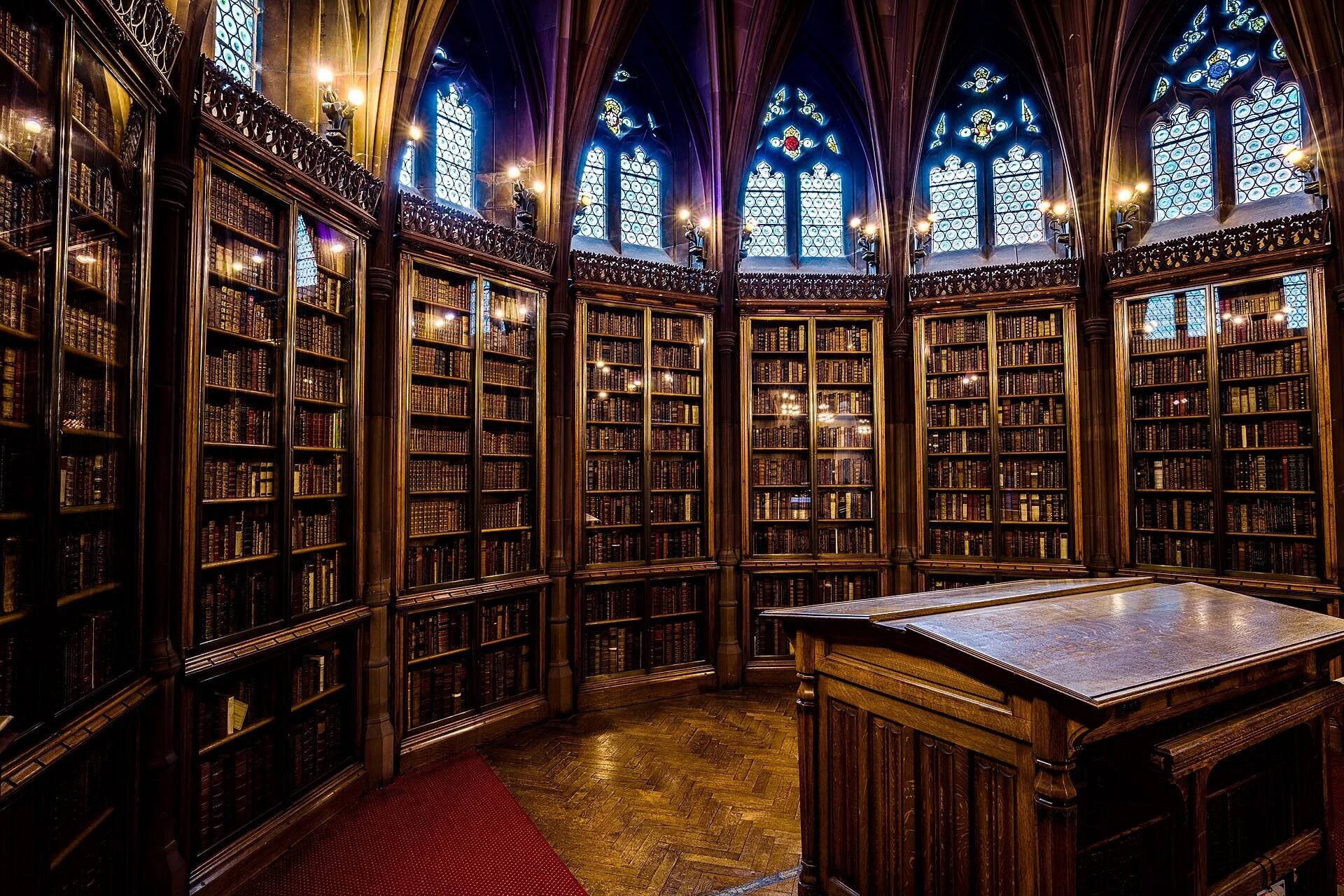
The John Rylands Library is one of the most powerful examples. Enriqueta Rylands founded it in memory of her husband, the cotton manufacturer John Rylands. Designed by Basil Champneys, the neo Gothic library opened in 1900 after a decade of construction.
The building looks deliberately removed from the factory. Stone vaults, stained glass and rare books create the atmosphere of a cathedral. Yet its existence is inseparable from cotton wealth.
That makes the John Rylands Library history especially revealing. Industrial money could purchase cultural permanence, turning commercial success into architecture intended to outlive the market that created it.
Why the worker bee still fits Manchester
The bee became associated with Manchester as a symbol of energetic, coordinated industry. It appears in civic decoration across the city, including mosaics and architectural details.
The symbol works because industrial Manchester depended on collective labour. No merchant, engineer or mill owner could create Cottonopolis alone. The system required thousands of hands to build machines, unload boats, tend spindles, keep records, move goods and maintain warehouses.
But the bee can become misleading if it turns difficult labour into a cheerful emblem. Manchester’s workers were not silent parts of a hive. They formed associations, demanded reform, supported campaigns and challenged the conditions imposed on them.
The strongest interpretation of the bee is therefore not obedience. It is interdependence.

Manchester’s greatest invention was the industrial city itself
Manchester mattered because it brought separate changes together at urban scale.
The canal, mill, engine, warehouse, railway and commercial office became parts of one system. That system produced remarkable innovation and wealth. It also produced overcrowding, pollution, exploitation and political conflict.
Modern Manchester has reused many industrial buildings and waterways. Former mills hold homes, offices and cultural spaces. Castlefield’s canals sit beneath rail viaducts and beside modern towers. The city continues to reinvent itself using the structures left by earlier transformations.
Seeing that landscape without context can make industrial heritage feel picturesque. Understanding it changes the view. Brick, iron and water become evidence of a revolution that connected invention to empire and profit to protest.
To hear those connections where they happened, explore the city with Trippy Tour Guide’s paid Manchester Industrial Revolution audio walking tour. The experience provides the complete on location narrative while this article gives you the larger historical argument.
Frequently asked questions
Why is Manchester called the world’s first industrial city?
Manchester combined mechanised factories, steam power, transport networks, warehouses, a rapidly expanding workforce and global trade on an unprecedented urban scale. The whole city became organised around industrial production.
What was Cottonopolis?
Cottonopolis was a nineteenth century nickname for Manchester. It described the city’s dominant role in cotton manufacturing, trading, warehousing and textile machinery.
What can you still see from Manchester’s industrial past?
Manchester retains canals, railway structures, warehouses, mill districts and civic buildings created from industrial wealth. Castlefield, Ancoats and the commercial centre show different parts of that history.
How was Manchester connected to slavery?
Manchester’s cotton industry relied heavily on raw cotton grown by enslaved people, particularly in the American South. The city also developed an influential abolitionist movement, creating a history defined by both dependence and opposition.
Is this article the same as the Manchester audio tour?
No. This article explains the wider historical argument. The paid Manchester Industrial Revolution tour contains its own location sequence, navigation and narration.