Perth Beyond the Skyline: Gold, the Swan River and the Stories Behind the City
Perth's glass towers can make the city seem younger than it is. At street level, a different scale appears: a brick clock tower beside an office block, a small church beneath mature trees, an ornate facade surrounded by newer construction. These buildings came from different economies and different ideas about what a capital should be.
The Swan River gives those changes a setting. It was a source of food and a means of movement long before the British colony of 1829. Later, gold found far inland brought people and money through the coastal capital. Perth history includes journeys along the Swan River and business arriving from the inland goldfields; both left buildings in the city streets.
Trippy Tour Guide's paid Perth cultural and historic walking tour adds local stories to the buildings around you. The city rewards a mixture of broad views and close observation: the Mint explains how inland mining reached the capital, while the Town Hall brings convict labour into a familiar civic setting.
Swan River history before the colonial city
Derbarl Yerrigan, the Swan River, is part of Whadjuk Noongar Country. The City of Vincent describes its importance for food and movement, and records its place in Waugal creation narratives. These are continuing cultural relationships. A history that begins with a European ship arriving leaves out the knowledge through which people had already understood and used the waterways for generations.
Place names can help a visitor recognise that difference. An English name may describe what an arriving outsider noticed; a Noongar name can belong to a different body of knowledge altogether. Neither a skyline photograph nor a colonial plaque can explain that knowledge on its own. Seek interpretation provided by Noongar people, and take care to distinguish their accounts from later retellings by tourism businesses.
The river later carried trade between colonial settlements. Guildford stood at the furthest navigable point on the Swan and became an inland port linking Perth with farming districts. The City of Swan records the arrival of steamboats in 1857. That traffic gives a waterfront view another dimension: the water beside the modern city once formed a transport corridor with busy destinations upstream.
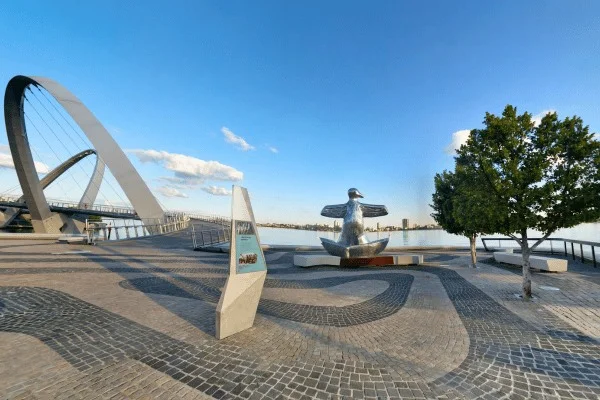
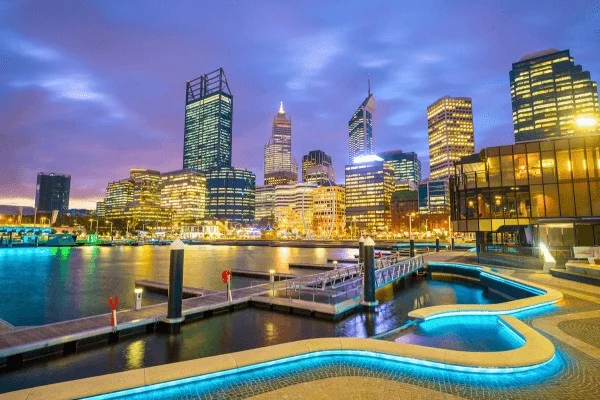
Waterfront paths and bridges are recent additions to a much older river setting.
A colonial capital beside the Swan
British colonisation established the Swan River Colony in 1829. The Western Australian Museum describes the early arrivals as a mixture of retired servicemen, professionals and people who came as artisans or servants. The settlement struggled to grow. The orderly confidence of a surviving colonial building should therefore be read alongside the uncertainty of the enterprise that paid for it.
Guildford's early plan borrowed the form of an English country town, an indication of what colonists hoped to reproduce in a new setting. Its location between the Swan and Helena Rivers shaped its commercial role more directly than that imported ideal. Perth, too, developed within a river system whose channels and navigable reaches imposed practical limits on where goods could travel.
Colonial development also changed who could occupy and control land. Describing the settlement as a beginning without naming the existing inhabitants makes that transfer sound uncomplicated. Keep the dates on civic plaques in their proper scope: they usually record the beginning of an institution or a European building. They cannot serve as the beginning of the place itself, however confidently the lettering presents them.
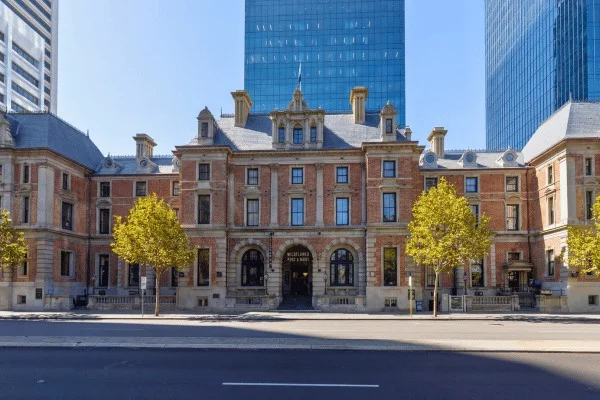
Convict labour beneath civic pride
Western Australia received convict ships between 1850 and 1868. The State Records Office preserves material about this system, including the administration of prisoners and tickets of leave. Those records are a reminder that convict history extends beyond a prison wall. Labour was assigned to projects that shaped how a growing colony functioned, and the people doing it had lives that cannot be reduced to a picturesque building tradition.
Perth Town Hall opened in 1870. The state heritage record names Richard Roach Jewell and James Manning in its design history and records the use of convict labour above foundations laid by other tradesmen. Its undercroft originally accommodated a food market. Later uses included shops and municipal functions, so the building's familiar appearance has coexisted with considerable change inside.
The Town Hall's undercroft brought everyday trade into a civic building. Its later occupants included fire engines and municipal offices before shops occupied the space in 1924. Those occupations changed what people encountered beneath the tower, keeping its lower floor involved in the practical business of the city. Food stalls, emergency equipment and shop counters each required something different from the same ground level space.
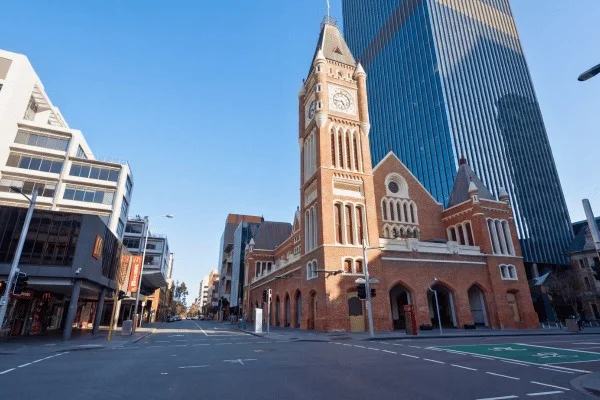
Gold arrived in Perth through people and business
The gold rushes of the 1890s brought a large influx of migrants to Western Australia. The Western Australian Museum notes that many came from Australia's eastern colonies, with others arriving from southern Europe and elsewhere. The mines lay away from Perth, yet their demand for supplies and services helped reshape the capital. Gold could affect a street without ever being dug from the ground beneath it.
The railways changed the river's commercial geography just as gold was enlarging Western Australia's economy. Guildford lost river trade after railway development in the 1880s, and the growth of Midland Junction in the following decade weakened its former importance. Prosperity moved unevenly: a new transport connection could expand business in one place while reducing the advantage of another.
Migration also means more than an increased population figure. New arrivals bring skills and expectations, then encounter the housing and employment actually available. Some intend to remain; others hope to earn enough to move on. When you look at an older commercial block, imagine the practical transactions that would have filled it: finding a room, arranging supplies, sending money or seeking information about the next opportunity.
Perth Mint history: turning gold into money
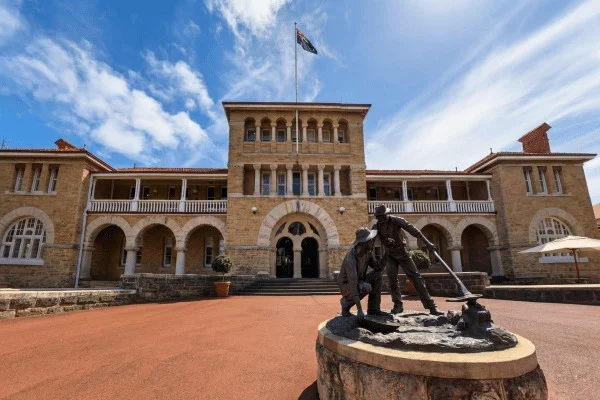
The Perth Mint opened in 1899 after John Forrest pressed for a local branch of the Royal Mint. Its own history records the production of gold sovereigns for circulation across Australia and the British Empire. Refining and minting made Perth a place where material from the goldfields could become a standardised, recognisable form of money.
Between 1899 and 1931 the Mint produced more than 106 million gold sovereigns. Britain then left the gold standard, and the institution's work changed. By 1940 it was producing Australian pennies. These shifts make the building a useful place to think about money as a system of public decisions and manufacturing, as well as a material that prospectors hoped to find.
The building is worth considering in that context before focusing on gold's glamour. Its formal architecture presents reliability, an important message for an institution handling valuable metal. For more background while exploring the city, the paid Perth cultural and historic audio tour provides a way to connect individual places with local stories. Check the Mint separately if you want an interior exhibition visit, since an audio walking tour and attraction admission are different purchases.
Religious buildings break up the commercial street
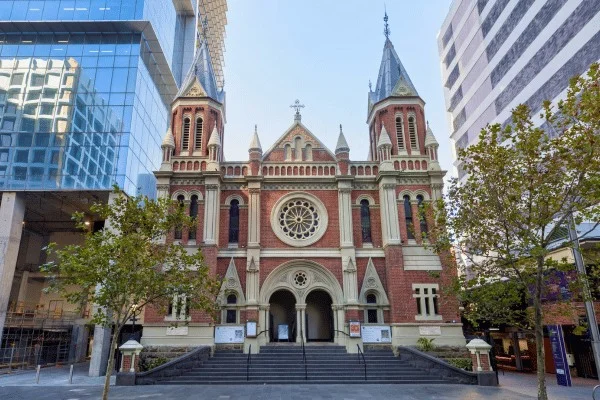
A church between office towers makes the change in Perth’s building scale easy to see. The older roofline remains visible between the repetitive floors of its newer neighbours. At pavement level, the difference is visible in the size of the doorways and the intervals between windows. An older building can retain a recognisable shape even when its neighbours have altered the setting almost completely.
Notice how religious architecture directs attention upward through pointed openings or a tower, then compare that movement with the repetitive floors of an office block. Both can be tall, but they organise a facade differently. At pavement level, steps may create a pause between the street and the entrance. A tree can preserve a sheltered patch even where construction has grown much larger around it.
Churches also remain places used by congregations. If a door is open, read the visitor information before entering and respect worship or private events. From outside, brickwork and window shapes offer plenty to examine. A frontage with a strong central entrance can hold your attention even when much taller neighbours occupy most of the sky behind it.
Kings Park puts the skyline in perspective
The land now called Kings Park has long cultural significance for Whadjuk Noongar people. The park authority records names including Kaarta Koomba and explains that the area remains a ceremonial and cultural place. Parts of the land were reserved for public purposes early in the colonial period, while subsequent landscaping and memorials added further uses.
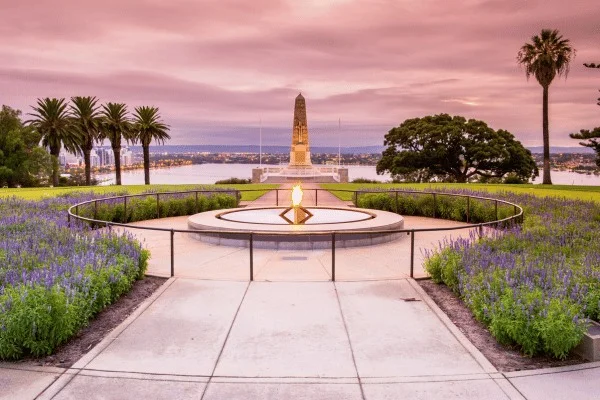
The State War Memorial's granite cenotaph was unveiled in 1929. Its undercroft records more than seven thousand service personnel who died in the First World War, while other walls commemorate Western Australians lost in later conflicts. The obelisk gives the memorial a conspicuous shape from a distance; the names bring that public form back to individual lives.
The surrounding memorial precinct developed over decades. The Court of Contemplation opened in 1955, and Queen Elizabeth II lit the Flame of Remembrance in 2000 using a flame brought from the Australian War Memorial in Canberra. The familiar photograph of a flame, water and skyline therefore combines several separate acts of remembrance. Allow enough time to read the inscriptions as well as taking in the outlook.
Read the joins between old and new
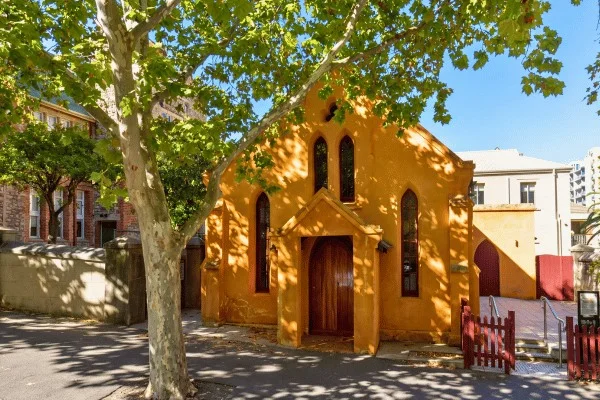
The most revealing detail in a heritage street is sometimes the join between buildings. An older wall may meet a new glass surface; a modest entrance may survive beneath a much larger development. These junctions show the decisions involved in keeping parts of a city while changing others. Preservation can mean retaining a whole building, a frontage or a public use, and those choices produce different experiences.
The Mint offers one precise comparison with those smaller buildings. Its original premises were designed by George Temple Poole, and its formal frontage advertised the seriousness of the work inside. The Town Hall expressed a different public purpose through its tower and market undercroft. Comparing these institutions gives the architecture a specific context: assessing precious metal required a different setting from accommodating civic meetings and everyday trade.
Perth's history includes the river's older cultural life, the coercion behind colonial construction and the movement of people during a gold boom. Those histories meet in a city still being rebuilt. Trippy Tour Guide's paid Perth walking tour can accompany that closer look, with time afterwards to revisit the building or riverside view that interested you most.
Frequently asked questions
Did the Perth gold rush happen in the city centre?
The goldfields needed supplies, transport and financial services, bringing business and migrants through Perth. The Mint opened in 1899 to refine gold and produce sovereigns. Looking at these institutions helps explain why gold rush prosperity changed the capital even though the major discoveries were inland. The river and railways carried other forms of trade through the same region.
Was Perth a convict settlement?
The Swan River Colony began in 1829. Convict transportation to Western Australia followed later, from 1850 to 1868. Keeping those dates separate avoids treating the whole colonial period as one unchanged system.
What does the Swan River add to a history visit?
It makes movement, food resources and Whadjuk Noongar cultural relationships part of the picture. The river is an older setting than the streets that now face it.
Can I explore Perth history on foot?
A city walk suits close observation of older buildings and their modern neighbours. The paid Trippy tour is an audio option; check its current product details and individual attraction arrangements when planning interiors.