Van Gogh in Arles: 7 Paintings and the Places That Changed His Art
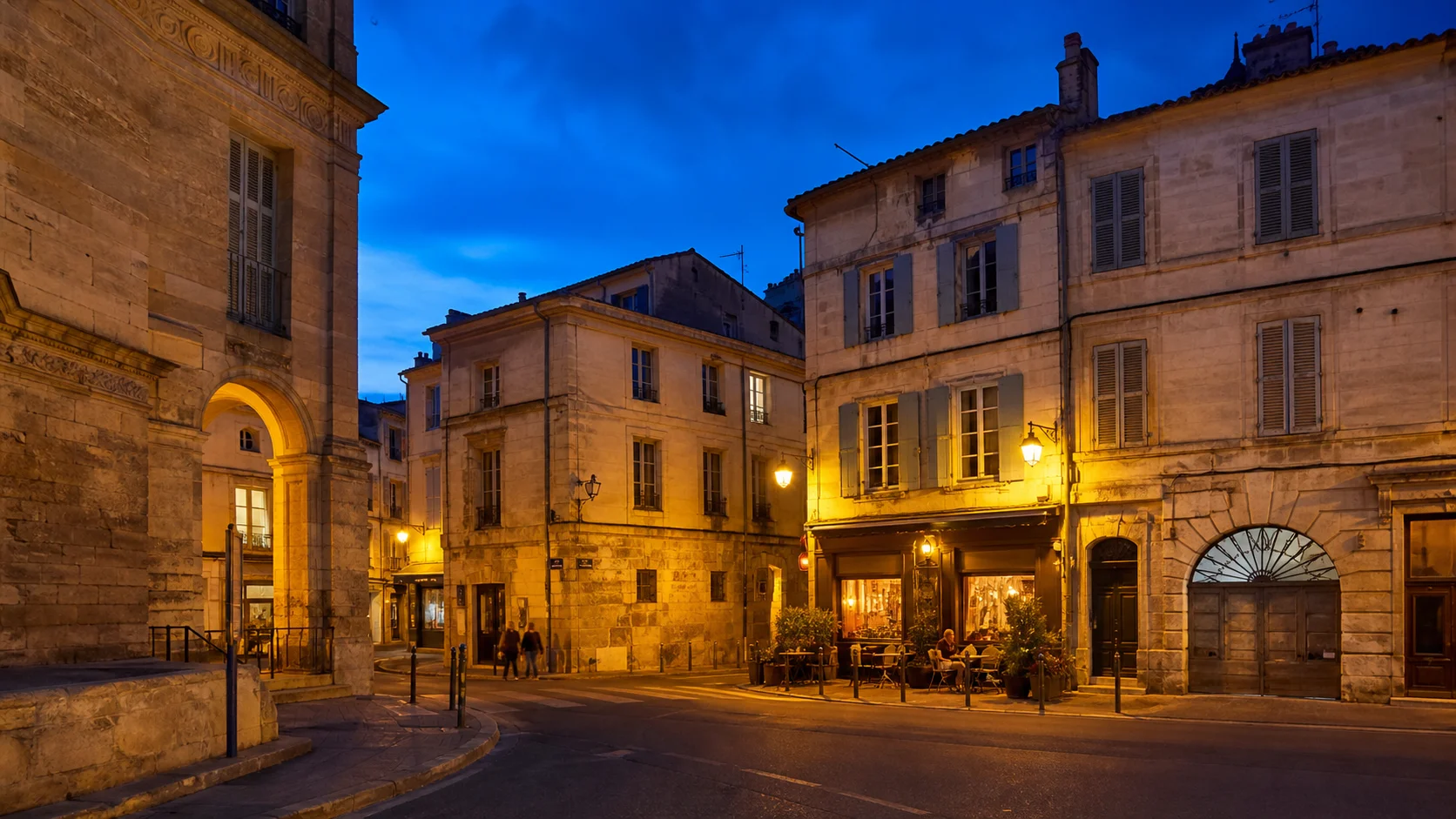
Arles after sunset: warm limestone and a deep blue sky still create the colour contrast that fascinated Van Gogh.
Vincent van Gogh arrived in Arles in February 1888 looking for brighter colour, stronger light and the possibility of beginning again. He stayed for roughly fifteen months. In that short period, he produced some of the most recognisable images in Western art and tied them permanently to a railway town on the edge of the Camargue.
Arles did more than give Van Gogh new subjects. Its Roman monuments, cafés, riverbanks, orchards and hard southern sun changed the way he used colour. Yellow became almost electric. Night skies turned blue rather than black. Ordinary places carried emotional weight.
You can still stand near many of those places today, although the relationship between canvas and city is rarely simple. Buildings have vanished. Gardens have been replanted. A painted viewpoint may compress or rearrange what was really there.
This article explores seven works and the ideas behind them. To hear the complete story at the places where it unfolded, use Trippy Tour Guide’s Arles Vincent Van Gogh Walking Tour, with GPS triggered audio and offline access.
Why Arles was a turning point
Van Gogh had lived in Paris before moving south. There he encountered Impressionism, Japanese prints and a community of modern artists, but city life exhausted him. Arles promised a different visual world: orchards in bloom, fierce mistral winds, ancient stone and a sun he imagined as almost Japanese in clarity.
He hoped the move would also lead to an artists’ community. His plan was ambitious and deeply personal. Arles would not simply be somewhere to paint; it would become a shared “Studio of the South.”
The dream never developed as he imagined. Yet the attempt shaped the paintings below.
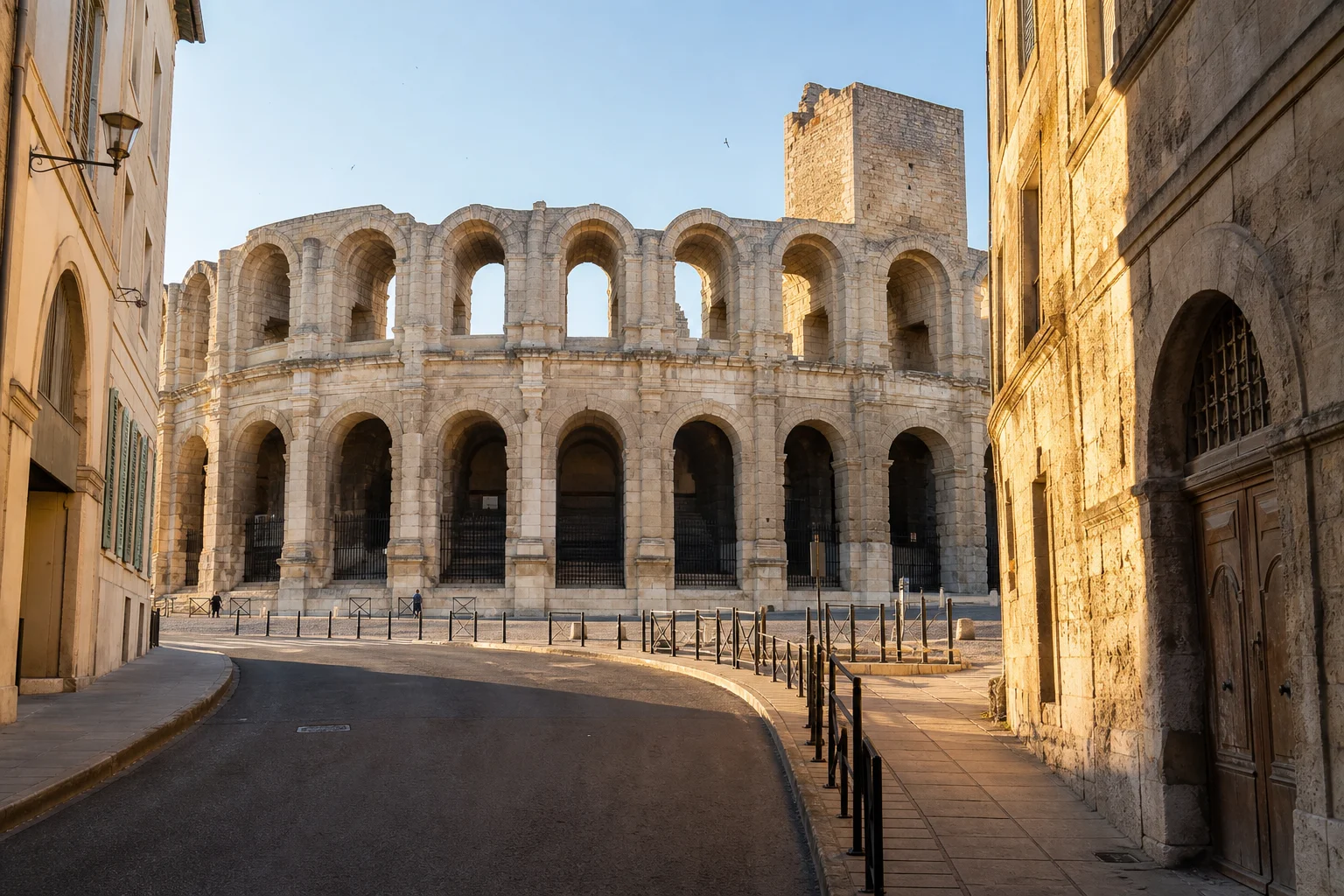
1. The Yellow House: painting a future that did not last
The small yellow building Van Gogh rented near Place Lamartine became the physical centre of his dream. He imagined guest rooms, shared studios and walls covered with art created by friends.
In The Yellow House, the building looks modest but full of possibility. Its colour separates it from the blue sky and dusty square, while the railway and surrounding streets place it in a modern, connected town.
Paul Gauguin eventually came to stay. Their weeks together produced intense work and increasingly serious conflict. The collaboration ended after Van Gogh’s mental health crisis in December 1888.
The Yellow House was later damaged during the Second World War and demolished. Visitors now encounter an absence: the site matters because of the hopes projected onto it, not because the building survives as a preserved museum.
That is exactly the kind of location where audio storytelling earns its place. A photograph cannot show what is gone; a strong story can reconstruct why the empty space matters.
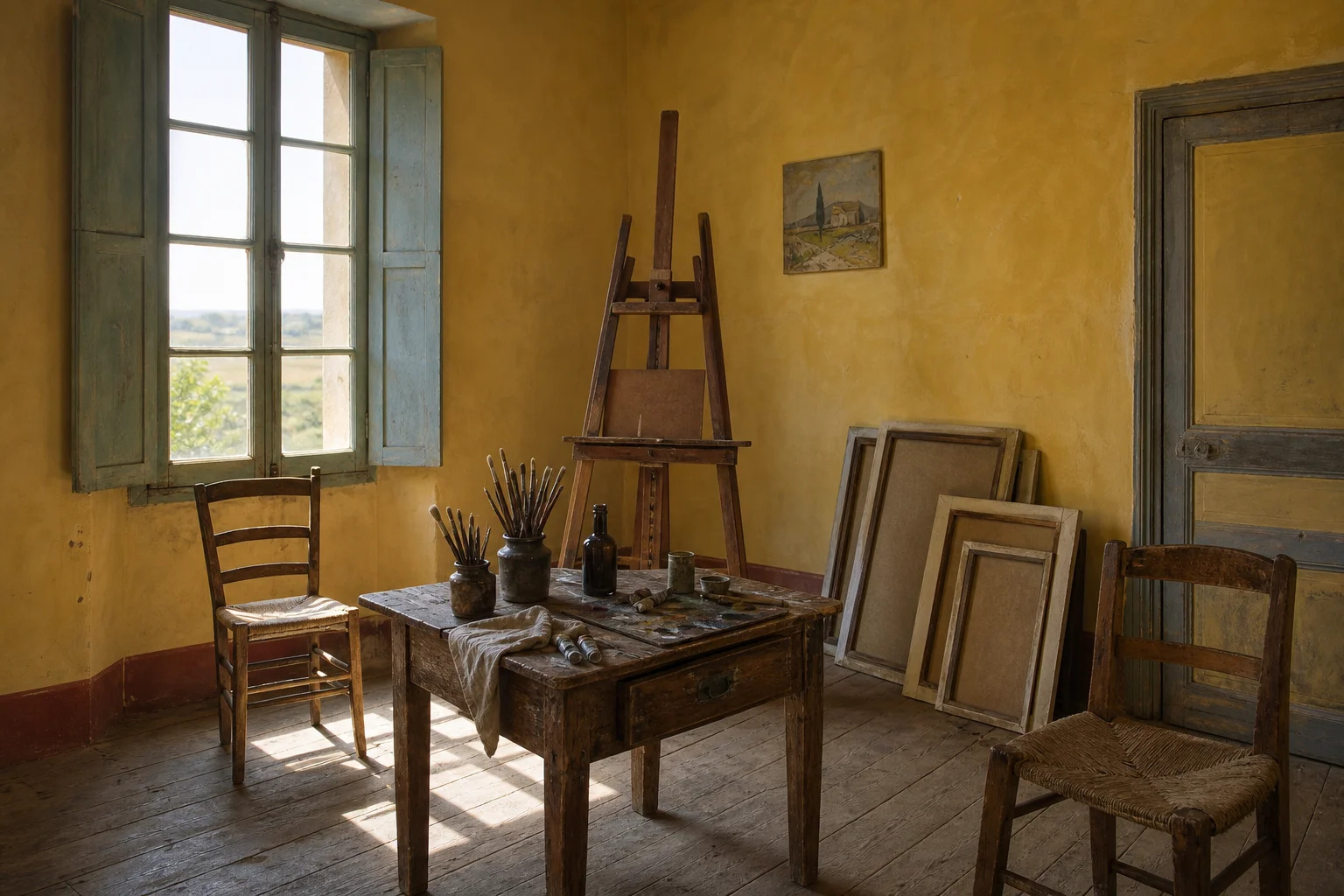
2. Starry Night Over the Rhône: learning to paint darkness in colour
Van Gogh wanted to paint night without reducing it to black. Along the Rhône, artificial lights reflected across the water while the sky remained a field of deep blue.
The result is not a neutral topographical record. He stretched reflections, intensified colour and gave the stars a presence larger than ordinary eyesight would register. Yet the basic ingredients remain recognisable in Arles: river, embankment, town light and an enormous sky.
The painting also demonstrates how modern Van Gogh’s Arles could be. Gas lighting and the working river were not picturesque leftovers from the past. They were contemporary subjects.
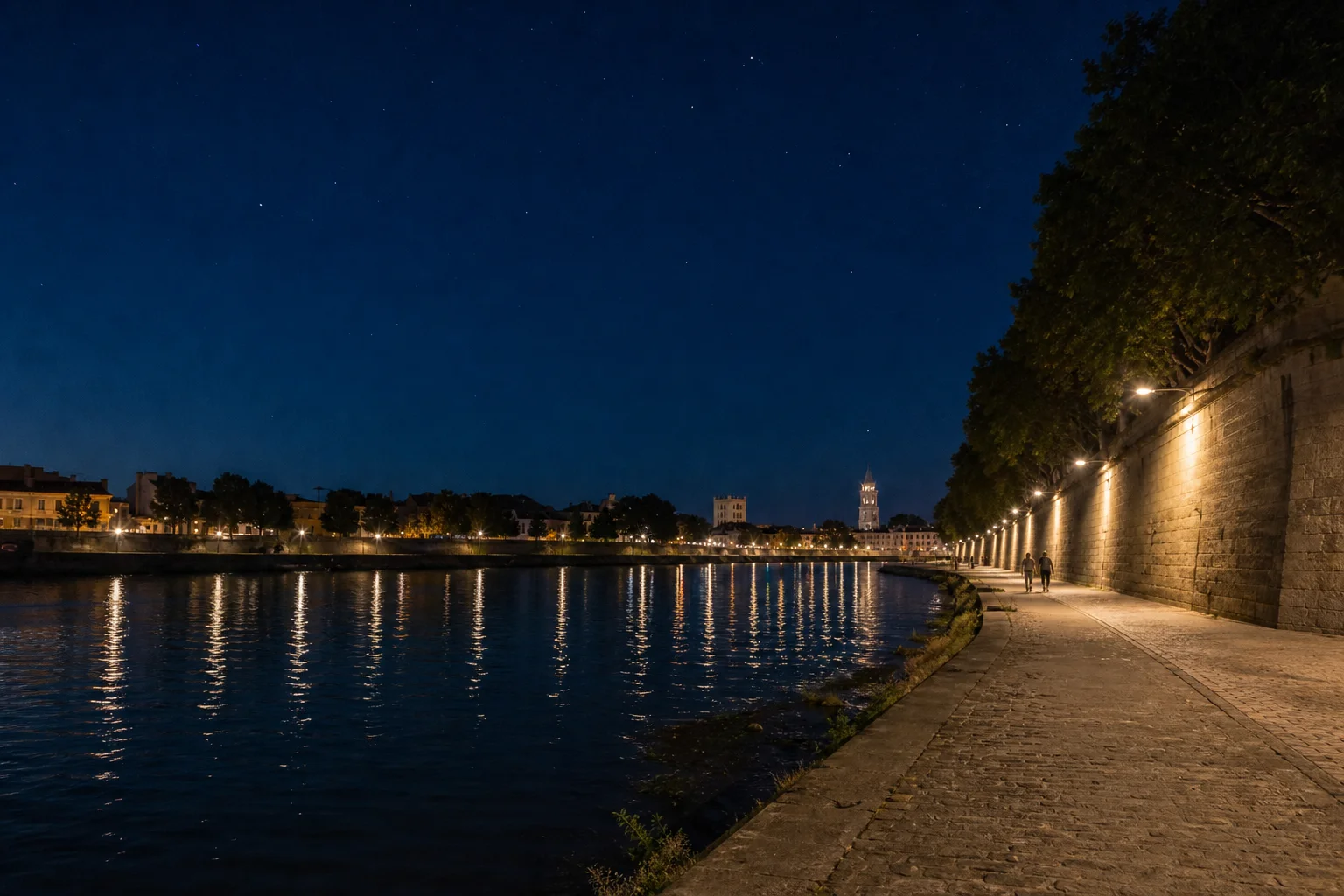
3. Café Terrace at Night: the city as a stage
At Place du Forum, Van Gogh turned a café terrace into a drama of warm yellow light and cool blue space. The steep angle pulls the viewer into the street, while the café glows almost like a set.
The modern café associated with the painting has changed and consciously presents its Van Gogh connection. That makes the location popular, but it can also encourage a shallow “same spot” photograph.
The more interesting question is how Van Gogh organised the scene. He did not merely record a café. He used colour to make public life feel intimate, theatrical and slightly unreal.
When you visit, step back from the façade. Look at the wedge of sky above the street and the way the square narrows. The composition becomes easier to understand when you stop searching for an exact replica of the canvas.
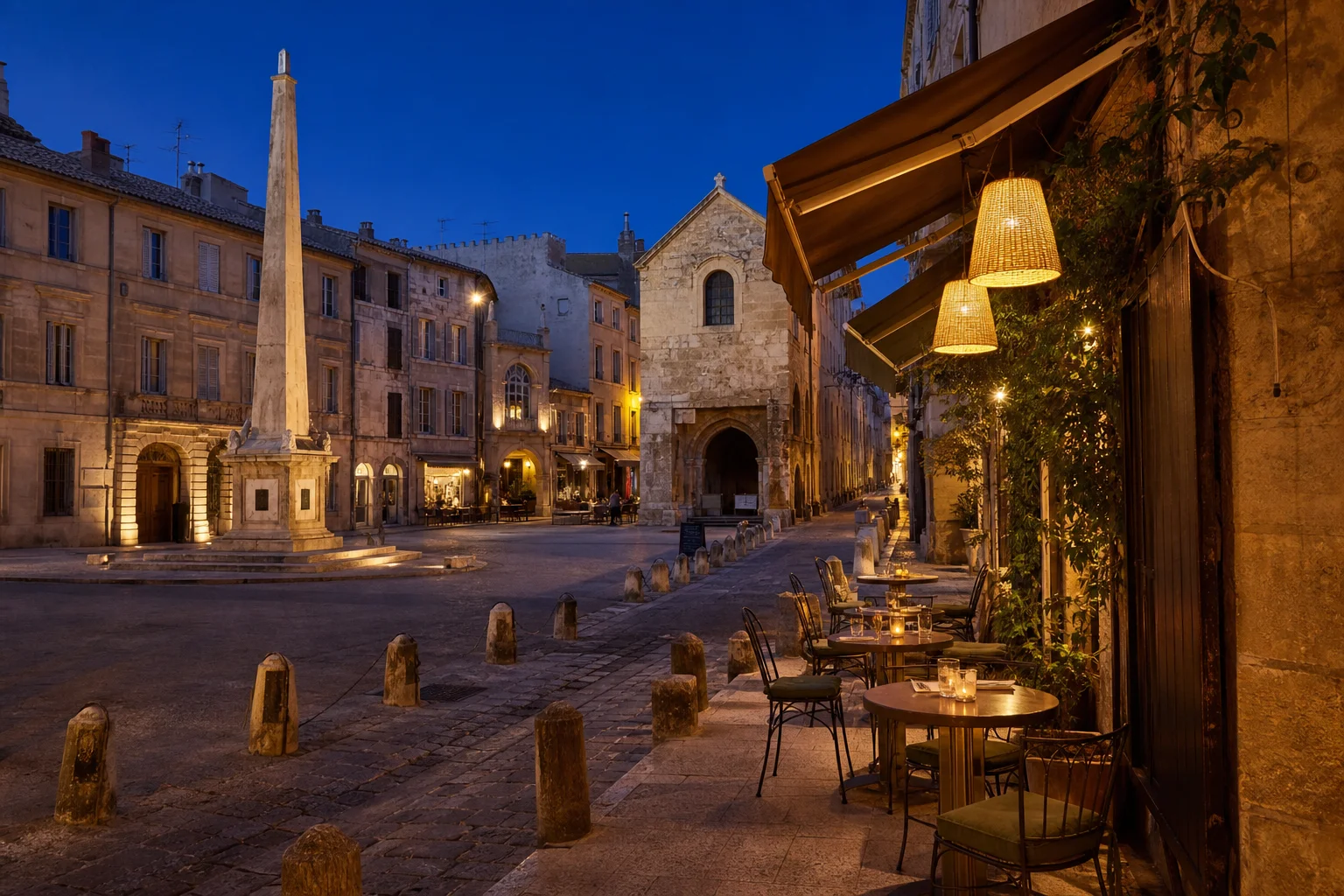
4. The Night Café: colour made deliberately uncomfortable
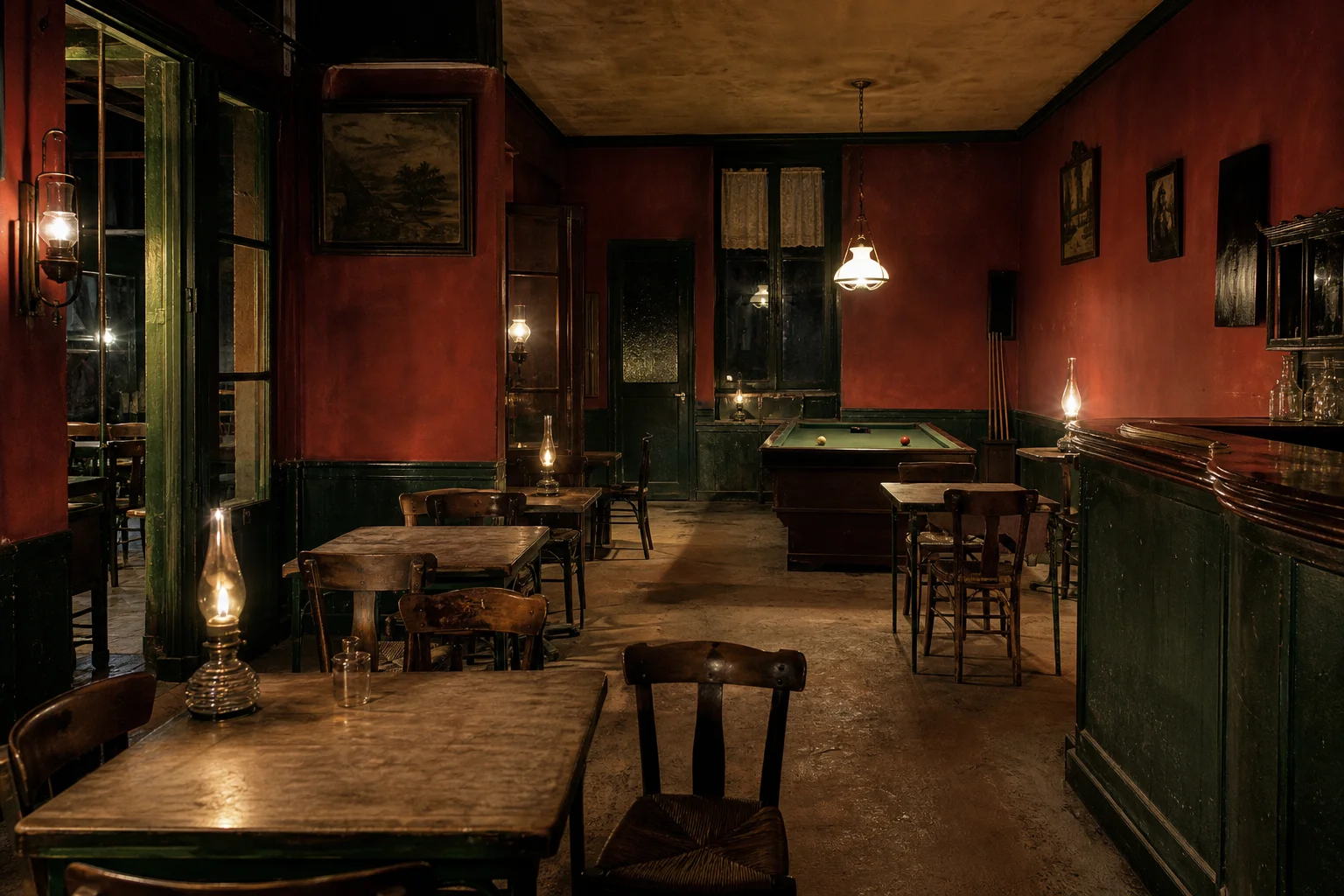
If Café Terrace at Night feels inviting, The Night Café does the opposite. The interior is dominated by red, green and yellow, with a tilted perspective that makes the room feel unstable.
Van Gogh described wanting to express the idea that a café could be a place where a person might ruin himself or lose his reason. Colour carries the psychological burden. The billiard table, lamps and scattered figures are ordinary; the emotional atmosphere is not.
The building connected with the painting no longer functions as it did in 1888, so the work is best understood as part of Van Gogh’s larger experiment: painting a place as it felt, not simply as it looked.
Want to discover the complete story of Van Gogh in Arles?
Hear the stories where they happened with the GPS guided Van Gogh tour. The experience includes the location sequence, directions and fuller narration in the Trippy Tour Guide app.
5. The Hospital in Arles: a garden after crisis
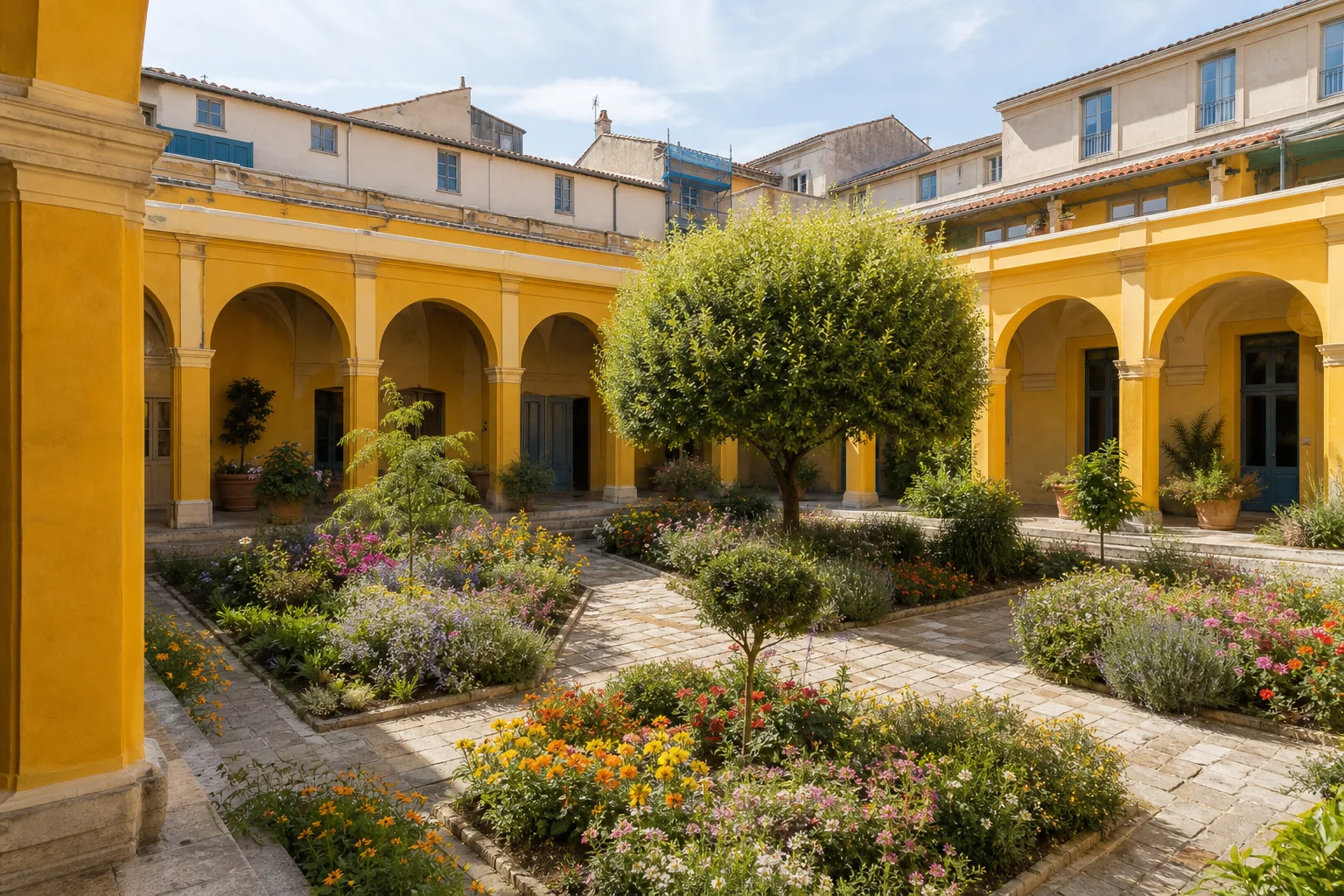
After the breakdown that ended his partnership with Gauguin, Van Gogh spent time in the hospital at Arles. He painted the courtyard as an ordered garden enclosed by two levels of arcades.
Today, the complex known as Espace Van Gogh contains a garden arranged to evoke the painting. It is beautiful and immediately legible, but it should not be mistaken for an untouched survival from 1889.
The deeper story is the tension between order and distress. The composition is structured, the flower beds contained and the arcades rhythmic. Yet the work belongs to one of the most difficult periods of Van Gogh’s life.
6. Les Alyscamps: two artists, one avenue, very different results
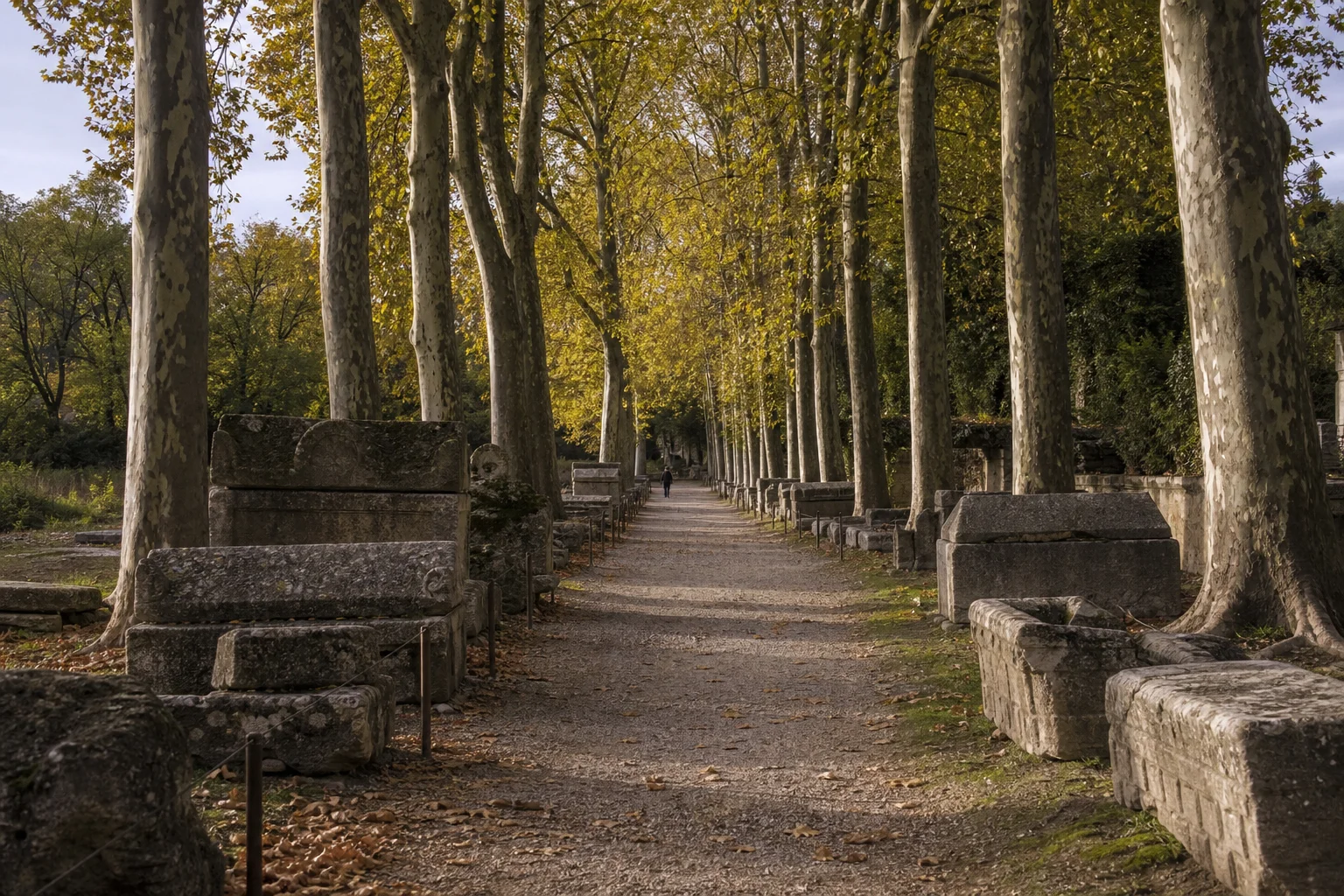
Les Alyscamps is an ancient necropolis lined with stone sarcophagi and tall trees. Van Gogh and Gauguin both worked there during their brief collaboration.
That makes the site unusually revealing. Two artists could stand in the same place and produce different visual arguments. Van Gogh emphasised the avenue’s rhythm, autumn colour and movement into depth. Gauguin pushed the setting toward a more symbolic, invented arrangement.
The comparison undermines the idea that a location determines a painting. Place supplies material; the artist decides what it becomes.
7. The Arena at Arles: ancient stone, modern crowd
Van Gogh’s view of the Roman amphitheatre is filled with spectators. The monument is present, but the people, compressed, animated and brightly dressed, command attention.
This was not an archaeological study. It was a picture of public entertainment inside a structure that had already survived for centuries.
The surviving amphitheatre helps visitors understand how Van Gogh saw Arles: Roman history was not sealed away from contemporary life. Ancient arches, cafés, railways, workers and crowds belonged to one active city.
What most visitors miss about Van Gogh’s Arles
The famous locations are only part of the story. Van Gogh’s achievement in Arles was not that he found seven ready made masterpieces waiting in the streets. He learned to turn ordinary environments into emotional structures.
That is why a checklist is a weak way to experience the city. The Yellow House matters because of the community he imagined. The hospital courtyard matters because of the crisis around it. Les Alyscamps matters because Gauguin was looking at the same avenue and seeing something else.
The place and the story need each other.
How to experience Van Gogh’s Arles without flattening it into photo stops
- Compare a painting with the location, but do not demand a perfect match.
- Notice what has changed, disappeared or been deliberately recreated.
- Look at the direction of light and the amount of sky in Van Gogh’s composition.
- Treat the Roman city and the modern nineteenth century town as one connected setting.
- Give yourself enough context to understand the emotional history, not only the image.
For that deeper layer, explore Arles with Trippy Tour Guide’s GPS triggered Van Gogh experience. It works offline, plays the right story as you approach each location and lets you pause whenever the city gives you a reason to stay longer.
Frequently asked questions
How long did Van Gogh live in Arles?
He arrived in February 1888 and left for Saint Rémy in May 1889, a stay of roughly fifteen months.
Is the Yellow House still standing?
No. It was damaged during the Second World War and later demolished. The location can still be understood with historical context.
Can you see original Van Gogh paintings in Arles?
Arles is primarily where you encounter the places connected with his work. Exhibition loans change, so check the Fondation Vincent van Gogh Arles before visiting.
What is the best way to explore the Van Gogh locations?
Use a place aware experience that combines historical context with navigation. A plain pin list shows where; it rarely explains why the place mattered.